
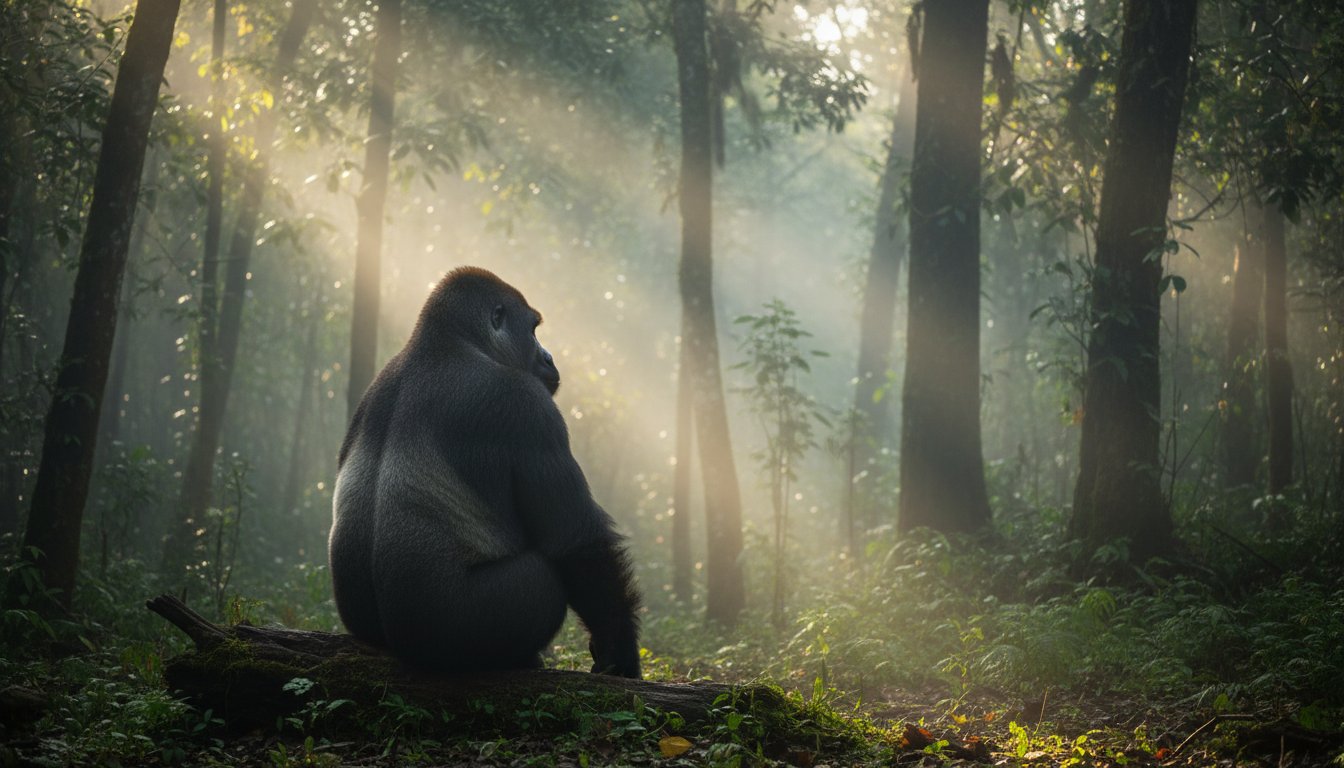
The Soul of the Wild: A Comprehensive Guide to East Africa Wildlife in 2026
What if the most profound conversation you ever had involved no words at all, but only the steady, rhythmic breath of a silverback gorilla in the emerald mist? You likely recognize that a journey into the heart of the continent is more than a simple holiday; it’s a search for a connection that feels both ancient and deeply personal. We understand the weight of your expectations for 2026. Choosing between the endless horizons of the Serengeti and the shadowed secrets of the Bwindi Impenetrable Forest can feel overwhelming, especially when you seek a truly ethical, private encounter with East African wildlife. It’s about finding a sanctuary that speaks to your soul.
This guide promises to illuminate the path toward your own soul-stirring adventure. You’ll gain a clear understanding of regional highlights, from the thundering Great Migration to the intimate sanctuaries of the Great Apes. We’ll provide the clarity you need to choose between the golden savannah and the lush rainforest, including the best times for sightings based on 2026 migration patterns and seasonal shifts. By the end, you’ll have the confidence to curate a bespoke experience that honors both the untamed wilderness and your own desire for a transformative, high-end escape. Nature awaits.
Key Takeaways
- Witness the ancient choreography of the Great Migration and the regal Big Five within the world’s most iconic and expansive savannah ecosystems.
- Journey into the emerald heart of the continent to experience a soul-stirring connection with the rare East Africa wildlife found in the mountain gorilla’s mist-shrouded sanctuary.
- Unveil the secrets of the wild by discovering rare, endemic species and hidden gems that only a curated, expert-led safari can reveal.
- Learn to orchestrate a sophisticated, multi-country itinerary that seamlessly balances conservation impact with the unparalleled exclusivity of a private legacy journey.
The Tapestry of East Africa Wildlife: An Introduction to the Soul of the Continent
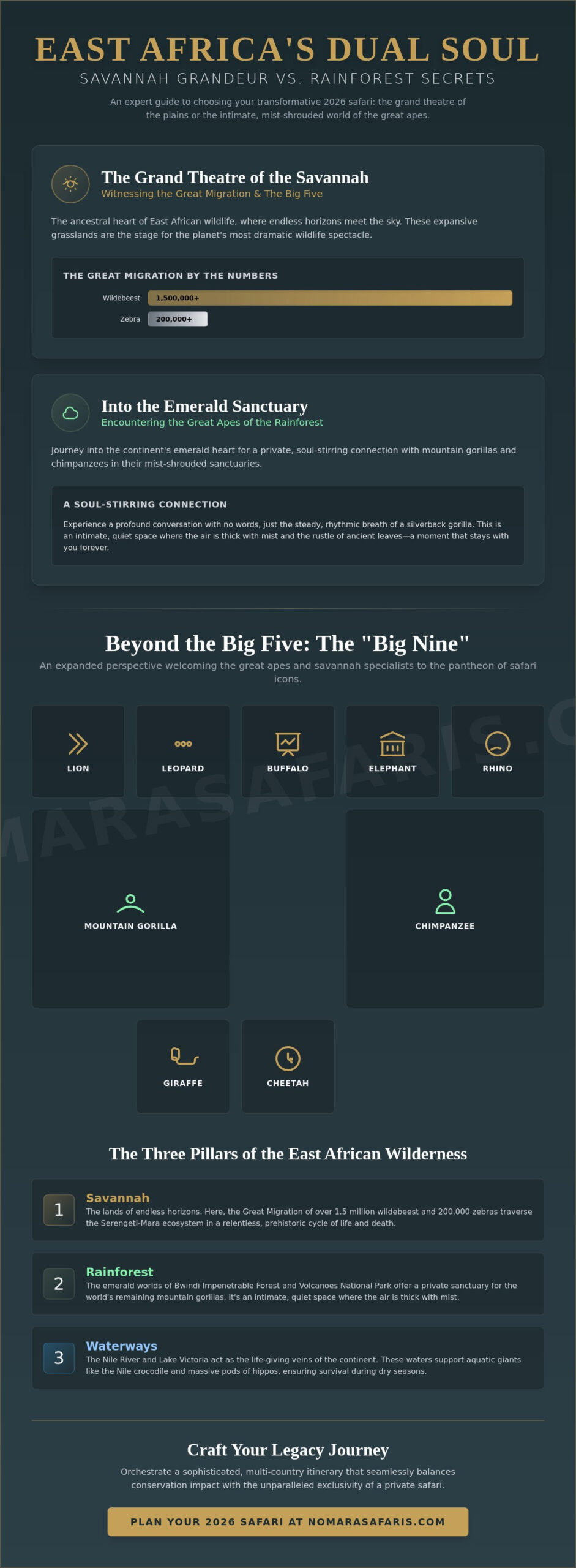
East Africa remains the world’s most evocative wildlife sanctuary. It spans the diverse landscapes of Uganda, Kenya, Tanzania, and Rwanda, offering a profound encounter with nature that feels both ancient and immediate. While many travelers arrive seeking the classic Big Five, the true spirit of East Africa wildlife is found in the “Big Nine.” This expanded perspective includes the legendary lion, leopard, rhino, elephant, and buffalo, but it also welcomes the intimate presence of the mountain gorilla, the chimpanzee, and rare endemics like the giraffe and cheetah. Witnessing these creatures in their ancestral homes isn’t just a holiday. It’s a soul-stirring journey into the heart of existence.
The emotional impact of these encounters is difficult to overstate. There’s a raw, authentic power in watching a pride of lions move through the tall grass or feeling the deep, vibrating hum of a silverback gorilla in the mist. These moments are curated by the land itself, offering a sense of sanctuary that stays with you long after you’ve returned home. The sheer density of species, particularly when exploring Kenya’s wildlife, reveals a biological richness unparalleled on any other continent.
Why East Africa Stands Alone in Global Biodiversity
The region’s unique geography creates a mosaic of life. You’ll find a high concentration of endemic species that exist nowhere else on Earth. This diversity is driven by dramatic shifts in altitude, which forge distinct microclimates from the snow-capped peaks of the Rwenzori Mountains to the humid tropical coastlines. The Great Rift Valley is the geological spine of African wildlife. This massive fissure has shaped the migration patterns and evolution of countless species for over 20 million years, creating a corridor of life that sustains the planet’s last great terrestrial migrations.
The Three Pillars of the East African Wilderness
The landscape is defined by three distinct realms that provide the stage for the East African wildlife experience:
- Savannah: These are the lands of endless horizons. Here, the Great Migration sees over 1.5 million wildebeest and 200,000 zebras traverse the Serengeti-Mara ecosystem in a relentless, prehistoric cycle of life and death.
- Rainforest: The emerald worlds of Bwindi Impenetrable Forest and Volcanoes National Park offer a private sanctuary for the world’s remaining mountain gorillas. It’s an intimate, quiet space where the air is thick with mist and the rustle of ancient leaves.
- Waterways: The Nile River and Lake Victoria act as the life-giving veins of the continent. These waters support aquatic giants like the Nile crocodile and massive pods of hippos, ensuring survival during the parched dry seasons.
Each of these environments offers a bespoke window into the wild. Whether you’re exploring the Albertine Rift’s montane forests or the expansive plains of the Rift Valley, the connection you feel to the earth is immediate and transformative.
The Grand Theatre of the Savannah: Witnessing the Big Five and the Great Migration
The Serengeti and Maasai Mara represent a single, breathing ecosystem that ignores man-made borders. This is the ancestral heart of east africa wildlife, where the horizon stretches until it melts into the sky. While the national parks offer immense scale, the private conservancies surrounding them provide a more intimate sanctuary. In these exclusive enclaves, the rush of the crowds fades. It’s replaced by the quiet rustle of the golden grass and the expert guidance of a private tracker who understands the language of the bush.
The Big Five: Beyond the Checklist
A leopard draped across a yellow-fever acacia limb is a masterclass in camouflage. These elusive cats thrive in the riverine thickets of Kenya and the ancient rocky kopjes of the Serengeti. While the leopard remains a ghost, the rhinoceros is a testament to human dedication. Organizations like the East African Wild Life Society have been instrumental in supporting the specialized sanctuaries that protect these prehistoric giants. By late 2024, rhino populations in Kenya showed a steady 5 percent annual growth, a trend that makes 2026 an ideal year for sightings in places like Ol Pejeta.
Elephant social dynamics offer another layer of discovery. In Amboseli, you’ll find massive matriarchs leading herds against the iconic backdrop of Kilimanjaro. Contrast this with the rugged terrain of Murchison Falls in Uganda. Here, the herds navigate lush, riverine forests, displaying a resilience that differs from their plains-dwelling cousins. Each encounter is a soul-stirring reminder of the intelligence and deep emotional bonds these creatures share.
The Great Migration: A Seasonal Masterpiece
The migration isn’t a singular event; it’s a relentless, circular pulse. From the calving season in the southern Serengeti during February to the treacherous Mara River crossings in August, the movement never truly stops. Over 1.5 million wildebeest and 200,000 zebras follow the rains in a raw display of predator and prey interactions. It’s a cycle of life that feels both ancient and immediate.
- January to March: The herds gather on the short grass plains of the Serengeti for calving season, attracting high concentrations of lions and cheetahs.
- July to September: The dramatic river crossings occur, where crocodiles lie in wait for the herds entering the Maasai Mara.
- October to December: The movement turns south again, replenishing the earth as the short rains begin.
To truly witness this masterpiece, one must bypass the standard tourist routes. A private mobile camp allows you to move with the rhythm of the herds, ensuring you’re always at the center of the action without sacrificing the comforts of a bespoke safari experience. This proximity creates a profound connection to the land, where the sounds of the night become the soundtrack to your journey.
Into the Emerald Sanctuary: Encountering the Great Apes of the Rainforest
The Albertine Rift stands as a formidable primate stronghold, harboring more endemic species than almost any other region on the continent. Within this verdant corridor, the air is heavy with the scent of damp earth and crushed ferns, a fragrant reminder of the forest’s ancient lineage. Distant, rhythmic hoots of chimpanzees puncture the silence, echoing through a canopy so dense it filters the African sun into a soft, emerald glow. This is a world of verticality and shadow, where the East Africa wildlife experience shifts from the expansive horizons of the plains to an intimate, soul-stirring encounter in the deep woods.
High-end trekking permits act as a vital bridge between luxury travel and essential conservation. By limiting daily visitors, these bespoke journeys ensure the primates remain undisturbed while generating the significant capital required to patrol these sanctuaries. It’s a model of stewardship where your presence directly funds the protection of a legacy that was nearly lost. The exclusivity of the experience isn’t merely about status; it’s about the profound impact of a quiet, private moment in the presence of greatness.
The Mountain Gorillas of Uganda and Rwanda
A private audience with a Silverback patriarch is a transformative event that defies simple description. He is a 400-pound titan of quiet confidence, moving with a gentle power that settles the soul. Whether you find yourself in the steep, bamboo-clad slopes of Rwanda’s Volcanoes National Park or the tangled ridges of Uganda’s Bwindi Impenetrable Forest, the physical demand of the trek is part of the ritual. The journey through the undergrowth is a physical dialogue with the land, requiring a steady heart and a willing spirit.
The reward is an unparalleled sixty minutes of silent observation. You’ll watch as mothers tenderly groom their young and juveniles tumble through the foliage with reckless abandon. This one-hour limit is strictly enforced to protect the health and social structure of the troop, making every second feel like a curated gift from the wilderness. It’s an intimate window into a social world that mirrors our own in ways that are both humbling and deeply moving.
Chimpanzees and Other Primates: The Forest’s High-Energy Inhabitants
Beyond the mountain peaks, the Kibale Forest in Uganda offers a different, more kinetic energy. This is the primate capital of the world, where the vocal and social world of chimpanzees takes center stage. Unlike the stoic gorillas, chimpanzees are a whirlwind of activity; they swing through the high canopy and move across the forest floor with a frantic, fascinating intelligence. These encounters provide a necessary balance to the East Africa wildlife narrative, showcasing the raw, high-energy social dynamics of our closest biological relatives.
In the higher elevations of the Virunga Mountains, you might also encounter the rare Golden Monkeys, whose fiery coats provide a stunning contrast to the deep greens of the bamboo thickets. These primate safaris do more than satisfy curiosity; they create a community legacy. Through revenue-sharing programs, up to 20 percent of permit fees are channeled back into local villages. This ensures that the people living on the forest’s edge are the primary beneficiaries of its survival, turning every bespoke trek into a meaningful act of preservation.
Beyond the Icons: Discovering East Africa’s Rare and Endemic Species
The true heartbeat of the savannah isn’t always found in the thundering movement of the masses. While the Great Migration is a spectacle of nature, the most profound connections often happen in the quiet, overlooked niches of the landscape. These hidden gems reveal themselves only through expert-guided, bespoke safaris that prioritize depth over distance. It’s in these moments, away from the crowds, where the intricate tapestry of East Africa wildlife becomes clear.
Exclusive concessions allow for private night drives, a luxury rarely found in public parks. Under the veil of darkness, the wilderness shifts its rhythm. You might witness the silver-white flash of a honey badger or the delicate, high-stepping gait of a serval hunting in the tall grass. These nocturnal encounters provide a rare window into the secret lives of species that remain invisible during the heat of the day, offering a soul-stirring perspective on survival.
The Enigmatic Tree-Climbing Lions of Ishasha
In the southern reaches of Queen Elizabeth National Park, the lions have abandoned the grass for the canopy. The tree-climbing lions of Uganda are a biological marvel. Seeing a pride draped across the limbs of an ancient sycamore fig tree is a sight that defies standard expectations of feline behavior. Researchers point to two primary drivers for this adaptation: the cooling breeze found at height and the desire to escape the persistent bite of ground-dwelling insects.
To capture these cats on camera, patience is your greatest asset. Use a lens with a focal length of at least 400mm to isolate the subject against the dappled light of the leaves. The contrast between the tawny coats and the deep green foliage creates a composition that is as rare as the behavior itself. This is East Africa wildlife at its most unpredictable and majestic.
An Avian Sanctuary: Birdwatching in the Pearl of Africa
Birds are the ultimate indicators of environmental health, and birdwatching in Uganda reveals an ecosystem in vibrant balance. The country supports a staggering 1,080 species, making it a premier destination for the discerning traveler. The Shoebill Stork, a prehistoric relic with a beak shaped like a Dutch clog, is the undisputed star of the marshlands. It stands nearly five feet tall, a silent sentinel in the papyrus swamps of Mabamba.
- Great Blue Turaco: A kaleidoscopic bird of the forest canopy, known for its deep blue plumage and striking crimson accents.
- African Green Broadbill: A rare find in the Bwindi Impenetrable Forest, sought after for its elusive nature and neon-green color.
These avian wonders remind us that the wilderness is built on layers of life, each as vital as the last. To experience these rare encounters for yourself, book your private sanctuary experience with the experts at Nomara Safaris today.
Crafting Your Legacy Journey: How to Experience East Africa’s Wildlife Responsibly
True luxury in the modern age isn’t defined by excess; it’s defined by access, intimacy, and the quiet knowledge that your presence nurtures the land you walk upon. When planning your encounter with East Africa wildlife, you face a pivotal choice: the deep immersion of a single-country focus or the grand tapestry of a multi-country expedition. A single-country itinerary, perhaps focusing exclusively on Tanzania’s ancient landscapes, allows for a slower rhythm. You might spend four days in a private corner of the Serengeti, watching the light change across the plains rather than rushing to the next airstrip. Conversely, a combined itinerary utilizes sophisticated regional flight networks to bridge the gap between the emerald forests of Uganda and the golden savannahs of Kenya in under three hours.
The transition from “Forest to Savannah” or “Bush and Beach” represents the pinnacle of curated travel. Imagine the physical challenge of a morning spent tracking primates in a humid rainforest, followed by a private charter that delivers you to a cool, breeze-swept tented camp by sunset. Professional guides act as the essential bridge in these moments. They don’t just spot animals; they translate the subtle language of the wild, explaining how a specific alarm call from a bird signals a hidden predator. Their expertise transforms a simple sighting into a profound lesson in ecology and survival.
The Art of the Bespoke Itinerary
Creating a journey that resonates requires a methodical yet soulful approach. You must first identify your primary “soul-stirring” priority. If your heart is set on the thundering hooves of the Great Migration, your calendar must align with the dry season from July to October. If the silent, amber gaze of a mountain gorilla is your goal, you’ll find the most stable trekking conditions in January or February. Your choice of accommodation should act as a sanctuary. We prioritize lodges that maintain a low-impact footprint, often utilizing 100% solar power and gray-water recycling systems to ensure the wilderness remains untamed for the next generation.
Sustainable Travel: Your Impact on the Wilderness
Your journey is a direct investment in the future of the African continent. Permit fees are not merely administrative costs; they are the lifeblood of conservation. In 2024, permit revenue provided up to 80% of the funding required for anti-poaching units and park ranger salaries in several key regions. This financial ecosystem ensures that the East African wildlife you admire today will thrive long after you return home. Nomara Safaris remains committed to hand-picked, eco-conscious lodges that prioritize community employment and wildlife corridors over mass tourism.
Every legacy begins with a single, conscious decision to explore. Whether you seek the raw power of the Nile or the quiet dignity of the great plains, your adventure awaits. You can book a curated 3 days Murchison Falls safari to witness the world’s most powerful waterfall, or contact our specialists to design a bespoke multi-country tour that spans the heart of the continent. The wild is calling; it’s time to answer with intention.
Step Into Your 2026 Legacy Within the Untamed Heart of Africa
The year 2026 beckons with the promise of unfiltered connection and profound discovery. You’ve explored the rhythmic thunder of the Great Migration and the silent, emerald sanctuaries where the world’s remaining mountain gorillas reside. These encounters aren’t mere sightings; they’re transformative milestones that define a life well-traveled. Witnessing East Africa wildlife in its purest form requires a delicate balance of expert logistics and deep, reverent knowledge. The landscape is a living masterpiece, and you’re invited to step inside the frame.
Nomara Safaris, fully licensed by Nexto Investment Company Limited, crafts these moments with obsessive attention to detail. We specialize in high-demand primate permit procurement, ensuring your seat at the table of nature’s most exclusive gatherings. Our expert-guided, bespoke itineraries transform a simple trip into a private sanctuary of wonder. Whether you’re tracking rare endemic species or seeking the Big Five, your journey remains intimate and impactful. The wilderness is calling, and its voice is one of timeless beauty and raw power.
Begin your soul-stirring journey with Nomara Safaris today. The sun is rising over the savannah, and your seat is waiting.
Frequently Asked Questions
What is the best time of year to see wildlife in East Africa?
The dry season from June to October offers the most rewarding views of East Africa wildlife as animals congregate around permanent water sources. During these months, the Great Migration typically reaches the Masai Mara by August, offering a raw spectacle of survival. The clear skies and sparse vegetation make tracking predators like lions and leopards more predictable for a curated photographic experience.
Can I see the Big Five and Mountain Gorillas on the same trip?
You can certainly encounter the Big Five and Mountain Gorillas on a single, bespoke itinerary by utilizing regional flight connections between Kenya and Uganda. A 90-minute flight from Nairobi to Entebbe bridges the gap between the golden savannas and the emerald rainforests. This seamless transition allows travelers to witness the grandeur of the plains and the intimacy of the forest within one soul-stirring journey.
Is it safe to go on a walking safari in East Africa?
Walking safaris are exceptionally safe when conducted under the stewardship of two armed, expert rangers who understand the nuances of animal behavior. These intimate journeys focus on the small details of the bush that vehicle safaris often overlook. By maintaining a respectful 30-meter distance from larger mammals, your guide ensures a secure yet profound connection with the untamed landscape.
What is the difference between a Kenya safari and a Uganda safari?
Kenya offers the iconic, wide-open savannas and massive herds of the Masai Mara, while Uganda provides a sanctuary of dense, volcanic rainforests. While Kenya is the premier destination for classic East Africa wildlife photography on the plains, Uganda hosts over 50 percent of the world’s remaining mountain gorilla population. Both destinations offer unique ecosystems that, when combined, create a complete portrait of the continent’s biological diversity.
How much do gorilla trekking permits cost in 2026?
In 2026, the Uganda Wildlife Authority lists gorilla trekking permits at $800 per person, while Rwanda maintains a rate of $1,500. These fees are vital for conservation, directly funding the protection of these endangered primates and their fragile habitats. Securing these permits at least 6 months in advance is essential due to the strict daily limit on visitors to each gorilla family.
What should I pack for a multi-habitat East Africa wildlife tour?
Pack versatile layers in neutral tones like khaki or olive to blend into the wilderness and manage temperature swings from 10 to 30 degrees Celsius. Essential items include sturdy, waterproof hiking boots for forest treks and a high-quality pair of 8×42 binoculars for bird watching. Don’t forget a wide-brimmed hat and reef-safe sunscreen to protect against the equatorial sun during your private game drives.
Are children allowed on wildlife safaris and primate treks?
Most luxury lodges welcome children aged 5 and above, but gorilla trekking is strictly reserved for those 15 years or older. This age limit, enforced by park authorities in both Uganda and Rwanda, ensures the safety of the primates and the trekkers alike. For younger explorers, we curate private activities that spark a lifelong passion for conservation through guided nature walks and track identification.
How does Nomara Safaris ensure ethical wildlife encounters?
Nomara Safaris ensures ethical encounters by partnering exclusively with conservancies that limit vehicle numbers to 3 per sighting. We prioritize low-impact tourism that respects the natural rhythms of the wild, ensuring our presence never disrupts animal behavior. By employing 100 percent local guides and supporting community-led initiatives, we create a legacy of stewardship that protects these sanctuaries for generations to come.


Comments are closed