
There is a singular moment, just after dawn on the floor of the Ngorongoro Crater, when the world feels both impossibly ancient and entirely new. The light is honey golden, soft enough to illuminate the dew on the grasses but sharp already promising the heat of an equatorial day. A herd of zebra lifts their heads in unison. This is not merely a holiday; it is a return to a baseline reality most of us have forgotten exists. Planning wildlife tours in Africa requires more than a credit card. It demands a philosophical shift in how we choose to witness nature. At Nomara Safaris, we have spent years guiding travelers through this labyrinth, understanding that a safari is the most complex travel product to purchase. You are betting on wild animal behaviour, the skill of a guide, seasonal rain, and political stability. When you book wildlife tours in Africa, you invest in moments of pure, unfiltered wildness. When the leopard drops her kill into the fork of an acacia tree as you round the corner, no other travel experience delivers such primal satisfaction. This guide is your strategic compass for wildlife tours in Africa, dismantling the jargon and empowering you to choose wildlife tours in Africa that fundamentally alter your understanding of the wild. The best wildlife tours in Africa build contingency into the itinerary, allowing extra time at a river crossing or a detour following fresh cheetah tracks. This is exactly where Nomara Safaris excels.
When travelers begin researching wildlife tours in Africa, they face a bewildering array of price points. A USD 1,500 safari and a USD 15,000 safari can visit the same national park, yet the experiences share almost no common DNA. Understanding the anatomy of a tour package is the first step toward avoiding disappointment. At its core, a professionally operated wildlife tour in Africa includes three non negotiable pillars: accommodation, transport including game drive vehicles and internal flights, and the services of a guide. However, quality varies astronomically. A budget tour might place you in a tented camp outside the park boundaries, requiring a one hour commute each morning, sacrificing the critical early morning viewing window. A luxury operation secures beds inside the park or in a private conservancy, meaning you are already in the theatre of wildlife when the sun rises. Nomara Safaris always prioritises in park accommodation for exactly this reason.
On a shared wildlife tour in Africa, you may negotiate camera angles with six strangers, your ability to follow a cheetah hunt constrained by group consensus. A private vehicle gives you absolute autonomy on your wildlife tours in Africa. You decide when to leave, when to stay, and when to break for Kenyan coffee poured from a thermos onto the savannah floor. Nomara Safaris exclusively designs private or small group wildlife tours in Africa that prioritise flexibility, because spontaneous moments, the fifteen minutes watching a pangolin uncurl or a leopard clean its paws, become the stories you carry home. The difference between shared and private is not merely comfort; it is whether you control your day’s narrative or surrender it to group compromise. For discerning travelers, this distinction alone justifies the upgrade.
The game drive is the iconic vehicle of wildlife tours in Africa, conducted in a modified Land Cruiser with a pop up roof for unobstructed viewing. These vehicles traverse terrain that would break a civilian car, climbing rocky kopjes and crossing seasonal rivers. A morning game drive begins at 6:00 AM, departing while the night’s chill lingers, setting the rhythm for all great wildlife tours in Africa. This timing is strategic because most predators conclude hunting by sunrise, and dawn offers the best opportunity to find lions, leopards, and hyenas either active or settling to rest. The vehicle moves slowly, stopping for the guide to read tracks or identify bird calls. What separates an exceptional guide is their ability to interpret behaviour, not just name animals. A great guide on wildlife tours in Africa turns the savannah into a living textbook.
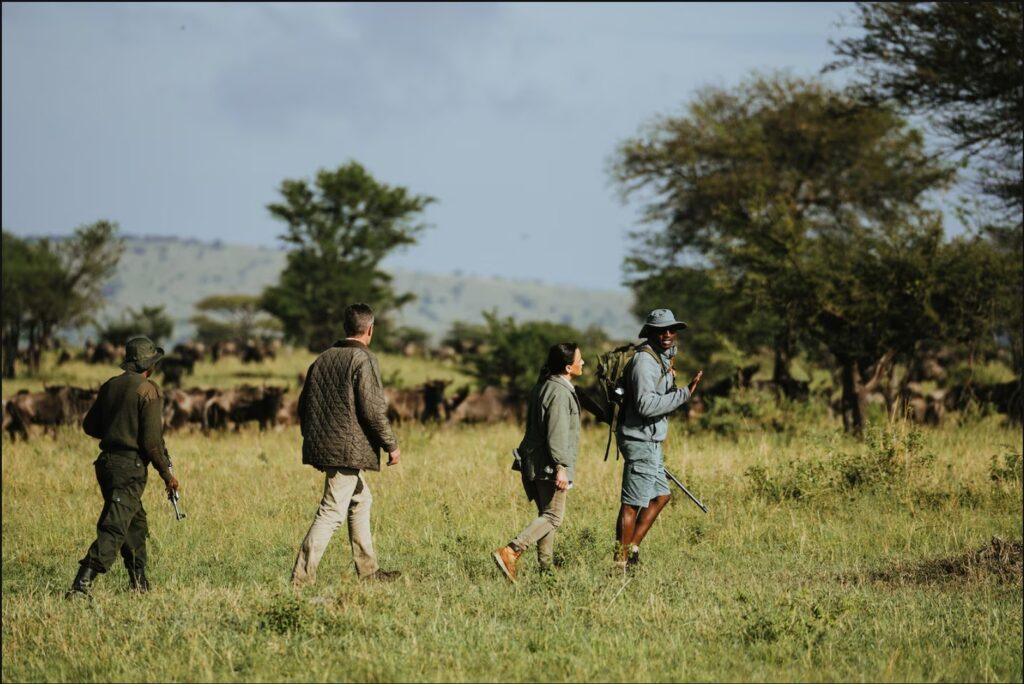
Walking safaris, available in concessions like Zambia’s South Luangwa or Tanzania’s Selous, offer radically different intimacy for those seeking deeper wildlife tours in Africa. On foot, the pretence of protection vanishes. You feel the weight of being a soft skinned primate in a landscape of apex predators. A walking safari is not about distance; it is about small marvels like dung beetles rolling spheres, the medicinal properties of a crushed leaf, and the geometry of a termite mound. Your guide shows you the spoor of a lion that passed an hour ago, the feather of a lilac breasted roller, or the medicinal uses of acacia bark. This slow, attentive travel reorients your relationship with the wild. Nomara Safaris can arrange walking safaris for those with a sense of adventure, creating a multi dimensional wildlife tour in Africa.
Boat safaris bring you level with hippos and crocodiles. Watching a herd of elephants swim from the deck of a boat is a perspective no land vehicle can replicate. The water surface acts as a mirror, doubling the drama of a sunset. On wildlife tours in Africa that include waterways like Uganda’s Kazinga Channel or Botswana’s Chobe River, the boat safari often becomes the unexpected highlight. You see the shoreline from a different angle: elephants drinking, buffalo bathing, kingfishers diving, hippos grunting in their pods. Hippos cause more human fatalities than any other large animal, but from a boat at respectful distance you can observe their social structures without risk. Nomara Safaris integrates these modalities based on your curiosity, because a well rounded wildlife tour in Africa should exercise all the senses.
The Big Five, comprising lion, leopard, elephant, rhino, and Cape buffalo, originated as hunting jargon for the five most difficult animals to take on foot. Today it serves as a checklist for many first time visitors booking wildlife tours in Africa. While we encourage broader appreciation of biodiversity, there is an undeniable thrill in encountering all five. The Serengeti Mara ecosystem delivers lions and leopards consistently. Lions live in prides that claim territories, making them predictable once a guide knows recent movements. Leopards are solitary, nocturnal, and masters of camouflage; spotting one requires patience and a guide who reads alarm calls of impalas and baboons. Elephants roam widely, but the great tuskers of Amboseli are legendary. The Ngorongoro Crater offers almost guaranteed black rhino sightings. Nomara Safaris designs wildlife tours in Africa that maximise your probability of completing the Big Five while keeping you immersed in the broader savannah spectacle.
The Great Migration is the largest overland mammal movement on earth, involving 1.5 million wildebeest and 200,000 zebra rotating through the Serengeti and Masai Mara. This is a continuous loop of calving, rutting, and river crossing drama. The crossings at the Grumeti and Mara Rivers, where crocodiles wait for the hesitant, are the most photographed moments on any wildlife tour in Africa. July through October in the northern Serengeti and Masai Mara are peak crossing months for wildlife tours in Africa focused on the Migration. To witness this, you need the right season, a guide with real time intelligence, and the willingness to wait. A crossing is not scheduled; herds gather on the banks, hesitant. Then suddenly a single wildebeest plunges in and the flood follows. Water churns with bodies. Crocodiles target the young. Nomara Safaris recommends five nights in the northern Serengeti or Mara during peak season to maximise your chances.
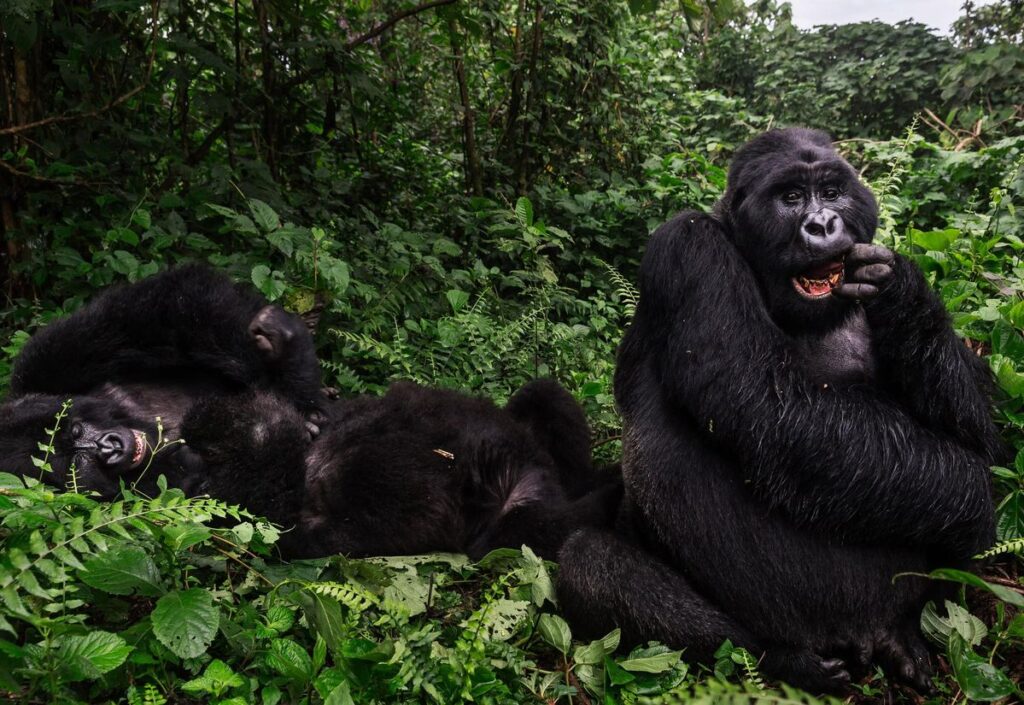
Primate experiences occupy a separate emotional category within wildlife tours in Africa. You do not observe gorillas from a vehicle; you hike through dense montane forest, guided by trackers who located the group’s sleeping site. When you sit in the presence of a silverback, watching him strip a thistle stem, the silence is thicker than any sound. This is a profound, hour long audience with our closest relatives, sharing 98 percent of our DNA. For travelers combining gorilla trekking with traditional wildlife tours in Africa, the contrast is intentional: the savannah offers space and distance, while the forest offers intimacy and kinship. The trek varies from fifteen minutes on an easy day to four hours of steep, muddy climbing on a hard day. Porters are available for hire, and Nomara Safaris strongly recommends them. Once you find the gorillas, one hour dissolves into moments: a mother nursing, a juvenile play fighting, the silverback’s deep belch of contentment.
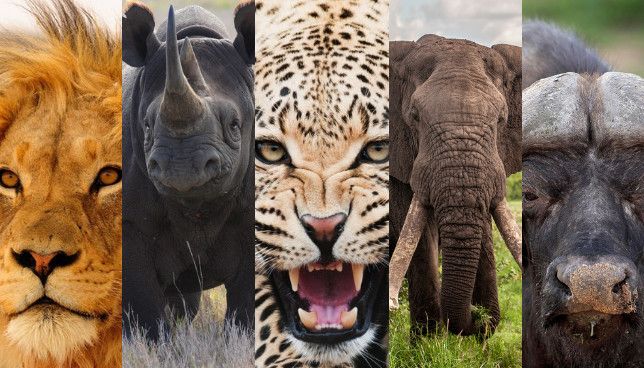
A Big Five focused wildlife tour in Africa is the most traditional entry point for first time safari goers, typically requiring five to seven game drives because the leopard is elusive and the rhino restricted in range. Destinations like the Ngorongoro Crater provide a condensed arena where all five coexist, though sightings are never guaranteed. The emotional arc follows a pattern: the first lion sighting spikes adrenaline, but by the third you observe social dynamics rather than counting bodies. Nomara Safaris advises clients not to obsess over the list but to remain open to the unexpected. A honey badger on a night drive or a serval hunting in tall grass frequently outranks the Big Five in post trip surveys. However, if the list matters, we design routes that maximise statistical probability without sacrificing the serenity of the bush.
The Great Migration focused wildlife tour in Africa requires precise timing and flexible routing because wildebeest do not consult guidebooks. Nomara Safaris monitors real time reports from our guide networks, allowing us to reposition vehicles at short notice. A river crossing observed from the right bank with the sun behind you is a definitive image of wild Africa, but without a guide who knows crossing points and behavioural tells, you may stare at an empty river for three days. We recommend five nights in the northern Serengeti or Masai Mara during peak season to maximise your chances. This safari is not for the inflexible traveler; you must wake early, stay out late, and change plans at a moment’s notice. Nomara Safaris empowers our guides to make autonomous decisions, as their local knowledge separates a mediocre Migration safari from a life changing one.
For travelers focused specifically on primate wildlife tours in Africa, the choice between Uganda and Rwanda is budget dependent. Rwanda’s advantages are logistical: a short drive from Kigali to Volcanoes National Park, high guiding standards, and a polished, premium atmosphere. Uganda’s gorilla experience is more variable but more affordable, with permits at USD 800 compared to Rwanda’s USD 1,500. At the apex of wildlife tours in Africa sits the luxury private safari, defined by exclusive use of a vehicle and guide, high end lodges, and complete customisation. Nomara Safaris exclusively designs luxury private wildlife tours in Africa for clients who value privacy and flexibility. A primate focused safari is physically demanding, requiring reasonable fitness, proper hiking boots, and preparation for mud and steep slopes. But the reward, looking into a gorilla’s eyes, is unmatched.
Tanzania is the heavyweight champion for wildlife tours in Africa, boasting the Serengeti National Park, covering 14,750 square kilometres, and the Ngorongoro Crater, a volcanic caldera 600 metres deep. A single day on the crater floor can yield the Big Five before lunch on many wildlife tours in Africa. The Serengeti is the primary stage for the Great Migration, and its different sectors offer distinct landscapes and seasonal game concentrations. Infrastructure is well developed, with a network of airstrips enabling fly in safaris. However, the Serengeti can feel crowded during peak season. Nomara Safaris mitigates this by booking private conservancies bordering the park where vehicle density is strictly limited. These conservancies also allow night drives and off road driving, activities prohibited in the national park itself, offering a superior experience for discerning travelers.
Kenya’s reputation for wildlife tours in Africa rests heavily on the Masai Mara National Reserve, but the private conservancies bordering the reserve offer a more exclusive and less frenetic experience. Off road driving is permitted in most conservancies, and night game drives and walking safaris are possible, adding significant value. For travelers seeking a premium wildlife tour in Africa, a conservancy based itinerary in Kenya delivers exceptional intimacy and flexibility. The Mara North, Olare Motorogi, and Naboisho conservancies limit vehicle numbers and allow night drives, creating a genuinely exclusive atmosphere. Kenya also offers Laikipia in the north, a landscape of rolling hills where endangered species like the Grevy’s zebra and reticulated giraffe thrive. Nomara Safaris often recommends Kenya for second time safari goers who have already experienced Tanzania’s crater.
Uganda is the most underrated destination for wildlife tours in Africa, with ecological diversity allowing you to track mountain gorillas in Bwindi, chimpanzees in Kibale, and transition to the savannah of Queen Elizabeth National Park for traditional game drives. Uganda’s wildlife tours in Africa are generally less expensive than Rwanda’s for gorilla trekking, with permits at USD 800 compared to USD 1,500, and the country feels more genuinely wild. The Kazinga Channel boat safari in Queen Elizabeth is among the finest in Africa, offering close encounters with hundreds of hippos and elephants crossing the channel. The downsides are real: Ugandan roads are challenging, with longer transfer times, and luxury accommodation options are fewer, though the ones that exist are world class. For the traveler who values biodiversity over easy transfers, Uganda is an unmatched choice.
Rwanda has positioned itself as the luxury destination for primate focused wildlife tours in Africa, with a permit price of USD 1,500 that buys an experience polished to a high sheen. Shorter drives from Kigali to Volcanoes National Park, excellent porter training, and a sighting success rate approaching 98 percent make Rwanda the choice for travelers with limited time. You can land in Kigali, trek gorillas for two days, and fly out within five nights without long road transfers. Beyond gorillas, Rwanda offers chimpanzee trekking in Nyungwe Forest National Park, one of the most biodiverse montane rainforests in Africa, complete with a canopy walk. Akagera National Park in the east has reintroduced lion and black rhino, creating a classic Big Five savannah experience. Nomara Safaris offers Rwandan itineraries for clients who prioritise comfort, predictability, and ease of travel.
The Kenya versus Tanzania debate is the most common deliberation among first time safari planners booking wildlife tours in Africa. Tanzania’s Serengeti is larger, wilder, and more remote than Kenya’s Masai Mara, offering unbounded space where you can drive for hours without seeing another vehicle. However, Tanzania’s infrastructure is less developed, with longer driving distances between parks. Kenya’s Masai Mara is smaller but more accessible, with a higher density of excellent lodges and a more developed network of internal airstrips. For the first time traveler on a standard wildlife tour in Africa of seven to ten days, Kenya offers easier logistics. For the traveler prioritizing wilderness, Tanzania’s Serengeti is superior. Nomara Safaris often recommends a combined itinerary for clients with ten to fourteen days, flying from the Serengeti’s northern sector into the Masai Mara’s southern sector for seamless wildlife tours in Africa that follow the Migration across the border.
For travelers focused on primate wildlife tours in Africa, choose Rwanda if budget allows and you want the most seamless, luxurious, and predictable gorilla trekking experience. Choose Uganda if you want to extend your wildlife tours in Africa to include savannah parks and chimpanzee trekking, or if you are willing to trade polish for lower costs and a more rugged sense of adventure. Neither choice is wrong. Uganda offers more diverse ecosystems overall, while Rwanda offers superior infrastructure and shorter transfer times. The permit price difference is significant: at USD 800 for Uganda versus USD 1,500 for Rwanda, a family of four saves USD 2,800 by choosing Uganda. But the Rwandan experience is undeniably smoother, with paved roads and lodges closer to the park entrance. Nomara Safaris presents both options clearly, allowing you to decide based on your balance of budget and convenience.
It is a mistake to frame game drives and gorilla trekking as competing activities within wildlife tours in Africa; they are deeply complementary. The game drive is about the expansive gaze, scanning horizons, feeling the immensity of the landscape, watching herds move across the plains. Gorilla trekking is active, physically demanding, and intensely private. The contrast heightens appreciation for both. For the traveler designing a ten to fourteen day wildlife tour in Africa, we recommend including both modalities, scheduling the gorilla trekking in the middle to allow rest days on either side. A typical sequence might begin with three days of savannah game drives to acclimatise, then two days of gorilla trekking for the emotional peak, then two final days of lighter game viewing to decompress. Travelers who have done this combination consistently report that the gorilla trekking is the emotional peak, but the game drives provide the narrative arc.
Understanding the true cost of wildlife tours in Africa requires moving beyond the headline tour price. Park fees, permits, internal flights, and gratuities can add 30 to 50 percent to the base package price.
| Tour Type | Duration | Daily Cost per Person (USD) | Typical Inclusions |
|---|---|---|---|
| Budget Group Camping | 7 to 10 days | 150 to 300 USD | Shared vehicle, basic camping, cook, park fees |
| Mid-Range Lodge Safari | 7 to 10 days | 350 to 600 USD | Shared vehicle or small group, lodge accommodation, most meals |
| Luxury Private Safari | 7 to 10 days | 800 to 1,500 USD | Private vehicle and guide, high end lodges, all meals and drinks |
| Premium Luxury Safari | 10 to 14 days | 1,500 to 2,500+ USD | Private guide, top tier lodges, internal flights, all inclusive |
This pricing table is a strategic starting point, not a fixed quotation. The daily cost fluctuates based on season, with low season discounts of 30 to 40 percent common in April, May, and November. Group size matters; solo travellers pay a significant single supplement. The gap between Mid-Range and Luxury purchases three things: vehicle exclusivity, guiding quality, and lodge location. For many travellers, the sweet spot is the lower end of the Luxury Private Safari range, approximately 800 to 1,000 USD per day for wildlife tours in Africa.
The dry season, running from June through October, is the peak period for wildlife tours in Africa. Without rain, surface water shrinks to permanent rivers and waterholes, and animals congregate around them, making sightings predictable. Vegetation thins out, removing cover. The dry season coincides with the most dramatic river crossings of the Great Migration from July through October. The skies are clear, temperatures moderate, and malaria risk drops slightly. However, the dry season has three drawbacks: higher prices, with lodges charging peak rates up to 50 percent more; higher crowds, with the Seronera area feeling like a traffic jam; and dust, with unsealed roads generating thick plumes that coat everything. For first time visitors constrained to school holidays, the dry season is the pragmatic choice.
For those with flexibility, the green season from November through May offers prices that drop by 30 to 50 percent for wildlife tours in Africa, with parks dramatically less crowded. The landscape transforms to vibrant green, with wildflowers and newborn antelope calves appearing in staggering numbers, particularly the wildebeest calving in the southern Serengeti from January to March. This calving season produces a predator frenzy that rivals the river crossings. Rain usually falls in afternoon storms that clear quickly, leaving mornings and evenings clear for game drives. For the budget conscious traveller or repeat visitor, green season wildlife tours in Africa offer a serene, beautiful, and affordable alternative. The drawbacks are real: thicker vegetation makes spotting leopards and rhino more difficult, and some lodges close during April and May. But for those willing to accept trade offs, the green season delivers exceptional value.
To witness the Great Migration on your wildlife tour in Africa, align your dates with the herds. From December through March, the herds are on the southern Serengeti short grass plains for calving season, where predator action is intense. From April through June, the herds move west and north through the central Serengeti and western corridor, with Grumeti River crossings occurring in May and June. From July through October, the herds are in the northern Serengeti and the Masai Mara, crossing the Mara River repeatedly in the most famous window. A common mistake is assuming that visiting the Masai Mara in August guarantees a crossing; it does not. Crossings are erratic, triggered by rainfall and herd pressure. Nomara Safaris recommends five nights in the northern Serengeti or Mara during peak season to maximise your chances, positioning you in mobile camps that can relocate if the herds shift.
A typical day on wildlife tours in Africa follows a rhythm dictated by the animals. You are woken before dawn, between 5:00 and 5:30 AM, with coffee delivered to your veranda. You dress in layers and meet your guide at the vehicle by 6:00 AM. The morning drive lasts three to four hours, covering twenty to fifty kilometres. Around 9:00 AM, you stop for a bush breakfast or return to the lodge. The middle of the day, from 10:30 AM to 3:30 PM, is spent at the lodge. This is the hottest period, when most large mammals sleep. Wise travellers use this time for a siesta, a swim, or editing photos. The afternoon drive departs around 3:30 PM and continues until sunset at roughly 6:30 PM, taking advantage of cooling temperatures and increasing animal activity.
The time between game drives on wildlife tours in Africa is not dead time; it is an essential component of the safari aesthetic. Luxury lodges design their common areas for relaxation, featuring dining areas open to the bush with fireplaces for chilly mornings. A swimming pool, often infinity edged to overlook a waterhole, provides a refreshing break. The food is excellent, with chefs using local ingredients like fresh tilapia from Lake Victoria and Ugandan arabica coffee. Many lodges offer guided nature walks, bird watching from a hide, or visits to a local school for ethical community engagement. The key psychological shift is slowing down. In normal life, travel is about maximising activity, but on safari the valleys between the peaks, the hours reading on a veranda listening to a fish eagle, are where you actually decompress.
The afternoon drive on wildlife tours in Africa departs around 3:30 PM, taking advantage of cooling temperatures and increasing activity as the day transitions toward sunset. Predators become more active, prey leave the shade to feed, and golden light creates spectacular photographic conditions. The drive continues until sunset, often stopping at a scenic lookout for sundowners, a classic safari ritual of drinks as the sun dips below the horizon. Many lodges offer night drives after dinner, where permitted, using spotlights to find nocturnal species. On a night drive, you may see bushbabies leaping, genets stalking, aardvarks emerging, and occasionally leopards on the move. This is a different world from the daytime savannah, adding another dimension to wildlife tours in Africa.
The choice between a luxury lodge and a permanent tented camp on wildlife tours in Africa is largely aesthetic. A lodge is a permanent structure built from local stone and thatch, with multiple rooms spread across a property. Lodges have larger common areas, bigger swimming pools, and more dining options. A permanent tented camp is not camping in the traditional sense. Tents are raised on wooden platforms, each the size of a small apartment, with furnishings often more bespoke than lodges. The main difference is sensory: in a tented camp, you hear the bush. When a lion roars at 2:00 AM, the canvas vibrates. Some travelers find this thrilling; others prefer solid walls. Both options at the luxury level include private verandas, outdoor showers, king beds, and gourmet food. Nomara Safaris helps you choose based on your tolerance for sensory immersion.
One of the most consequential decisions in planning wildlife tours in Africa is whether to stay inside the national park or outside its gates. Staying inside costs more, sometimes 50 to 100 percent more, but delivers three advantages. First, you access the park during golden hours without queuing at a gate. Second, you can conduct night game drives or stay out past sunset on a private concession. Third, you are immersed in the environment 24 hours a day; wildlife passes through the lodge itself. Staying outside is cheaper but forces you to waste the first hour of morning light on transit and the last hour of evening light on the return drive. On a seven day wildlife tour in Africa, staying outside costs fourteen hours of prime game viewing time. A four night safari inside the park is superior to a seven night safari outside it.
Mobile tented camps, used for following the Great Migration, are erected and dismantled seasonally to move with the herds. They are less luxurious than permanent camps, with simpler furnishings, bucket showers, and no swimming pools. But they offer the unmatched advantage of waking up exactly where the herds are. When wildebeest cross the Mara River, mobile camps are positioned within a short drive of the crossing points. For travelers on wildlife tours in Africa focused on the Migration, a mobile camp is the only way to maximise your chances. For your wildlife tours in Africa, we recommend a mix: a luxury lodge for the first two nights, a permanent tented camp for the middle, and a mobile camp if you are Migration chasing. Avoiding budget camping is advisable unless your tolerance for basic conditions is high.
This 7 day Tanzania itinerary combines the Ngorongoro Crater with the Serengeti. Day one: arrive Kilimanjaro, transfer to Arusha. Day two: drive to Ngorongoro, afternoon crater drive. Day three: morning crater drive, then drive to central Serengeti. Day four: full day in central Serengeti focusing on resident predators. Day five: drive to northern Serengeti for potential river crossings. Day six: morning game drive, fly back to Arusha. Day seven: depart. This wildlife tour in Africa hits all highlights while minimising driving. Cost range: mid range 3,500 to 5,000 USD; luxury 7,000 to 10,000 USD.
For travelers who cannot choose between Kenya and Tanzania. Day one: arrive Nairobi. Days two to three: Masai Mara. Day four: fly to Serengeti. Days five to six: Serengeti. Day seven: Ngorongoro. Day eight: crater drive. Day nine: drive to Arusha. Day ten: depart. This requires three internal flights but delivers unparalleled diversity. Cost range: luxury 10,000 to 15,000 USD.
For a short primate focused wildlife tour in Africa. Day one: arrive Entebbe, drive to Bwindi. Day two: gorilla trekking (USD 800 permit). Day three: drive to Queen Elizabeth National Park. Day four: morning game drive, afternoon Kazinga Channel boat safari. Day five: morning game drive, return to Entebbe. Cost range: mid range 2,500 to 3,500 USD; luxury 4,000 to 6,000 USD excluding permit.
The ultimate primate pilgrimage. Day one: arrive Kigali. Day two: gorilla trekking in Volcanoes (USD 1,500 permit). Day three: drive to Bwindi, Uganda. Day four: gorilla trekking in Bwindi (USD 800 permit). Day five: drive back to Kigali. Day six: depart. Tracking gorillas in two different habitats provides a comparative understanding. Cost range: luxury 8,000 to 12,000 USD including both permits.
For travelers who want both adventure and relaxation. After a 7 day Tanzania safari, fly to Zanzibar. Spend 5 nights: 2 in Stone Town, 3 on a northern or eastern beach resort. Zanzibar offers diving, snorkelling, dhow cruises, and Swahili coastal cuisine. Cost range for the beach extension: mid range 1,500 to 2,500 USD; luxury 3,000 to 5,000 USD, excluding the safari portion.
Designing wildlife tours in Africa is a consultative partnership, not a transaction. At Nomara Safaris, we begin every relationship with a one hour discovery call. We ask about your previous travel experiences, fitness level, photography goals, and tolerance for risk. The answers shape everything. Our custom planning process follows four steps: consultation, proposed itinerary with three routing options, refinement, and final reservation locking with permit payments. You have direct access to your designer via WhatsApp. Our ground network includes relationships with over two hundred lodges and a roster of senior guides, ensuring your wildlife tours in Africa run smoothly with contingency plans for weather, road conditions, and unexpected animal movements.
Off the shelf wildlife tours in Africa are designed for the average traveler, but the average traveler does not exist. A tailored itinerary aligns with your chronotype, pace preference, and social needs. A photographer needs a different vehicle, one with removable doors and camera mounts, than a honeymooning couple who might prioritise a private dinner in the bush. A family with teenagers needs a different lodge, one with a pool and reliable Wi Fi, than a retired couple who might value a spa and quiet library. Nomara Safaris builds these preferences into the itinerary, resulting in wildlife tours in Africa that feel effortless because they were designed for you. When you choose us, you have a partner available 24 hours a day throughout your journey.
The three technical pillars of a successful wildlife tour in Africa are lodge selection, routing, and season strategy. Lodge selection balances location, style, and budget. We know which lodges deliver on their promises. Routing uses bush flights and logical overnight stops to maximise fresh energy for each new location. Season strategy is our specialist domain. We know that the southern Serengeti in February delivers cheetah hunts daily, but that same area in April is a muddy, empty liability. We know that the Masai Mara in October still has river crossings, but the crowds have thinned. When you book wildlife tours in Africa with Nomara Safaris, you are booking decades of on the ground data synthesised into a seamless experience.
The minimum effective duration for a genuine wildlife tour in Africa is five nights, assuming you fly directly into a single park like the Masai Mara or Serengeti. With five nights, you have four full game drive days, enough to cover core habitat zones and statistically encounter major species. However, a five night safari is a sample, not deep immersion. The optimal duration for first time travelers is seven to ten nights, allowing for two or three distinct ecosystems. This duration also builds in a rest day to prevent safari fatigue. For travelers combining gorilla trekking with savannah game drives, ten to fourteen nights is recommended. The common mistake is trying to fit four parks into seven days, spending half your waking hours in transit.
Safety on wildlife tours in Africa must be considered across three categories: wildlife, crime, and health. Regarding wildlife, risks are manageable through strict guide instructions. Hippos and Cape buffalo cause the most fatalities, not lions or leopards. Your guide will enforce rules: remain seated, do not approach rivers after dark, and never walk between a hippo and its water source. Regarding crime, lodges and camps are isolated compounds with professional security. The greatest risk is opportunistic theft in urban centres during airport transfers; Nomara Safaris uses private transfers. Regarding health, malaria prophylaxis is essential for savannah destinations, and yellow fever vaccination is required for many countries. With these precautions, a safari presents no greater risk than travel to rural Southeast Asia.
A well designed wildlife tour in Africa in East Africa will reliably include elephant, lion, Cape buffalo, zebra, wildebeest, giraffe, hippopotamus, crocodile, spotted hyena, impala, warthog, baboon, and abundant birdlife. Leopard sightings are probable but not guaranteed; a seven day safari yields a leopard sighting approximately 70 percent of the time. Cheetah are visible on open plains, particularly in the southern Serengeti. Rhino are the most difficult of the Big Five; Ngorongoro Crater and Ol Pejeta Conservancy offer the best chances. For specialised species like mountain gorilla, book a primate focused itinerary. The magic is not in the count but in the behaviour: watching a lioness teach her cubs to stalk or a herd of elephant mourning a dead matriarch.
There is no legal requirement to hire a guide for wildlife tours in Africa in most national parks, but the practical necessity is absolute. In East Africa, self driving is strongly discouraged and in some cases prohibited. The roads in parks like the Serengeti and Masai Mara are unmarked and can lead you into areas with no cell reception and dangerous wildlife. A guide brings daily intelligence: which prides of lions have been seen where, which waterhole is attracting elephants. Without this local knowledge, your safari becomes an aimless drive hoping for luck. Guides are also trained in off road recovery, first aid, wildlife behaviour interpretation, and radio protocols for emergencies. At Nomara Safaris, we consider the guide the single most important variable in your safari’s success. We do not offer self drive options.
The decision to invest in a wildlife tour in Africa is an investment in memories that outlast any material possession. The moment the lion roars at 2:00 AM vibrating through canvas, the moment the gorilla reaches out inches from your face, the moment the sun sets over the Serengeti painting clouds in violet and orange, these become part of your internal landscape forever. At Nomara Safaris, we do not see ourselves as booking agents. We see ourselves as stewards of those moments, orchestrating permits, flights, lodge bookings, and vehicle assignments so you can be fully present for the wonder. Contact Nomara Safaris to schedule a consultation. We will respond within 24 hours. There is no obligation. Your journey begins with a conversation about wildlife tours in Africa. We look forward to guiding you home to the wild.