
There is no wildlife spectacle on earth that compares to the Great Migration. More than 1.5 million wildebeest and 200,000 zebra move in a continuous, ancient loop through the Serengeti and Masai Mara, driven by rainfall and the search for fresh grass. The river crossings, where the herds plunge into crocodile infested waters, are the most dramatic wildlife moments captured on film. But the Migration is not a single event. It is a year round cycle of calving, rutting, and moving. For travelers booking Great Migration wildlife tours, understanding this cycle is essential. You do not want to arrive at the Mara River in August expecting chaos, only to find that the herds have not yet arrived or have already crossed. At Nomara Safaris, we have spent decades tracking the Migration in real time, positioning our clients in the right place at the right moment. This guide will walk you through the annual cycle, the best destinations for each phase, the lodge and camp options that put you closest to the action, and the itineraries that maximise your chances of witnessing a river crossing. Whether you want the drama of the Mara River or the predator frenzy of calving season, Great Migration wildlife tours deliver the pinnacle of African wildlife viewing.
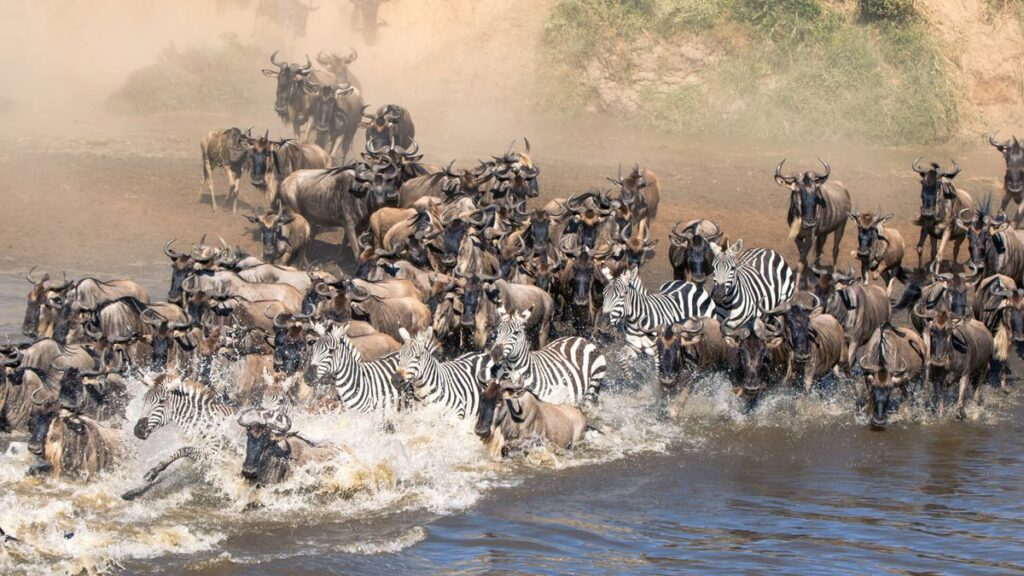
From December through March, the herds congregate on the short grass plains of the southern Serengeti and the Ngorongoro Conservation Area. This is calving season. Within a three week window, typically in February, half a million wildebeest calves are born. The synchronisation is a survival strategy. By giving birth all at once, the herds overwhelm the predator population. The lions, cheetahs, and hyenas cannot eat all the calves. For travelers booking Great Migration wildlife tours during calving season, the predator action is relentless. Cheetahs hunt daily on the open plains. Lions target the vulnerable newborns. Hyenas work in clans to separate calves from their mothers.
The calving season is the best time for Great Migration wildlife tours focused on predator prey interaction. The plains are open, the light is spectacular, and the vehicle density is lower than during river crossing season. The drawback is the risk of rain, which can make some roads impassable. Nomara Safaris recommends February as the optimal month for calving season, balancing calf density, predator activity, and weather. The lodges in the southern Serengeti, including mobile camps that follow the herds, offer front row seats to the action.
From April through June, the herds move west and north through the central Serengeti and the western corridor. This is the rutting season, when the wildebeest males compete for females. The Grumeti River crossings occur typically in May and June. The Grumeti is narrower than the Mara River, and the crocodiles are larger, some exceeding five metres. The crossings are less dramatic than the Mara River plunges but more intimate. You are closer to the action. The crocodile attacks are savage and swift.
For Great Migration wildlife tours focused on the Grumeti, the western corridor is the destination. The Grumeti Reserves, a private concession managed by Singita, offers exclusive access with very low vehicle density. The mobile camps in the area move with the herds. The drawback is that the Grumeti crossings are less predictable than the Mara River crossings. Some years produce dozens of crossings; other years only a handful. Nomara Safaris recommends a minimum of four nights in the western corridor during May and June to maximise your chances.
From July through October, the herds mass in the northern Serengeti and cross the Mara River into Kenya’s Masai Mara. This is the most famous phase of the Migration, and the most photographed. The Mara River is wide and deep. The crocodiles are numerous. The crossings are chaotic, with wildebeest plunging from high banks, drowning in the current, and being snatched by reptiles. The far bank becomes a scramble of panicked hooves. The entire spectacle lasts perhaps fifteen minutes, but it imprints on your memory for a lifetime.
Great Migration wildlife tours focused on the Mara River crossings require strategy. The crossings are not daily events. They are unpredictable, triggered by rainfall patterns, herd pressure, and the phase of the moon. A week in the northern Serengeti during August might produce five crossings or zero. To maximise your chances, Nomara Safaris recommends a minimum of five nights in the northern Serengeti or Masai Mara, staying in a mobile camp that can relocate to follow the herds. September and early October offer the best combination of crossing activity and manageable crowds. The peak August crowds can be intense, particularly on the Kenyan side.
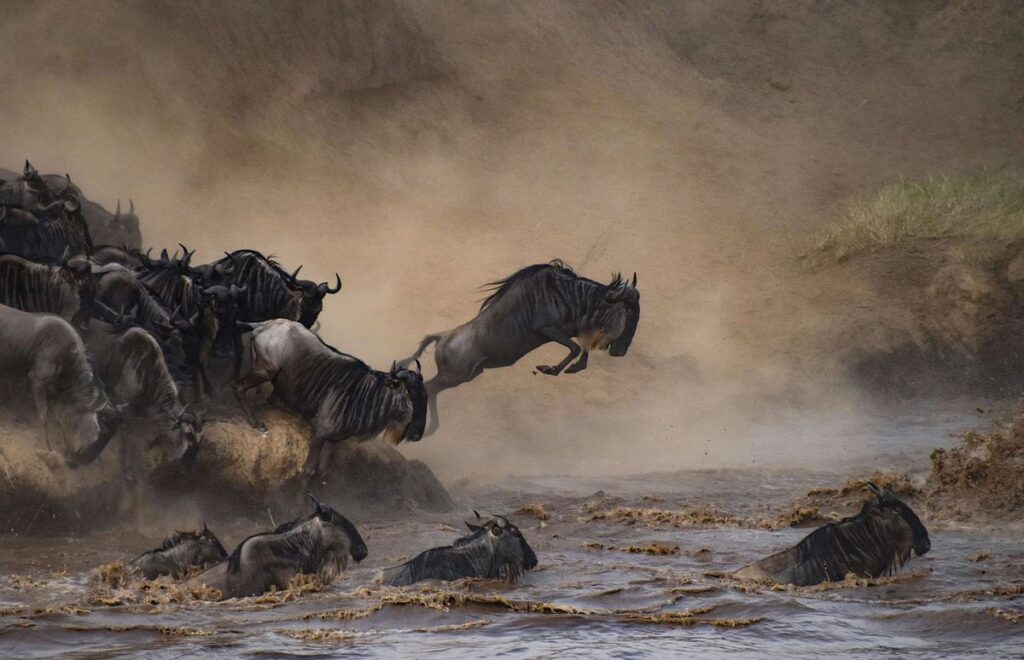
The northern Serengeti is the Tanzanian side of the Mara River crossings. The advantage of staying in Tanzania is lower vehicle density. The Kenyan side of the Mara River is busier, with more lodges and more vehicles. The Tanzanian side has fewer camps and stricter vehicle limits. The disadvantage is that the crossing points are fewer and the roads are rougher. But for travelers booking Great Migration wildlife tours who want to avoid crowds, the northern Serengeti is the better choice.
The lodges in the northern Serengeti range from permanent camps like Sayari and Lamai to mobile camps that relocate seasonally. The mobile camps are the best option for Great Migration wildlife tours because they can move to follow the herds. When the wildebeest shift from one crossing point to another, your camp moves with them. Nomara Safaris recommends a minimum of five nights in a mobile camp in the northern Serengeti for peak Migration viewing.
The Masai Mara is the Kenyan side of the Mara River crossings. The advantage of staying in Kenya is accessibility. The roads are better, the lodge density is higher, and the private conservancies offer exclusive access. The disadvantage is the vehicle density. During peak season, the Mara River crossing points can be crowded, with dozens of vehicles lining the banks. However, staying in a private conservancy like Mara North or Olare Motorogi gives you priority access and allows off road driving.
For Great Migration wildlife tours focused on the Kenyan side, Nomara Safaris recommends staying in a private conservancy and driving into the national reserve for the crossings. This hybrid model gives you the exclusivity of the conservancy for daily game drives and the access to the crossing points when the action begins. The Mara River crossings on the Kenyan side are more reliably photographed because the banks are accessible.
For travelers booking Great Migration wildlife tours who prefer predator action over river crossings, the southern Serengeti during calving season is the destination. The Ndutu region, on the border between the Serengeti and Ngorongoro Conservation Area, is the epicentre. The open plains support thousands of wildebeest and zebra. The cheetah and lion sightings are exceptional. The vehicle density is lower than during river crossing season.
The lodges in the southern Serengeti include mobile camps that operate only during calving season, from December to March, as well as permanent lodges like Ndutu Safari Lodge and Lake Masek Tented Camp. Nomara Safaris recommends February for the peak of calving season. The predator action is daily, and the light is spectacular.
For Great Migration wildlife tours, mobile camps are the gold standard. These camps are erected at the start of the season and moved as the herds shift. They are less luxurious than permanent lodges, with simpler furnishings, bucket showers, and no swimming pools. But they offer the unmatched advantage of being positioned within a short drive of the crossing points or the calving grounds. When the wildebeest mass on the banks of the Mara River, you are already there. When the herds shift to a new crossing point, your camp moves with them.
Mobile camps are available during the river crossing season from July to October in the northern Serengeti and Masai Mara, and during calving season from December to March in the southern Serengeti. Nomara Safaris has preferred partnerships with the best mobile camp operators. We recommend a minimum of four to five nights in a mobile camp to maximise your chances of witnessing a crossing or a calving hunt.
For travelers who prioritise comfort over proximity, permanent lodges in key locations offer excellent access to the Migration. In the northern Serengeti, Sayari Camp and Lamai Serengeti are permanent properties with river frontage. In the Masai Mara, Governors’ Camp and Angama Mara are iconic properties with access to crossing points. In the southern Serengeti, Ndutu Safari Lodge is a classic property with a small number of rooms and an unbeatable location.
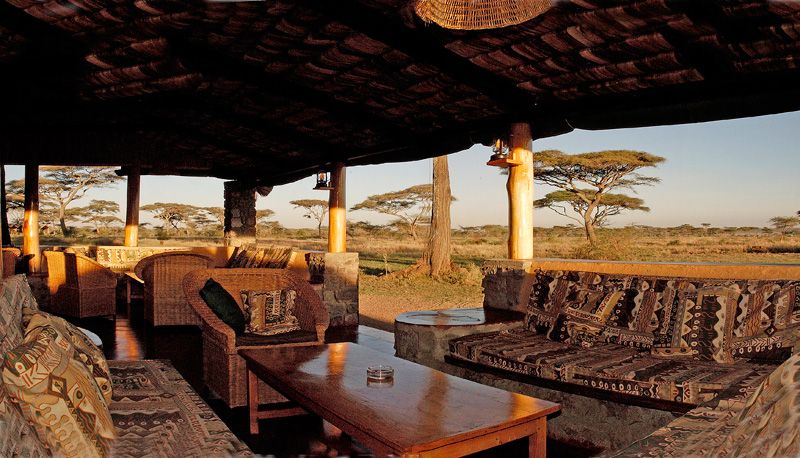
The trade off for permanent lodges is that they cannot move. If the herds shift away from your lodge’s location, you have long drives to reach them. For Great Migration wildlife tours, Nomara Safaris recommends mobile camps for travelers whose primary goal is the Migration and permanent lodges for travelers who want a balance of luxury and access.
For Great Migration wildlife tours on the Kenyan side, private conservancies offer the best of both worlds. You stay in a luxury lodge or tented camp in a conservancy with excellent year round game viewing. When the Migration arrives, you drive into the national reserve for the crossings. The conservancies offer off road driving and night drives, which you can enjoy even when the herds are not present.
Nomara Safaris recommends Mara North Conservancy, Olare Motorogi Conservancy, and Naboisho Conservancy for Great Migration wildlife tours in Kenya. These conservancies limit vehicle density and offer excellent guiding. The lodges in these conservancies include Mahali Mzuri, Olare Mara Kempinski, and Naboisho Camp.
This 7 day Great Migration wildlife tour focuses on the Mara River crossings. Day one: arrive Kilimanjaro, charter flight to the northern Serengeti. Days two to six: daily game drives along the Mara River, monitoring crossing points with your guide. Mobile camp accommodation. Day seven: charter flight to Kilimanjaro for departure. Cost range: luxury USD 8,000 to USD 12,000.
This 7 day Great Migration wildlife tour focuses on the Kenyan side. Day one: arrive Nairobi, charter flight to the Masai Mara. Days two to six: daily game drives in the Mara, staying in a private conservancy with access to the reserve. Day seven: charter flight to Nairobi for departure. Cost range: luxury USD 7,000 to USD 10,000.
This 5 day Great Migration wildlife tour focuses on predator action during calving season. Day one: arrive Kilimanjaro, charter flight to the southern Serengeti. Days two to four: daily game drives on the short grass plains, watching cheetah and lion hunts. Day five: charter flight to Kilimanjaro for departure. Cost range: luxury USD 5,000 to USD 7,000.
This 10 day Great Migration wildlife tour follows the herds from calving to the Grumeti. Day one: arrive Kilimanjaro. Days two to four: southern Serengeti for calving season. Day five: charter flight to the western corridor. Days six to eight: Grumeti River crossings. Day nine: charter flight to Kilimanjaro. Day ten: depart. Cost range: luxury USD 12,000 to USD 15,000.
September and early October offer the best combination of river crossing activity and manageable crowds for Great Migration wildlife tours. The herds are in the northern Serengeti and Masai Mara from July through October, but August is the busiest month with peak crowds and higher prices. September still has regular crossing activity, but the vehicle density is lower. October can still deliver crossings, particularly early in the month. Nomara Safaris recommends booking a mobile camp for five nights in September.
Yes, you can see the Great Migration in both Tanzania and Kenya on a single Great Migration wildlife tour. The herds cross from the Serengeti into the Masai Mara typically in July and return in October. To follow them, you need a multi country itinerary with charter flights between the two countries. A typical combined itinerary might include four nights in the northern Serengeti followed by four nights in the Masai Mara. Nomara Safaris coordinates all cross border logistics including visas and flights.
Calving season in the southern Serengeti from January to March offers more guaranteed predator action than the river crossings for Great Migration wildlife tours. While the river crossings are more dramatic, they are unpredictable. You might wait for days without seeing a crossing. Calving season, by contrast, delivers daily hunts. The cheetah sightings are exceptional, and the open plains allow you to watch chases unfold. For travelers who prioritise guaranteed action over dramatic spectacle, Nomara Safaris recommends calving season.
You need a minimum of five nights for Great Migration wildlife tours focused on river crossings. The crossings are unpredictable, and a shorter itinerary leaves too much to chance. Five nights gives you four full days on the ground, which provides a reasonable statistical probability of witnessing a crossing. For calving season, three to four nights is sufficient because the action is daily. For combined itineraries following the herds, seven to ten nights is recommended. Nomara Safaris advises longer itineraries for travelers whose primary goal is the Migration.
The Great Migration is the greatest wildlife spectacle on earth. But it is also the most logistically complex. You need the right season, the right location, the right guide, and the right camp. At Nomara Safaris, we have spent decades tracking the herds. We know which crossing points are active, which mobile camps have the best positions, and which guides have the best track records. Contact Nomara Safaris to begin planning your Great Migration wildlife tour. Tell us your preferred season and duration. We will respond with a proposed itinerary within 48 hours.