

The Kenya versus Tanzania debate is the most common deliberation among first time safari planners. Both countries offer world class wildlife, experienced guides, and excellent lodges. Both host the Great Migration. Both have the Big Five. But the differences, once you understand them, are significant. For travelers booking Kenya vs Tanzania wildlife tours, the choice is not about which country is objectively better. It is about which country is better for you. Tanzania’s Serengeti is larger, wilder, and more remote than Kenya’s Masai Mara. The feeling in the Serengeti is one of unbounded space, where you can drive for hours without seeing another vehicle. Kenya’s Masai Mara is smaller but more accessible, with a higher density of excellent lodges and a more developed network of internal airstrips. At Nomara Safaris, we design Kenya vs Tanzania wildlife tours in both countries, and we have helped hundreds of clients make this decision. This comprehensive guide will walk you through every factor: the Great Migration, the Big Five, the lodges, the costs, the crowds, the logistics, and the intangible differences. By the end of this Kenya vs Tanzania wildlife tours comparison, you will know exactly which side of the border is calling you.
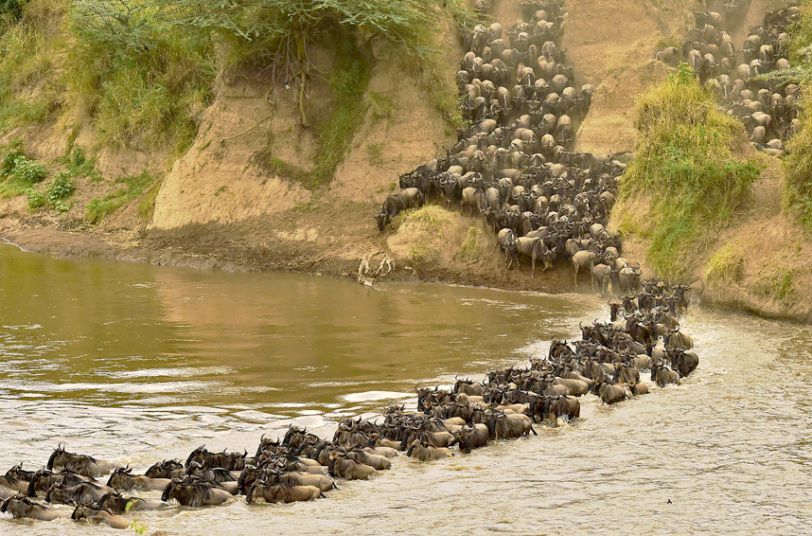
The Serengeti is the primary stage for the Great Migration. For travelers booking Kenya vs Tanzania wildlife tours, understanding this cycle is essential. The herds spend approximately nine months of the year in Tanzania, moving from the southern plains for calving from December to March, through the western corridor for the Grumeti River crossings from April to June, and into the northern Serengeti for the Mara River crossings from July to October. The Serengeti covers 15,000 square kilometres, ten times the size of Kenya’s Masai Mara. The vehicle density in the Serengeti is lower than in the Masai Mara, particularly outside the central Seronera area. The private concessions in the Grumeti and northern Serengeti offer exceptional exclusivity for Kenya vs Tanzania wildlife tours that prioritise solitude. The calving season from January to March is unique to Tanzania, with half a million wildebeest calves born on the short grass plains. The predator action during this period is relentless.
The drawback of the Serengeti for Kenya vs Tanzania wildlife tours is the infrastructure. The park is more remote. The roads are rougher. The distances between sectors are longer. To properly experience the Serengeti, you need internal flights. But for travelers who prioritise wilderness over accessibility, the Serengeti is the superior choice. The feeling of being the only vehicle on the endless plains is worth the extra logistics. Nomara Safaris designs Kenya vs Tanzania wildlife tours in the Serengeti with optimal flight routing to minimise transfer time and maximise game viewing.
The Masai Mara is the northern extension of the Serengeti ecosystem. For travelers booking Kenya vs Tanzania wildlife tours who want the classic image of wildebeest plunging into crocodile infested water, the Mara delivers. The herds are present from July to October, crossing the Mara River in dramatic fashion. The Mara is smaller than the Serengeti, approximately 1,500 square kilometres, but the wildlife density is higher because of the permanent water sources. The river crossings in the Mara are more reliably photographed than in the Serengeti because the banks are more accessible. For Kenya vs Tanzania wildlife tours focused on photography, the Masai Mara has a clear advantage. The infrastructure is excellent. The lodges are plentiful. The internal flight network is well established.
The drawback of the Masai Mara for Kenya vs Tanzania wildlife tours is the vehicle density. During peak season, the crossing points can be crowded, with dozens of vehicles lining the banks. The feeling is less wild than the Serengeti. For some travelers, this is an acceptable trade off. For others, the crowds diminish the experience. The private conservancies bordering the Mara offer a solution. When you book Kenya vs Tanzania wildlife tours that include conservancy stays, you get off road driving, night drives, and lower vehicle density.
For Kenya vs Tanzania wildlife tours focused on the Great Migration, the answer depends on your timing. If you want calving season from January to March, Tanzania is your only option. If you want Grumeti River crossings from April to June, again, Tanzania. If you want Mara River crossings from July to October, both countries offer excellent viewing. For Kenya vs Tanzania wildlife tours during these peak months, choose the Serengeti for lower vehicle density and a more remote experience. Choose the Masai Mara for easier logistics and more dramatic crossings. Nomara Safaris can design Kenya vs Tanzania wildlife tours for any season.
Tanzania offers the most reliable Big Five viewing in East Africa, making it a top choice for Kenya vs Tanzania wildlife tours focused on completing the classic safari checklist. The Ngorongoro Crater alone often produces lion, leopard, elephant, buffalo, and black rhino in a single morning descent. No other destination on earth offers such condensed, guaranteed sightings. For Kenya vs Tanzania wildlife tours, the crater is a game changer. The black rhino population is protected and visible on the open plains. The Serengeti adds exceptional lion and leopard viewing, with the Seronera valley known for its high predator density. Tarangire National Park offers elephant herds of up to 300 individuals during the dry season, with ancient baobab trees providing a stunning backdrop.
The drawback of Tanzania for Kenya vs Tanzania wildlife tours is that the parks are spread out. To see the full range, you need to visit multiple sectors. A typical Big Five itinerary includes Tarangire, the Ngorongoro Crater, and the Serengeti. The driving distances can be long, though internal flights solve this problem. For the dedicated Big Five seeker, Tanzania delivers. Nomara Safaris designs Kenya vs Tanzania wildlife tours that maximise your probability of completing the set.
Kenya offers exceptional Big Five viewing for Kenya vs Tanzania wildlife tours, with a caveat. The Masai Mara delivers lion, leopard, elephant, and buffalo in abundance. The lion prides are famous. The leopards along the Talek River are reliably seen. The rhino population in the Mara is small, and sightings are rare. To complete the Big Five on Kenya vs Tanzania wildlife tours in Kenya, you need to add a trip to Lake Nakuru National Park or Ol Pejeta Conservancy. Both offer reliable rhino viewing, including the last two northern white rhinos at Ol Pejeta.
The quality of the lion and leopard viewing in the Mara is outstanding. The private conservancies offer off road driving, which enhances your chances of finding leopards. For Kenya vs Tanzania wildlife tours, Kenya’s conservancy model gives you access that rivals the Ngorongoro Crater for predator viewing. The drawback is the extra travel for rhino. For travelers who prioritise the other four, Kenya is excellent.
For Kenya vs Tanzania wildlife tours focused on the Big Five, Tanzania is the winner. The Ngorongoro Crater’s reliable black rhino sightings give Tanzania a clear advantage. Kenya requires an extra destination to complete the set. However, if you are willing to add Lake Nakuru or Ol Pejeta, Kenya’s Big Five experience is exceptional. The predator viewing in the Masai Mara conservancies is arguably better than in the Serengeti. For Kenya vs Tanzania wildlife tours, the choice comes down to whether you prioritise the rhino or the off road experience.
Tanzania offers several private concessions within the Serengeti ecosystem. The Grumeti Reserves, operated by Singita, cover 140,000 hectares of private land. Vehicle density is extremely low, and off road driving is permitted. Klein’s Camp on the eastern boundary offers access to the less visited Loliondo area. For Kenya vs Tanzania wildlife tours prioritising solitude, Tanzania’s private concessions are a strong choice. The drawback is cost. These concessions are more expensive than Kenya’s conservancies and fewer in number.
Kenya’s private conservancies bordering the Masai Mara are more numerous and accessible. Mara North, Olare Motorogi, and Naboisho offer excellent exclusivity. Off road driving and night drives are permitted. Vehicle density is strictly capped. For Kenya vs Tanzania wildlife tours, Kenya’s conservancy model is more developed and offers more options across different budgets. Night drives are a major advantage, allowing you to see nocturnal species. In Tanzania’s national parks, night driving is prohibited.
Both countries offer excellent exclusivity for Kenya vs Tanzania wildlife tours. Kenya has more options at more price points, making it accessible to mid range travelers. Tanzania’s private concessions are more expensive but offer even lower vehicle density. For travelers on a mid range budget, Kenya’s conservancies offer better value. For travelers on a luxury budget, both countries deliver. The key difference is night drives. Kenya’s conservancies allow them. Tanzania’s do not except in the most expensive concessions.
When comparing Kenya vs Tanzania wildlife tours on cost, Tanzania’s park fees are higher. The Ngorongoro Crater fee is USD 80 per person per day. The Serengeti fee is USD 70 to USD 80. Kenya’s Masai Mara fee is similar, but Kenya does not have an equivalent to the Ngorongoro Crater fee. For Kenya vs Tanzania wildlife tours, Tanzania’s park fees are generally higher. Accommodation prices are similar in both countries. Luxury lodges range from USD 800 to USD 1,500 per night. Mid range options range from USD 300 to USD 600. Budget camping ranges from USD 150 to USD 250.
Internal flights are a significant cost for Kenya vs Tanzania wildlife tours, particularly for Tanzania. Flights from Arusha to the Serengeti cost approximately USD 300 round trip. In Kenya, flights from Nairobi to the Masai Mara cost approximately USD 250 to USD 400. Tanzania itineraries typically require more flights because you are covering more ground.
For Kenya vs Tanzania wildlife tours, Tanzania is slightly more expensive. A 7 day mid range safari in Kenya costs approximately USD 3,000 to USD 4,500 per person. A 10 day safari in Tanzania costs approximately USD 3,500 to USD 5,000. The difference is not dramatic. For most travelers, the choice between Kenya vs Tanzania wildlife tours should be based on experience, not cost.
Kenya is more accessible for international travelers booking Kenya vs Tanzania wildlife tours. Nairobi receives more direct flights than Kilimanjaro or Arusha. The roads from Nairobi to the Masai Mara are better than the roads from Arusha to the Serengeti. The drive to the Mara takes five to six hours. The drive to the Serengeti takes six to eight hours on rougher roads. Many travelers fly to the Serengeti to avoid the road.
A satisfying Kenya vs Tanzania wildlife tour in Kenya can be done in 7 days, focusing on the Masai Mara and Lake Nakuru. A satisfying tour in Tanzania requires 10 days to cover the Serengeti, Ngorongoro Crater, and Tarangire. For travelers with only one week, Kenya is the better choice. For travelers with 10 days or more, Tanzania’s additional time is well spent.
This 7 day Kenya vs Tanzania wildlife tour focuses on Kenya’s best. Day one: arrive Nairobi. Day two: fly to the Masai Mara, afternoon game drive. Days three to four: full day game drives in the Mara, staying in a private conservancy. Day five: fly to Lake Nakuru, afternoon rhino viewing. Day six: morning game drive, fly back to Nairobi. Day seven: depart. Cost range: mid range USD 3,000 to USD 4,500; luxury USD 7,000 to USD 10,000.
This 10 day Kenya vs Tanzania wildlife tour covers Tanzania’s northern circuit. Day one: arrive Kilimanjaro. Day two: drive to Tarangire for elephants. Day three: drive to Ngorongoro Crater rim. Day four: full day on the crater floor. Day five: drive to central Serengeti. Days six to seven: game drives in central Serengeti. Day eight: drive to northern Serengeti. Day nine: morning game drive, fly to Kilimanjaro. Day ten: depart. Cost range: mid range USD 3,500 to USD 5,000; luxury USD 8,000 to USD 12,000.
For travelers who cannot choose, this 12 day Kenya vs Tanzania wildlife tour combines both countries. Day one: arrive Nairobi. Days two to three: Masai Mara. Day four: fly to the Serengeti. Days five to seven: Serengeti game drives. Day eight: Ngorongoro Crater. Day nine: drive to Arusha. Day ten: depart. Cost range: luxury USD 10,000 to USD 15,000.
Which country has better wildlife viewing, Kenya or Tanzania?
Both countries offer exceptional wildlife viewing for Kenya vs Tanzania wildlife tours. Tanzania has the advantage of the Ngorongoro Crater, which delivers the Big Five reliably. Tanzania also has the larger Serengeti, where the Migration spends most of the year. Kenya has the Masai Mara, which offers higher wildlife density during the Migration months. The quality of guiding is excellent in both countries. For most travelers comparing Kenya vs Tanzania wildlife tours, the difference is not about which has better wildlife, but about which experience suits their travel style.
Is the Masai Mara or the Serengeti better for the Great Migration?
For Kenya vs Tanzania wildlife tours focused on the Great Migration, the Serengeti is better for calving season from January to March and for the Grumeti River crossings from April to June. The Masai Mara is better for the Mara River crossings from July to October, which are more dramatic and more reliably photographed. Neither is universally better. The answer depends on your timing and priorities for Kenya vs Tanzania wildlife tours.
Which country is more expensive for a safari?
Tanzania is slightly more expensive than Kenya for Kenya vs Tanzania wildlife tours. The park fees are higher, particularly the Ngorongoro Crater fee. The distances are larger, requiring more internal flights. A 7 day safari in Kenya costs approximately USD 3,000 to USD 4,500. A 10 day safari in Tanzania costs approximately USD 3,500 to USD 5,000. The difference is not dramatic. For most travelers, the choice should be based on experience, not cost.
Can I combine Kenya and Tanzania in one safari?
Yes, you can combine both countries in a single Kenya vs Tanzania wildlife tour. A combined itinerary might include four nights in the Masai Mara followed by four nights in the northern Serengeti. You need to account for border crossing logistics and charter flights. Ensure you have the East African Tourist Visa which covers both countries. Nomara Safaris specialises in multi country Kenya vs Tanzania wildlife tours and handles all logistics.
The choice between Kenya and Tanzania is not about right or wrong. It is about finding the country that matches your travel style. Kenya offers accessibility, excellent conservancies, and dramatic river crossings. Tanzania offers wilderness, the Ngorongoro Crater, and the full arc of the Migration. At Nomara Safaris, we design Kenya vs Tanzania wildlife tours in both countries. We know the best guides, the best lodges, and the best seasons for each. Contact Nomara Safaris to begin planning your Kenya vs Tanzania wildlife tour. Tell us your priorities, your budget, and your preferred travel dates. We will help you choose the country that is right for you.