
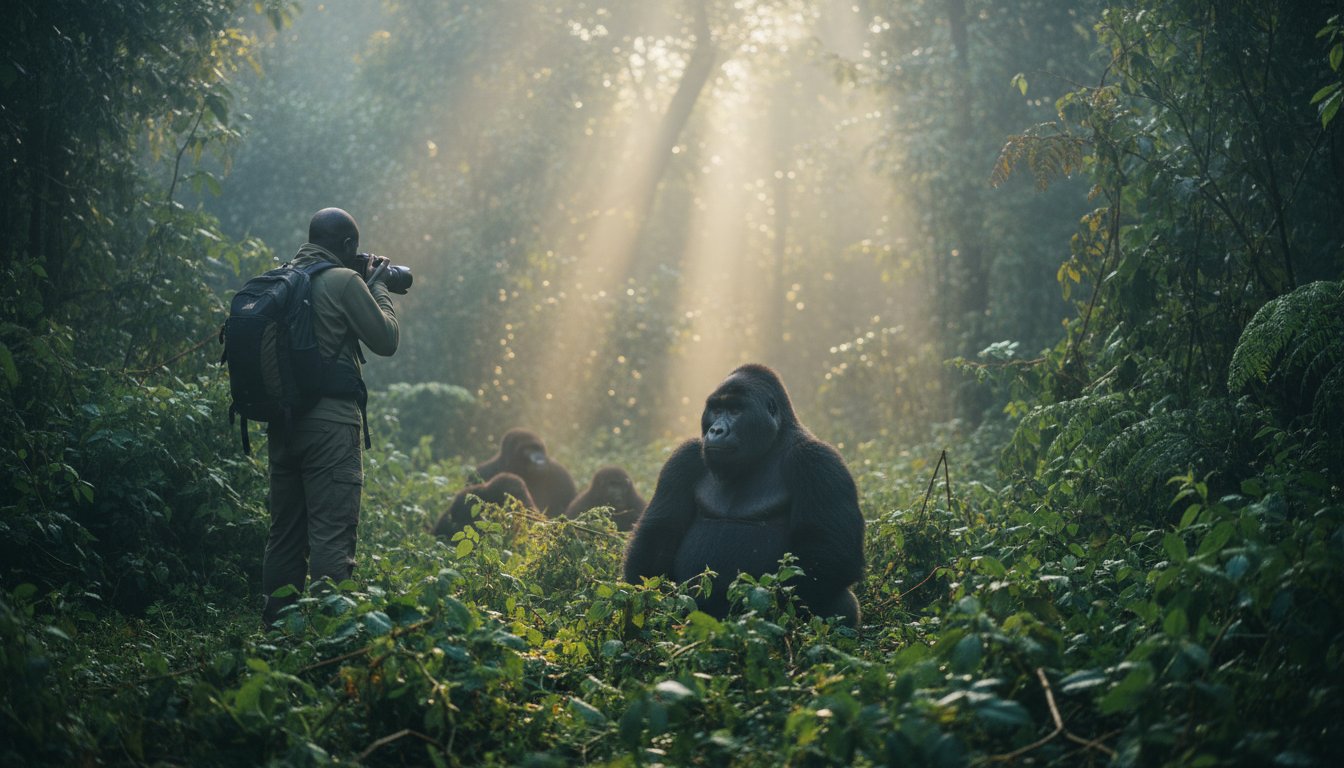
Is Gorilla Trekking Ethical? A Soulful Guide to Conservation and Stewardship
What if the most profound moment of your life was also a radical act of protection? It’s natural to wonder is gorilla trekking ethical when you consider the fragility of the world’s remaining 1,063 mountain gorillas. You likely feel a deep reverence for these primates, yet you harbor a quiet anxiety that your presence might disturb the very sanctuary you’ve traveled so far to honor. We understand this conflict; it’s the mark of a discerning traveler who values impact as much as intimacy.
In this soulful guide, you’ll discover how a curated safari serves as a vital lifeline for conservation, moving beyond simple tourism to create a lasting legacy. We’ll examine exactly how the Rwanda Development Board directs 10 percent of permit revenue into local communities and how strict health protocols prevent the transmission of human illness. You’ll gain a clear framework for choosing a responsible operator, ensuring your journey through the mist remains a transformative experience for both you and the majestic families of the forest.
Key Takeaways
- Uncover the philosophy of ‘conservation tourism’ and how your presence can move beyond observation to become a vital safeguard for the mountain gorilla’s untamed sanctuary.
- Learn how the investment of a trekking permit is meticulously allocated by wildlife authorities to fund the protection and legacy of this majestic species.
- Understand the critical health protocols and habituation risks to ensure your soul-stirring encounter leaves a positive footprint on the primate population.
- Follow our discerning manifesto to identify bespoke operators who empower indigenous communities through ethical and respectful engagement.
- Gain the clarity needed to decide is gorilla trekking ethical by exploring a curated approach that balances high-end intimacy with uncompromising conservation integrity.
The Great Dilemma: Can Tourism Truly Protect the Mountain Gorilla?
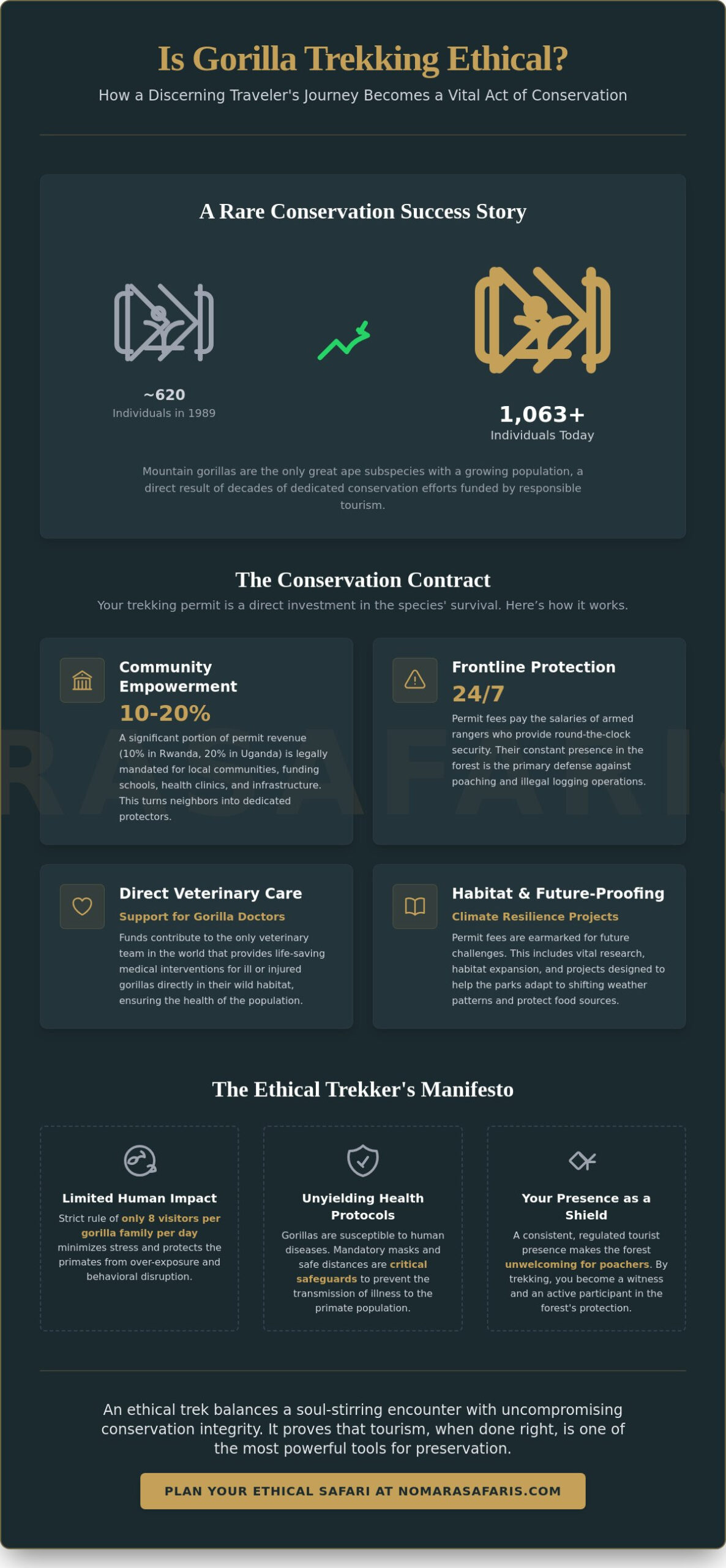
To ask is gorilla trekking ethical is to step into a space where sophisticated travel meets the raw reality of survival. It’s a question that defines conservation tourism, a practice where the well-being of the primate takes precedence over the traveler’s desire for proximity. There’s an undeniable tension when humans enter a wild sanctuary. We’re guests in a world that doesn’t belong to us. Yet, stewardship suggests that doing nothing is the most dangerous choice of all. Without the watchful eyes of rangers and the funding from bespoke expeditions, these forests would likely fall silent. Today, mountain gorillas represent a rare triumph in the natural world. They’re the only great ape subspecies with a growing population, rising from approximately 620 individuals in 1989 to over 1,000 in the most recent census data.
The Fragile Balance of the Virunga and Bwindi Sanctuaries
The mist-shrouded peaks of Volcanoes National Park and the ancient, tangled roots of Bwindi Impenetrable Forest create a geography of isolation. These sanctuaries are beautiful but finite. This is why the rule of only 8 people per gorilla family per day remains a hard ethical boundary. It limits the footprint of our curiosity and protects the primates from human-borne stress. Habituation is the patient, years-long process of building a bridge of trust between humans and gorillas through quiet, consistent presence. It’s a delicate dance that ensures the animals remain wild while allowing for the soul-stirring encounters that fund their very existence.
Why Your Presence Acts as a Shield
Your presence in the forest acts as a silent, powerful guardian. A regulated, constant tourist presence makes the deep woods too busy for illegal loggers and poachers to operate in the shadows. By embarking on a trek, you become a witness to the forest’s health, not just a passive observer of the wildlife. The Mountain Gorilla conservation status has seen a remarkable shift because tourism creates a value system where the gorilla is worth more alive than dead. This is conservation through value. It turns local communities into protectors and ensures that the untamed heart of Africa remains beating for generations to come. When considering if is gorilla trekking ethical, one must look at the legacy of protection your permit provides. It’s a curated form of stewardship that transforms a holiday into a meaningful act of preservation.
The Conservation Contract: How Your Permit Funds a Species’ Survival
To understand why the price of admission to these ancient forests is so high, one must look past the paperwork. The permit is a sacred vow. It’s a direct investment in a fragile future. When travelers ask, is gorilla trekking ethical, the answer is found in the ledger of the Uganda Wildlife Authority (UWA) and the Rwanda Development Board (RDB). These institutions ensure your contribution flows directly into the veins of the ecosystem. In Uganda, 20% of all park entry fees are legally mandated to support neighboring communities. Rwanda allocates 10% of its total tourism revenue to similar initiatives. This financial transparency has funded over 160 schools and dozens of health clinics, ensuring that the people living on the edge of the wild see the gorillas as a blessing rather than a burden. For a transparent look at these costs, explore our Gorilla Trekking Uganda Price guide.
This model has turned a once-dying population into a conservation success story, proving that mountain gorillas can thrive when their presence provides value to the people living alongside them. It’s a delicate balance of human need and wildlife preservation.
Rangers, Researchers, and the Frontline of Protection
The sanctuary of the forest is maintained by the constant presence of armed rangers. These guardians provide 24/7 protection against illegal incursions, their salaries funded entirely by your trek. Beyond security, your permit supports the vital work of the Gorilla Doctors. They are the only veterinary team in the world providing life-saving medical interventions to gorillas in the wild. Looking toward the future, 2026 permit fees are already being earmarked for climate resilience projects. These funds will help the parks adapt to shifting weather patterns that threaten high-altitude vegetation. Your journey today secures their habitat for the next generation.
Economic Alternatives to Poaching
The most profound shift in East African conservation is the transformation of former poachers into dedicated protectors. Men who once set snares now serve as expert trackers and guides. This shift is fueled by the economic ripple effect of luxury tourism. Data shows that one trekker supports up to 20 local families through the vast safari ecosystem of lodges, porters, and artisans. In the forests of East Africa, every permit issued is a shield held high against the threat of extinction. When you choose to walk these paths, you aren’t just a guest; you’re a patron of a living legacy. If you feel the call of the wild, we invite you to curate your private journey into the heart of the forest.
Navigating the Risks: Habituation, Health, and the Human Footprint
To ask is gorilla trekking ethical is to confront our own biological footprint within a fragile sanctuary. We enter a world where the line between guest and intruder is razor-thin. The primary concern is the invisible threat of disease. Because mountain gorillas share approximately 98% of our DNA, they’re susceptible to human respiratory ailments like the flu, COVID-19, or even a common cold. These pathogens can devastate a troop that lacks our built-up immunity. Stewardship requires us to view our presence as a calculated risk, one only justified by the immense protection our permits provide to these untamed landscapes.
The Great Ape Health Protocol
By 2026, the standard of care has evolved into a sophisticated ritual of protection. Mandatory mask-wearing and hand sanitization aren’t merely suggestions; they’re essential components of a curated journey. An ethical operator will always enforce a “sick traveler” policy. If you develop a cough or fever, a responsible guide will facilitate a reschedule. This priority on primate health over immediate profit is why the species was downgraded from Critically Endangered to Endangered in November 2018. It’s a testament to the success of rigorous, science-based tourism that prioritizes the legacy of the troop over the desires of the individual.
Managing the Human Impact on the Wilderness
The 7-meter rule remains the most critical ethical boundary for any traveler. This distance isn’t just for your safety; it’s a mark of respect for the gorilla’s personal space. While habituation allows us to witness their private lives, we must ensure it doesn’t leave them vulnerable to bad actors. Maintaining this distance helps preserve their natural wariness, ensuring they don’t become too accustomed to human proximity. To truly honor the experience, we must embrace a philosophy of mindful observation over digital clutter.
- Silence as Sanctuary: Keep voices low to avoid distressing the troop and to maintain the peace of the rainforest.
- Submissive Body Language: Avoid direct, prolonged eye contact and keep your posture low if a silverback approaches; it’s a gesture of peace.
- Digital Mindfulness: Resist the urge for constant “gorilla selfies.” Focus instead on the soul-stirring reality of a wild encounter.
- Leave No Trace: Every scrap of waste must leave the rainforest with you to protect this pristine environment from contamination.
Choosing “conservation trekking” over “commercial trekking” means adhering to these strict regulations without exception. It’s the difference between a shallow holiday and a transformative act of stewardship. When we follow these protocols, is gorilla trekking ethical? The answer becomes a resounding yes, provided we remain humble guests in their ancestral home, moving with the quiet confidence of those who understand their role in a larger story of survival.
The Discerning Trekker’s Manifesto: Ensuring Your Journey is Truly Ethical
Choosing to step into the mist of the Bwindi Impenetrable Forest or the Volcanoes National Park isn’t merely a travel decision; it’s a profound pledge of stewardship. When asking is gorilla trekking ethical, the answer lies in the transparency and intention of your chosen guardians. A truly ethical operator curates more than a tour; they curate a legacy. To ensure your presence remains a gift to the wild, use this checklist to vet your provider:
- Verified Licensing: Ensure the operator holds valid permits from the Uganda Wildlife Authority (UWA) or the Rwanda Development Board (RDB).
- Direct Community Reinvestment: Confirm that a portion of your fee supports local health or education initiatives. In Uganda, 20 percent of park entry fees are legally mandated to go to neighboring communities.
- Guide Expertise: Ethical guides prioritize the gorillas’ comfort over your perfect photograph, maintaining a strict 7-meter distance at all times.
- Porter Empowerment: Choose operators who actively encourage the hiring of porters.
The concept of the “Porter’s Dignity” is central to an ethical pilgrimage. Hiring a local porter is a vital act of economic empowerment, not a sign of personal weakness. Many porters are former poachers or subsistence farmers; by providing a dignified wage, you transform them into the forest’s most fierce protectors. This direct injection of capital into the village economy ensures that the sanctuary remains more valuable standing than destroyed. Booking through licensed providers like Nomara Safaris ensures your permit is legitimate and your footprint supports this delicate social fabric.
Beyond the Permit: Supporting Local Communities
Your journey should echo far beyond the forest floor. To deepen your connection, seek out the Batwa Development Program, established in 2002 to support the “Keepers of the Forest” who were displaced when the parks were created. Avoid “cultural encounters” that feel like staged performances. Instead, choose community-led tours that add a layer of authentic depth to a 3 Days Murchison Falls Safari or a gorilla trek. Purchasing bespoke, hand-woven baskets or local honey directly from artisans ensures your wealth stays within the community’s hands.
Packing for Impact
Your wardrobe is a silent conversation with the wild. Understanding if is gorilla trekking ethical extends to your gear. Neutral colors like khaki, olive, and sand are essential; they minimize animal stress by blending into the untamed landscape. Ditch single-use plastics for reusable water bladders and pack biodegradable detergents to protect the pristine watershed. If you wish to leave a legacy, bring “gifts of education” such as pens, solar lamps, or notebooks for local schools. Avoid the temptation to hand out candy or cash to children, as this fosters a culture of begging rather than empowerment.
Ready to embark on a soul-stirring journey that honors the wild? Begin your ethical pilgrimage with Nomara Safaris today.
The Nomara Sanctuary: Curating Impactful Encounters with Integrity
Nomara Safaris exists at the delicate intersection of luxury and legacy. We recognize that the question of is gorilla trekking ethical depends entirely on the stewardship of the journey. Our philosophy is rooted in an unhurried, deeply personal approach that treats the African wilderness as a sanctuary rather than a destination. We don’t just offer tours; we curate soul-stirring encounters that respect the rhythms of the forest. By choosing a bespoke path, you ensure your presence is a contribution to the wild’s survival. It’s a bridge between your desire for an unparalleled adventure and the urgent needs of the ecosystem.
Expert Guides as Guardians
Our guides are the heartbeat of the Nomara experience. Each mentor brings a minimum of 12 years of field expertise, having undergone rigorous training in both ecological science and the nuances of high-end guest etiquette. We prioritize private tours because they allow for a whisper-quiet presence in the Bwindi Impenetrable Forest. This exclusivity isn’t just for your comfort; it’s a deliberate strategy to minimize the physiological stress on the gorilla families. We hand-pick our partner lodges based on strict sustainability audits, selecting only those that utilize 100% solar power or support specific community health initiatives within the 15-kilometer buffer zone of the park.
- Private Excursions: Limited group sizes to maintain the sanctity of the habitat.
- Eco-Luxe Lodging: Partners chosen for their 2024 carbon-neutral certifications.
- Expertise: Guides trained in primate pathology to prevent cross-species disease transmission.
Your Legacy in the Pearl of Africa
Transforming your travel into a force for good is the ultimate goal of a Nomara itinerary. We take the administrative burden off your shoulders, managing the intricate permit process through the Uganda Wildlife Authority. This ensures that your contribution directly supports the 20% revenue-sharing model that funds local schools and clinics. Is gorilla trekking ethical when managed with this level of precision? We believe it’s the only way to secure a future for the 1,063 mountain gorillas left on Earth. It’s about creating a footprint that heals rather than harms.
Your journey culminates in a moment of profound connection. When you finally stand in the presence of a Silverback, you’ll feel the weight of your impact. That first eye contact is more than a photograph; it’s a silent pact between two worlds. This is the moment where travel becomes transformative. We invite you to become a guardian of the sanctuary by booking a bespoke itinerary that honors the untamed heart of Africa. Your legacy begins with a single, respectful step into the green.
Step Into Your Role as a Guardian of the Mist
Determining if is gorilla trekking ethical depends entirely on the intention and integrity behind the trek. Your journey into the high-altitude forests serves as a critical financial lifeline for the mountain gorilla population, which reached a milestone of 1,063 individuals in the most recent Virunga Massif and Bwindi surveys. These funds empower park rangers and local communities to protect habitats that would otherwise face encroachment. By following the strict 7-meter observation protocols and choosing operators who prioritize wildlife health over proximity, you become a vital part of a successful conservation story.
Nomara Safaris, fully licensed by Nexto Investment Company Limited, specializes in these profound, low-impact encounters. We provide expert-guided tours that focus on sustainable impact and offer guaranteed permit procurement for high-demand sectors, ensuring your experience is as seamless as it’s meaningful. You’re invited to join an elite circle of travelers who view the wilderness as a sanctuary to be honored. Begin your soul-stirring journey and become a guardian of the wild with Nomara Safaris. The untamed heart of Africa awaits your arrival with open arms.
Frequently Asked Questions
Is gorilla trekking bad for the gorillas’ health?
Gorilla trekking isn’t inherently harmful when managed through strict protocols that prioritize the primates’ wellbeing. The primary risk is the transmission of human respiratory diseases because humans share roughly 98.4% of their DNA with these Great Apes. Since the 1981 census showed only 254 mountain gorillas remained, the introduction of the 60 minute observation limit has been vital. This curated window ensures the family’s natural rhythms remain undisturbed while funding their sanctuary.
Where does the gorilla permit money actually go?
Your permit fee serves as a direct investment in the survival of a species and the prosperity of its human neighbors. In Rwanda, the government’s 2017 policy increased the community revenue share to 10% of total permit sales. These funds have built over 700 schools and health clinics in the areas surrounding Volcanoes National Park. The remaining capital pays for the 24 hour protection provided by dedicated park rangers and anti-poaching units.
Are the gorillas drugged or fenced in for tourists?
Mountain gorillas remain entirely wild and live without fences in their natural, untamed habitats. They move freely across the transboundary landscapes of the Virunga Massif and Bwindi Impenetrable Forest. No sedatives or enclosures are ever used. These animals are simply habituated over a 2 to 3 year period to tolerate a quiet, respectful human presence within their private forest sanctuary.
Why is gorilla trekking so expensive if it is ethical?
High permit costs are a deliberate pillar of the “high value, low impact” conservation model. This strategy limits the daily footfall in fragile ecosystems while generating the massive capital required for constant anti-poaching patrols. When asking is gorilla trekking ethical, one must look at the results. This funding turned the mountain gorilla into the only great ape subspecies whose population is currently increasing according to the International Union for Conservation of Nature.
What happens if I get sick right before my trek?
You won’t be allowed to trek if you show signs of a cold, flu, or other contagious illness. This rule is absolute because a simple human virus can be fatal to a gorilla troop. Most park authorities, including the Uganda Wildlife Authority, offer a 50% refund or a rescheduled date if a medical officer confirms your illness. It’s a selfless act that protects the legacy of these wild families.
Is it ethical to use a porter during the gorilla trek?
Hiring a porter is one of the most impactful ways to support the local economy directly. These individuals are often members of neighboring villages who now rely on tourism for their livelihood rather than illegal forest activities. By paying the standard minimum fee of 20 dollars, you provide a sustainable income that supports an entire household. It transforms a challenging climb into a shared, soulful journey of mutual respect.
How does the 7-meter rule protect the gorillas?
The 7 meter rule acts as a critical biological shield between you and the gorillas. This distance significantly reduces the risk of cross species infection while preventing the animals from feeling crowded or threatened by your presence. While the gorillas might occasionally break this barrier out of curiosity, your guides will maintain the gap to ensure the encounter remains a respectful observation rather than a stressful intrusion.
Can I trek gorillas if I am not physically fit?
Physical limitations don’t have to prevent you from experiencing this soul-stirring encounter in the wilderness. For those with mobility challenges, porters can carry you into the forest using a specialized sedan chair or “stretcher” for an additional fee. Park rangers also curate trekking groups based on fitness levels. They assign those who need a gentler path to the gorilla families located closest to the park boundaries to ensure the experience is accessible.


Comments are closed