
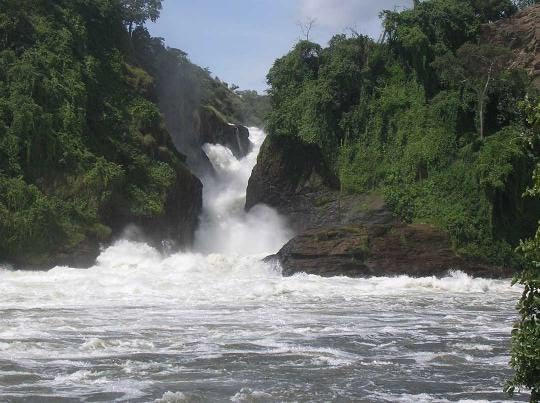
Murchison Falls National Park is Uganda’s largest protected area and one of the most dramatic wildlife destinations in East Africa. The park is bisected by the Victoria Nile, which explodes through a seven metre wide gap in the rocks to create Murchison Falls, one of the most powerful waterfalls on earth. The park supports large herds of Rothschild’s giraffe, elephant, Cape buffalo, and lion. The boat safari to the base of the falls is spectacular, with hippos, crocodiles, and elephants lining the banks. The Budongo Forest, within the park, offers chimpanzee tracking. This Murchison Falls National Park guide covers everything you need to know for an unforgettable visit. You will learn about the best wildlife viewing areas, the boat safari experience, chimpanzee tracking, the top lodges, the best time to visit, and how to get there. Whether you are a first time visitor or a seasoned safari goer, this Murchison Falls National Park guide will help you plan the perfect safari.
Murchison Falls National Park covers approximately 3,900 square kilometres in northwestern Uganda. The park is part of the larger Murchison Falls Conservation Area, which also includes Karuma and Bugungu Wildlife Reserves. The Victoria Nile flows through the park from east to west, creating the dramatic waterfall where the river forces itself through a narrow gorge. The park is divided by the Nile. The northern bank offers classic savannah game viewing with open plains, acacia woodlands, and large herds of wildlife. The southern bank is more forested and is home to the Budongo Forest, one of the best places in Uganda for chimpanzee tracking.
The park was first gazetted in 1926, making it one of Uganda’s oldest protected areas. It was a favourite destination of Ernest Hemingway and Winston Churchill. The park was heavily affected during the Idi Amin era, but wildlife populations have recovered significantly. Today, Murchison Falls National Park is a must visit destination for any Uganda safari. It offers a combination of spectacular scenery, diverse wildlife, and unique activities that few other parks can match. This Murchison Falls National Park guide will help you navigate all the park has to offer.
Murchison Falls National Park supports an impressive variety of wildlife. The northern bank is the prime game viewing area. The open savannah supports large herds of Rothschild’s giraffe, a subspecies found only in Uganda and Kenya. These giraffes are easily identified by their white legs and lack of markings below the knee. Elephants are abundant, often seen in herds of 20 to 50 individuals crossing the plains. Cape buffalo are present in large herds, often numbering in the hundreds. Lions are present, especially near the Delta area where the Nile enters Lake Albert. The lions of Murchison are known for their size and dark manes.
Leopards are present but elusive. Your best chance is on a night drive, which can be arranged at some lodges. Hyenas are common and often seen at dawn and dusk. The park also supports Uganda kob, waterbuck, oribi, hartebeest, and warthog. The birding is exceptional, with over 450 species recorded, including the rare shoebill stork, the Goliath heron, and the African fish eagle. The best game viewing is in the morning from 6:30 AM to 10:00 AM and in the late afternoon from 4:00 PM to 7:00 PM. The northern bank roads are well maintained during the dry season but can be challenging in the wet season.
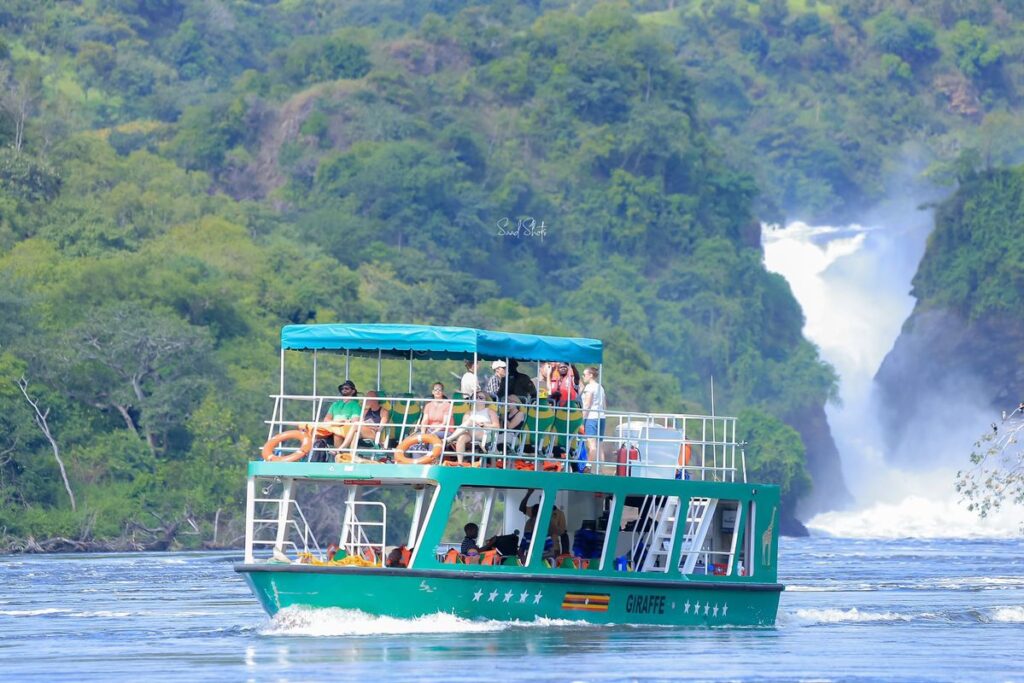
The boat safari to the base of Murchison Falls is the signature activity of the park and a highlight of any Murchison Falls National Park guide. The boat departs from the Paraa jetty on the northern bank. The three hour boat trip travels upstream along the Victoria Nile to the base of the falls. The riverbanks are lined with hippos and crocodiles. You will see hundreds of hippos, often in pods of 20 to 50, grunting and splashing in the water. Crocodiles bask on the sandbanks, their mouths open to regulate their temperature. Elephants, buffalo, and giraffe come to the river to drink. The birdlife is spectacular, with kingfishers, herons, bee-eaters, and the majestic African fish eagle.
As you approach the falls, the river narrows and the current quickens. The spray from the falls becomes visible in the distance. The boat stops at a safe distance from the raging water. The sight and sound of the Nile exploding through a seven metre gap is unforgettable. You can feel the power of the water from the boat. After viewing the falls, you may hike to the top of the falls for a different perspective. The boat safari is offered twice daily, at 9:00 AM and 2:00 PM. The morning trip is cooler and offers better light for photography. The afternoon trip has better lighting on the cliffs. The boat safari is included in most Murchison Falls National Park guide itineraries.
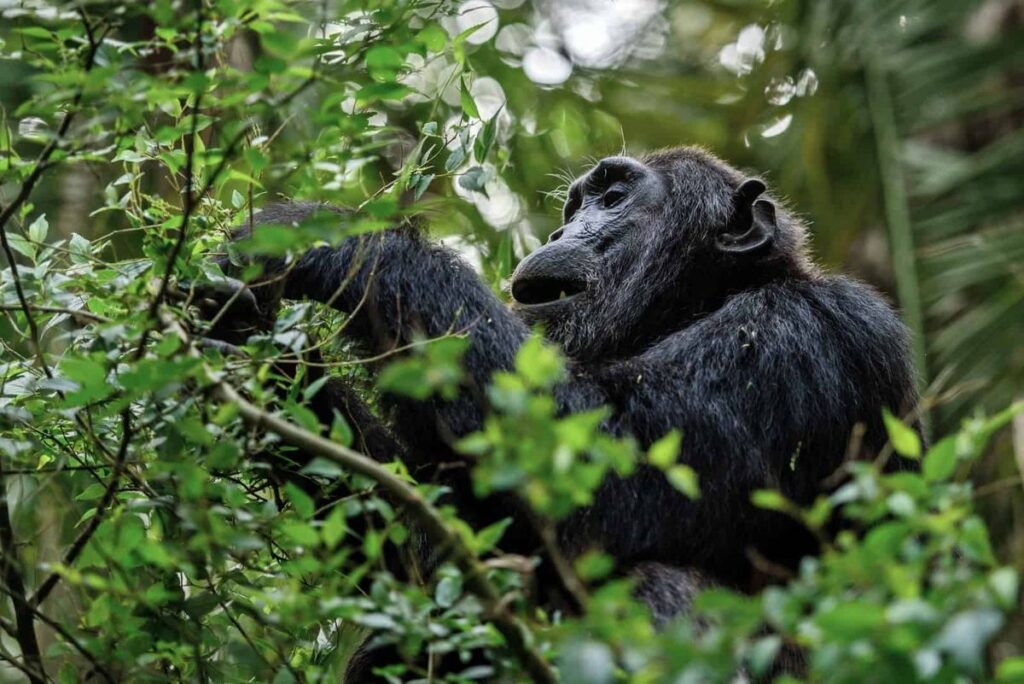
The Budongo Forest, located in the southern part of Murchison Falls Conservation Area, is one of the best places in Uganda for chimpanzee tracking. The forest is home to an estimated 600 to 800 chimpanzees, with two habituated groups available for tracking. The Kaniyo Pabidi sector is the main chimpanzee tracking area. The trek is shorter and less physically demanding than gorilla trekking in Bwindi. The forest is also home to other primates, including black and white colobus monkeys, blue monkeys, and red tailed monkeys. The birding is exceptional, with over 360 species recorded.
The chimpanzee tracking permit costs approximately USD 250 per person. The trek lasts two to four hours, depending on where the chimpanzees are feeding. When you find them, you have one hour to observe. You watch them socialise, groom, feed, and play. The pant hoot chorus, a vocalisation that echoes through the forest, is unforgettable. The Budongo Forest is also a butterfly haven, with over 300 species recorded. The best time for chimpanzee tracking is during the dry seasons from June to September and December to February. The wet season can be muddy, but the forest is lush and beautiful. Adding chimpanzee tracking to your Murchison Falls National Park guide itinerary gives you a complete primate experience.
The best time to visit Murchison Falls National Park is during the dry seasons from June to September and December to February. The roads are dry and passable, especially the northern bank roads that are prone to flooding in the wet season. Wildlife viewing is at its peak as animals congregate around the Nile and other water sources. The boat safari is excellent year round, but the dry season offers clearer skies and better photographic conditions. The chimpanzee tracking in Budongo is easier during the dry season, as the trails are less muddy.
The wet seasons from March to May and October to November have advantages. The landscape is lush and green. The birding is exceptional, with migratory species present. The crowds are smaller. Some lodges offer lower rates. The boat safari is still possible, and the falls are even more powerful. The biggest drawback is that the northern bank roads can become impassable after heavy rain. If you visit during the wet season, a 4×4 vehicle is essential. This Murchison Falls National Park guide recommends the dry season for first time visitors and the wet season for repeat visitors and birders.
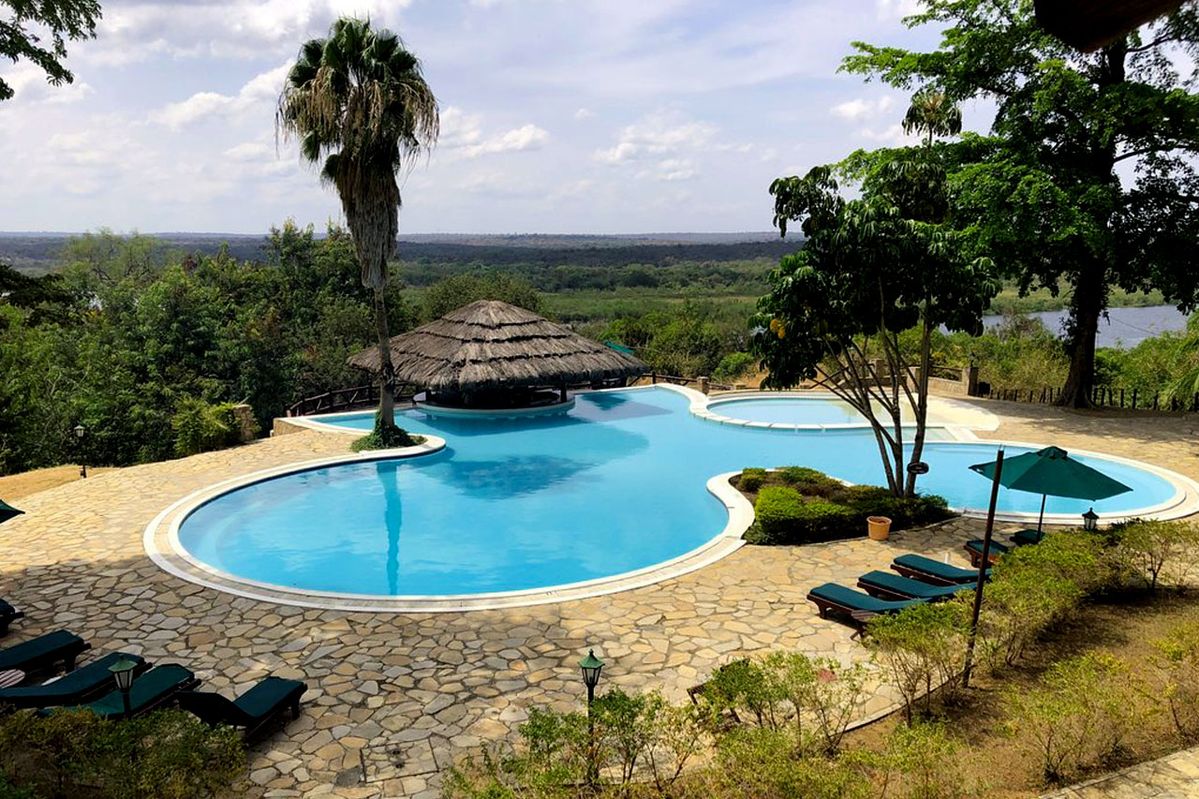
Murchison Falls National Park has a range of accommodation options, from luxury lodges to budget campsites. Paraa Safari Lodge is the oldest lodge in the park, perched on a hill overlooking the Nile. The lodge has a swimming pool, a spa, and a restaurant. The views of the river and the surrounding savannah are spectacular. Baker’s Lodge is a luxury property on the southern bank, offering five bandas on raised wooden platforms overlooking the Nile. The lodge is peaceful and elegant. Chobe Safari Lodge is a large property on the northern bank, offering river view rooms, safari cottages, and a campsite. The lodge has a swimming pool, a spa, and a fitness centre.
For mid range travellers, Pakuba Safari Lodge offers comfortable rooms on the northern bank with excellent game drive access. Murchison River Lodge offers bandas and tents on the southern bank with a swimming pool. Fort Murchison Lodge is located just outside the park and offers good value. For budget travellers, Red Chilli Rest Camp offers basic bandas and a campsite on the northern bank. The public campsites inside the park offer the lowest cost accommodation for self drive travellers. This Murchison Falls National Park guide recommends booking your accommodation well in advance, especially during the dry season.
Murchison Falls National Park is accessible by road and by air. The most common route is by road from Kampala. The drive takes approximately five to six hours, covering 300 kilometres. The road is paved for most of the journey, with the final 30 kilometres on a dirt road. You can also fly from Entebbe or Kampala to Pakuba airstrip or Chobe airstrip. The flight takes approximately one hour. Charter flights are available through several operators. Flying is more expensive but saves time and offers spectacular aerial views of the park.
Most visitors approach the park from the south, entering through the Kichumbanyobo gate. From there, you drive to the ferry crossing at Paraa. The ferry operates from 7:00 AM to 7:00 PM and carries vehicles across the Nile. If you are staying on the northern bank, you take the ferry. If you are staying on the southern bank, you do not need the ferry to reach your lodge but will need it to access the northern bank game drives. The ferry is free for pedestrians and vehicles. Your driver guide will handle the logistics. This Murchison Falls National Park guide recommends arriving at the ferry early to avoid queues during peak season.
Murchison Falls National Park is known for the dramatic waterfall where the Victoria Nile explodes through a seven metre wide gap. It is also known for its boat safari to the base of the falls, large herds of Rothschild’s giraffe and elephant, and chimpanzee tracking in Budongo Forest. The park offers a unique combination of savannah wildlife, primate tracking, and spectacular scenery that few other parks can match.
You can see four of the Big Five in Murchison Falls National Park. Lion, leopard, elephant, and Cape buffalo are all present. Lion sightings are good, especially near the Delta area. Leopards are elusive but present. Elephants and buffalo are abundant. Rhinos are not present in the park. To see a rhino, you must visit the Ziwa Rhino Sanctuary on the way to or from Murchison Falls. This Murchison Falls National Park guide recommends adding Ziwa to your itinerary to complete the Big Five.
The boat safari in Murchison Falls National Park costs approximately USD 30 to USD 40 per person. The three hour trip departs from the Paraa jetty on the northern bank. The fee is separate from the park entry fee. The boat safari is offered twice daily at 9:00 AM and 2:00 PM. You can book the boat safari at your lodge or at the jetty. Nomara Safaris includes the boat safari in our Murchison Falls itineraries.
The best time to visit Murchison Falls National Park is during the dry seasons from June to September and December to February. The roads are dry, wildlife viewing is excellent, and the boat safari conditions are ideal. The wet seasons from March to May and October to November offer lush landscapes, excellent birding, and lower prices, but the roads can be challenging. This Murchison Falls National Park guide recommends the dry season for first time visitors.
Yes, Murchison Falls National Park is safe for tourists. The park is well managed by the Uganda Wildlife Authority. Armed rangers patrol the park. Crime against tourists is extremely rare. Follow your guide’s instructions, stay in your vehicle during game drives except at designated viewing points, and do not walk in the bush without a ranger. The greatest risks are slipping on muddy trails or driving accidents on rough roads. This Murchison Falls National Park guide advises hiring a professional driver guide for your safety.
Murchison Falls National Park offers one of the most diverse and spectacular safari experiences in East Africa. The combination of the powerful waterfall, the boat safari, the abundant wildlife, and the chimpanzee tracking is unmatched. At Nomara Safaris, we design Murchison Falls itineraries that include game drives, the boat safari, chimpanzee tracking, and a stop at Ziwa Rhino Sanctuary. Contact Nomara Safaris to begin planning your Murchison Falls safari. Tell us your preferred travel dates and group size. We will create a custom itinerary that showcases the best of this remarkable park.