
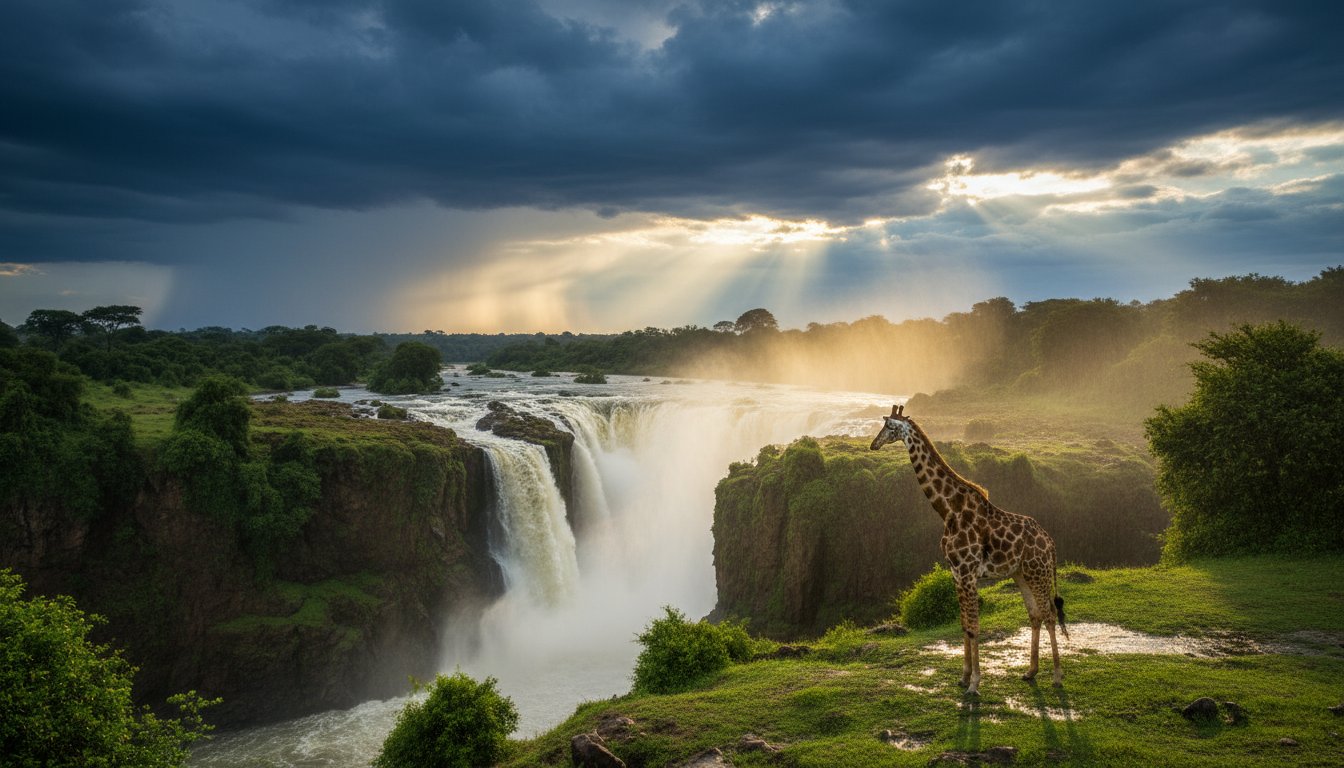
The Best Time to Visit Murchison Falls: A Soul-Stirring Seasonal Guide (2026)
What if the most profound moments in the African wilderness happen when the crowds are absent and the sky is heavy with the scent of impending rain? Choosing the best time to visit Murchison Falls is often a delicate balance between seeking the sun and embracing the raw, untamed cycles of this ancient sanctuary. You likely worry that a mistimed booking in May might hide the Big Five behind a curtain of green, or perhaps you fear the intense 32 degree Celsius heat of the peak dry season will dampen the spirit of discovery. It’s a common anxiety for the discerning traveler who seeks a journey that is both intimate and impactful.
We promise to demystify these seasonal transitions, helping you curate a private experience that captures the Nile’s power at its peak. This guide provides a sophisticated look at the trade-offs of the 2026 calendar, from the lush birding havens of November to the prime predator tracking window in July. You’ll gain the clarity needed to book a bespoke adventure that resonates with your personal vision of the wild. It’s time to move beyond generic advice and discover a schedule tailored to your soul.
Key Takeaways
- Discover how the equatorial rhythm ensures Murchison Falls remains a warm, evocative sanctuary year-round, offering a soul-stirring experience in every season.
- Learn why the golden dry months are considered the best time to visit Murchison Falls for witnessing the raw power of the Nile and dense wildlife gatherings at the water’s edge.
- Uncover the hidden magic of the emerald wet season, where lush, vibrant landscapes provide a dramatic backdrop for avian wonders and intimate photography.
- Evaluate key metrics like wildlife density and crowd levels to curate a journey that perfectly aligns with your personal safari style and aesthetic preferences.
- Explore how bespoke planning and expert guidance can transform a tropical shower into a private, meaningful moment within the untamed heart of Uganda.
The Rhythm of the Wilderness: Understanding Murchison Falls’ Seasonal Cycles
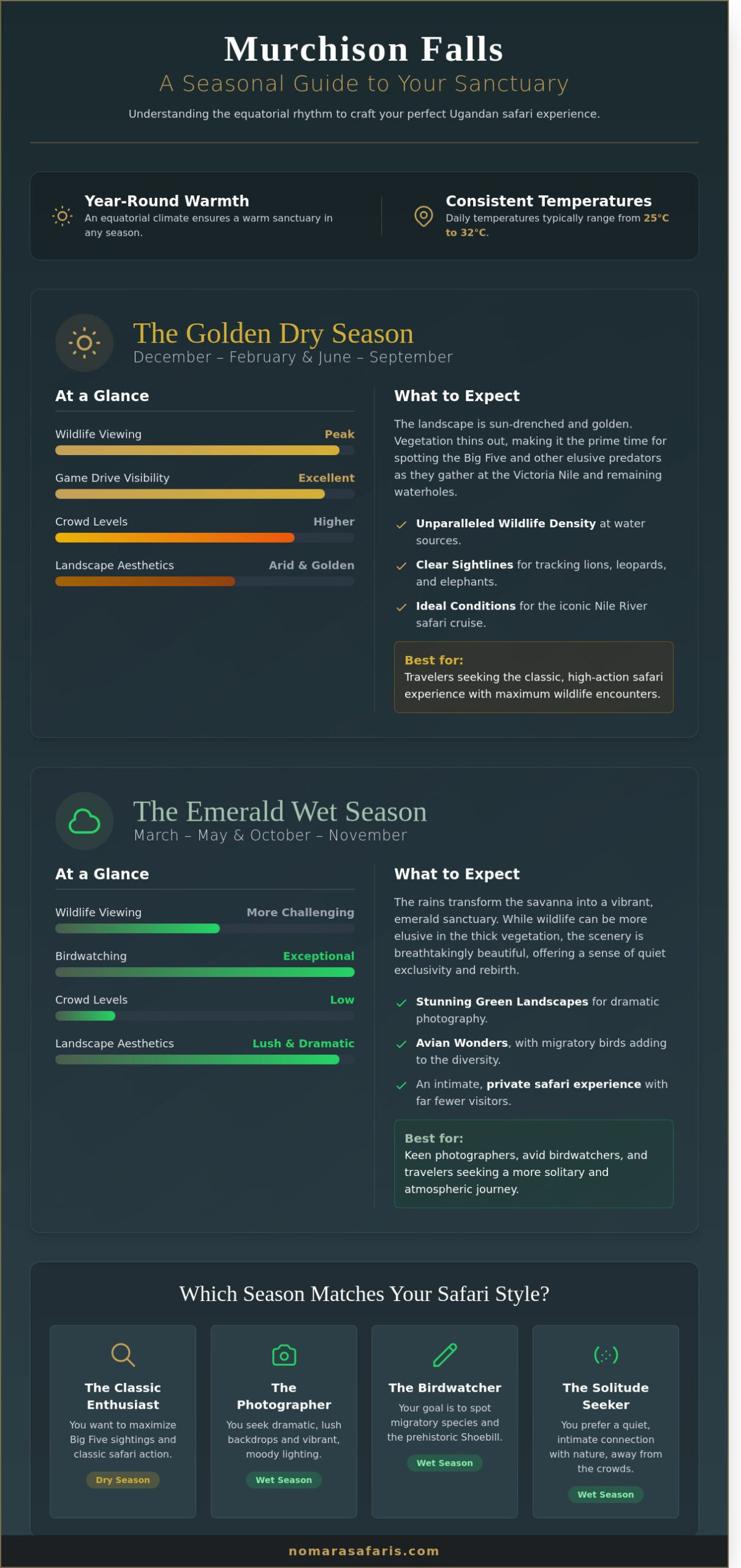
Murchison Falls is a place where time feels suspended, dictated not by clocks but by the ancient rhythms of the sun and the sky. Determining the best time to visit murchison falls requires an understanding of its unique equatorial heartbeat. Unlike regions with four distinct seasons, this wilderness breathes through a cycle of two dry and two wet periods. The primary dry seasons span from December to February and June to September, while the emerald rains arrive from March to May and October to November.
The geography of Murchison Falls National Park creates a dramatic stage for these shifts. From the sweeping golden savannas of the north to the ancient, towering Borassus palm forests, the landscape transforms under the influence of the Victoria Nile. We call this “The Pulse of the Nile.” As water levels fluctuate and the heat intensifies, the river becomes a life-giving magnet, drawing massive herds of elephants and Cape buffalo from the parched interior to its cooling banks. It’s a curated spectacle of nature that ensures every journey remains deeply personal.
The Interplay of Heat and Rain
Temperatures here remain consistently warm, typically hovering between 25°C and 32°C. However, January and February possess a distinct character. During these months, the heat is intense and dry, creating a shimmering haze over the plains that feels profoundly raw. The “short rains” of late year and the “long rains” of spring don’t just dampen the earth; they revive it. Imagine the sensory rush when the first heavy droplets strike the sun-baked soil, releasing a rich, earthy scent known as petrichor that signals a season of rebirth. This moisture transforms the parched brown earth into a vibrant, emerald sanctuary within days.
Why Timing Matters for Your Sanctuary Experience
The height of the grass and the availability of water dictate the intimacy of your encounters. During the dry months, the vegetation thins, offering unparalleled visibility of the Big Five. This is also a prime window for those seeking the prehistoric Shoebill stork in the delta. When the rains arrive, the savanna turns a lush, vibrant green, providing a stunning backdrop for photography, even if the wildlife becomes more elusive within the thicket. In Murchison, the seasons don’t just change the weather; they rewrite the narrative of the savanna. Choosing your moment is the first step in crafting a bespoke adventure that resonates with your soul.
- Dry Season (Dec-Feb, Jun-Sep): Peak wildlife viewing as animals congregate at water sources.
- Wet Season (Mar-May, Oct-Nov): Lush landscapes, migratory birds, and a sense of quiet exclusivity.
- Equatorial Climate: Constant warmth ensures the park is a year-round destination for the discerning traveler.
The Golden Dry Season: Peak Wildlife Viewing and Sun-Drenched Savannas
The dry season is widely considered the best time to visit Murchison falls for those seeking the quintessential African safari experience. Between December and February, and again from June to September, the landscape transforms into a theater of survival. As the sun bakes the earth, smaller water holes evaporate, forcing wildlife to congregate along the banks of the Victoria Nile. This concentration creates unparalleled opportunities for observation. The vegetation thins significantly, stripping away the hiding places of elusive predators like leopards and prides of lions that stalk the parched grasslands.
The iconic Nile River safari cruise reaches its peak during these months. The water remains calm, and the banks teem with life. The Uganda Wildlife Authority manages the park’s conservation efforts, ensuring these water-based expeditions provide a front-row seat to nature’s most private moments. You’ll glide past pods of hippos and massive Nile crocodiles, feeling the cool mist of the falls as the boat approaches the thunderous base of the cataract.
The Peak Months: December, January, and February
The early months of the year offer a raw, intense beauty. Temperatures often reach 32°C (90°F), yet this heat serves a strategic purpose. It draws massive herds of elephants and towering Rothschild’s giraffes to the water’s edge in predictable patterns. You’ll witness them drinking in the golden light of late afternoon, a sight that defines the spirit of the sanctuary. Nomara Safaris manages these warmer months with precision; we curate early morning game drives and provide private, climate-controlled transfers to ensure your comfort remains absolute. The skies stay a brilliant, cloudless blue, providing the perfect canvas for wide-angle landscape photography that captures the sheer scale of the savanna.
The Gentle Dry: June through September
This window represents the high season, characterized by a softer climate and a vibrant atmosphere within the park. It’s a strategic choice for many travelers because it aligns perfectly with the window for gorilla trekking in Uganda. Temperatures are more temperate, averaging 28°C (82°F), making the afternoon boat cruises particularly refreshing. You’ll find the park hums with the shared excitement of fellow enthusiasts, yet our expert guides navigate the trails to ensure your encounters feel intimate. If you’re ready to witness this sun-drenched spectacle for yourself, consider a bespoke journey tailored to the rhythm of the wild.
The Emerald Wet Season: Dramatic Landscapes and Avian Wonders
For those who seek a deeper, more resonant connection with the wild, the wet season represents the best time to visit murchison falls. Occurring from March to May and again from October to November, these months witness a profound metamorphosis. The park sheds its dusty, golden mantle, replacing it with a vibrant, emerald carpet that stretches toward the horizon. It’s a period of absolute abundance. The savanna transforms into a lush sanctuary where the air is scented with damp earth and blooming acacia, offering a sensory experience that the dry season simply cannot replicate.
The Victoria Nile reaches its peak dramatic power during these months. As rainfall increases, the water volume surging through the narrow, seven-meter gorge intensifies. The result is a visceral display of nature’s raw force. You don’t just see the falls; you feel the vibration in your chest as the river thunders into the “Devil’s Cauldron” below. Discerning travelers recognize this as the “secret season,” a time when the landscape is at its most photogenic and the wildlife is energized by the cooling rains.
A Birder’s Paradise and Migratory Marvelling
The wet season marks the arrival of thousands of migratory visitors from Europe and Northern Africa, turning the park into a global avian crossroads. In the marshy deltas where the Nile meets Lake Albert, the prehistoric Shoebill Stork often emerges from the reeds, providing a rare glimpse for the patient observer. From November to April, Murchison Falls becomes a kaleidoscope of over 450 bird species, including the rare Pel’s Fishing Owl. This seasonal influx creates a curated spectacle of nature that rewards those who value biodiversity and quiet observation over the typical checklist safari.
The Beauty of Solitude and Soft Light
Choosing this window grants you a level of intimacy that the busier months cannot match. Safari vehicles are few and far between. You’ll often find yourself alone with a pride of lions or a herd of elephants, undisturbed by the hum of other engines. For photographers, the benefits are unparalleled. The rain washes the dust from the atmosphere, creating a “clean” air that sharpens every frame and captures the deep saturation of the landscape. Dramatic cloud formations provide a theatrical backdrop for every sunset, casting a soft, ethereal light over the untamed wilderness.
Navigating the terrain during this time requires precision and high-end equipment. Nomara Safaris utilizes private 4×4 vehicles specifically maintained for softer terrain, ensuring your movement through the park remains seamless. While some tracks become more challenging, the expertise of a dedicated guide turns the journey into a bespoke adventure. It’s a soul-stirring experience where the rhythms of the rain dictate a slower, more intentional pace of discovery.
Crafting Your Ideal Journey: Which Season Matches Your Safari Style?
Choosing the best time to visit Murchison Falls depends entirely on how you wish to experience the wild. The park doesn’t offer a single experience; it provides a rotating gallery of moods, each tailored to different desires. While the dry months offer visibility, the wet months provide a lush, private sanctuary that feels entirely your own.
- Wildlife: The dry seasons (December to February and June to September) create high concentrations of game at the Nile’s edge. In the wet months, animals disperse, yet this is when you’ll witness the tender arrival of newborns.
- Scenery: Dry months bring golden, dusty savannahs. The “Emerald Season” (March to May and October to November) transforms the park into a vibrant, high-definition landscape of deep greens and blooming acacias.
- Crowds: Peak months see a higher volume of travelers at the falls. The shoulder seasons offer a sense of profound isolation.
- Photography: While dry months offer clear shots, the wet season provides dramatic, moody skies and a lack of haze that makes colors pop.
Many travelers ask if the rain will ruin their safari. It’s a common concern, but the reality of tropical showers is far from a washout. Rain in Murchison Falls often arrives in short, powerful bursts, usually in the late afternoon or night. These moments refresh the air and settle the dust. They don’t stop the adventure; they simply add a layer of raw, atmospheric beauty to the narrative.
The Persona Guide: Finding Your Window
The Big Game Enthusiast: If your heart is set on spotting lions, leopards, and massive herds of elephants, the dry season is your primary target. Short grass and limited water sources force wildlife into the open, making tracking far more predictable.
The Soulful Photographer: Seek the Emerald Season. The light after a storm is unparalleled, casting a soft, ethereal glow over the landscape. This is the time for those who appreciate depth, texture, and the absence of other vehicles in their frame.
The Avian Adventurer: The wet months are non-negotiable for birders. With over 450 species recorded, including migratory birds that arrive between November and April, the park becomes a chaotic, colorful symphony of life.
Practical Considerations for 2026
For those planning a 2026 journey, we recommend booking the December to January window at least 10 months in advance. This period remains the most coveted for its reliable weather. If you’re combining Murchison with chimpanzee trekking in Budongo Forest, remember that the forest floor is easier to navigate when it’s dry. Choosing bespoke private safaris allows for the flexibility needed to pivot your daily schedule if a sudden rainstorm appears, ensuring you never miss a moment of the magic.
Ready to curate your own story in the heart of Uganda? Explore our private expedition options today.
Beyond the Calendar: Planning Your Private Murchison Falls Sanctuary
The secret to an unparalleled safari isn’t found on a standard meteorological chart. While the best time to visit murchison falls often aligns with the dry months of January or July, the true magic lies in how you engage with the landscape. At Nomara Safaris, we don’t just book trips; we curate sanctuaries. We understand that the rhythm of the wilderness doesn’t adhere to a rigid schedule. Whether you arrive when the savannah is golden and crisp or when the rains have painted the earth a vibrant emerald, your experience is meticulously shaped to reflect the raw beauty of the moment. We believe that the soul of Africa reveals itself best when the distractions of the modern world are stripped away.
The Nomara Difference in Murchison
Our approach centers on exclusivity and a profound respect for the natural world. We select private camps that serve as quiet havens, ensuring you’re never just another traveler in a crowded lodge. Our professional guides possess a deep, intuitive understanding of animal behavior that goes beyond mere spotting. They know how to track a pride of lions through the dense thickets of the wet season or find the quiet bends of the Nile where shoebill storks linger away from the main tourist tracks. If you’re seeking a condensed yet profound immersion, our 3 Days Murchison Falls Safari offers a masterclass in high-end, intimate wildlife viewing. It’s about quality over quantity, ensuring every sunset and every sighting feels like it was staged just for you.
- Expertise: Our guides have spent over 10,000 hours in the field, interpreting the subtle language of the bush.
- Exclusivity: We prioritize private concessions and low-impact camps to maintain the integrity of your sanctuary.
- Precision: We adjust daily game drive times based on real-time weather patterns, not fixed itineraries.
Begin Your Soul-Stirring Journey
As you look toward your 2026 travels, consider what kind of legacy you wish to create through your experiences. A private consultation allows us to align the seasonal nuances of Uganda with your personal aspirations. We handle the intricacies of permit procurement for chimpanzee trekking in Budongo Forest, where the Uganda Wildlife Authority limits group sizes to just six people per trek to protect the primates. This foresight guarantees your place in the forest’s quiet cathedral without the stress of logistics. The African wilderness is timeless, yet its most intimate moments are fleeting. It’s a world that rewards the patient and the discerning. Reach out to us for a curated East African itinerary that transcends the ordinary. Let’s build a journey that resonates in your spirit long after you’ve returned home.
Your Legacy Awaits on the Banks of the Nile
The wilderness doesn’t wait, yet it rewards those who move with intention. Whether you seek the golden clarity of the June to August dry season or the vibrant rebirth found in the April rains, the best time to visit murchison falls is whenever you’re ready to be moved by the untamed. Our team possesses an intimate knowledge of the Nile’s 12 month cycle, ensuring your journey aligns perfectly with the movements of the great herds and the seasonal flowering of the savanna. We provide expert-guided private 4×4 safaris that offer a sanctuary of comfort amidst the raw power of the falls. From the seamless procurement of Chimpanzee and Wildlife permits to the selection of the most secluded viewpoints, we curate every moment with quiet confidence. This isn’t a mere itinerary; it’s a soul-stirring passage into the heart of Africa’s most powerful water. Your transformative 2026 expedition begins with a single, deliberate choice to seek the extraordinary in every sunrise.
Begin Crafting Your Bespoke Murchison Falls Journey
The river is calling, and your sanctuary is prepared.
Frequently Asked Questions
Is Murchison Falls National Park open year-round?
Yes, Murchison Falls National Park remains open 365 days a year for those seeking a soul-stirring connection with the wild. While the landscapes transform with the rhythm of the rains, the park gates never close. Every season offers a bespoke perspective on the wilderness, ensuring your journey into this untamed sanctuary is always possible.
Can I see the Big Five in Murchison Falls during the rainy season?
You can encounter four of the Big Five within the park boundaries during the rainy season. While lions and leopards may seek shelter in the dense foliage, elephants and buffaloes thrive in the lush 3,840 square kilometer landscape. To complete the set, we curate a private visit to the Ziwa Rhino Sanctuary, located just south of the park’s main gates.
What is the hottest month in Murchison Falls?
January and February are the hottest months in the park. During this peak period, daily temperatures often climb to 33°C. This heat creates the best time to visit murchison falls for wildlife enthusiasts. Animals congregate around the Nile, offering unparalleled viewing opportunities from the comfort of a private boat as they seek relief from the sun.
When is the best time for bird watching in Uganda?
The optimal window for bird watching spans from November to April. This period welcomes migratory species from Europe and North Africa, joining the 450 resident species in a vibrant display of life. The lush landscape becomes a sanctuary for avian wonders, providing a sophisticated experience for even the most discerning birders who value rare sightings.
Are the roads in Murchison Falls passable in April and May?
Roads remain passable in April and May, though a robust 4×4 vehicle is essential for navigating the softened earth. These months represent the peak of the rainy season. Our bespoke safaris utilize expertly maintained vehicles to ensure your journey through the untamed wilderness remains seamless and professional, regardless of the seasonal mud on the tracks.
What should I pack for a Murchison Falls safari in the dry season?
Pack lightweight, breathable fabrics in neutral tones like khaki or stone to blend into the natural landscape. Essential items include a wide-brimmed hat, SPF 50 sunscreen, and high-quality binoculars for private wildlife sightings. Even in the heat, bring a light jacket for the cool, quiet mornings on the Nile before the sun reaches its zenith.
How many days do I need for a Murchison Falls safari?
A stay of 3 to 4 days allows for a curated exploration of this vast wilderness. This timeframe ensures you don’t feel rushed during your experience. It provides ample space for sunrise game drives, private boat safaris to the base of the falls, and a contemplative hike to the dramatic summit where the Nile river compresses through a narrow gorge.
Is the Shoebill Stork easier to see in the wet or dry season?
The elusive Shoebill Stork is most frequently sighted during the dry season, specifically from January to March. As water levels in the Nile Delta recede, these prehistoric birds congregate in the remaining marshy pockets. This period offers the best time to visit murchison falls for those seeking a rare, soul-stirring encounter with one of Africa’s most iconic avian treasures.

