
What to Wear on Safari: A Curated Guide to Soul-Stirring Style in 2026
What if the most essential piece of equipment for your 2026 East African expedition isn’t a high-powered lens, but the silent language of the fabric you choose to wear? You likely understand that the dawn chill on the Serengeti plains feels vastly different from the golden heat of a midday bush walk. Deciding what to wear on safari often brings a sense of hesitation; the fear of attracting tsetse flies with the wrong hue or the stress of fitting a life’s worth of comfort into a single 15kg duffel bag. It’s a delicate balance to strike when you’re preparing for a journey into the heart of the wild.
We believe that your attire should be as soul-stirring as the landscapes you’re about to traverse. This guide transforms the logistical challenge of packing into a curated art form. You’ll master the art of sophisticated layering and learn which specific color palettes harmonize with the environment while ensuring your safety. We’ll provide a definitive roadmap to creating a versatile, high-end capsule wardrobe that meets the technical demands of the terrain without sacrificing the elegance of a private sanctuary. By the end of this journey, you’ll possess the confidence to pack light, move with grace, and focus entirely on the profound beauty of the untamed world.
Key Takeaways
- Discover how a curated palette of khaki, olive, and stone serves as a sophisticated camouflage, allowing you to blend seamlessly into the soulful rhythm of the wild.
- Master the “three-layer” sanctuary rule to gracefully navigate East Africa’s dramatic temperature shifts, from the crisp 5°C dawn to the golden 30°C midday sun.
- Understand the essential distinctions between savanna attire and rainforest gear to ensure you are perfectly prepared for both the open plains and the emerald depths of primate territories.
- Learn to navigate the 15kg weight limit for private bush flights with our bespoke 2026 blueprint on what to wear on safari, prioritizing both elegance and utility.
- Select the ideal footwear to carry you from the untamed trail to the quiet luxury of the “camp shoe” ritual as the sun sets over the horizon.
The Philosophy of the Safari Palette: Blending into the Wild
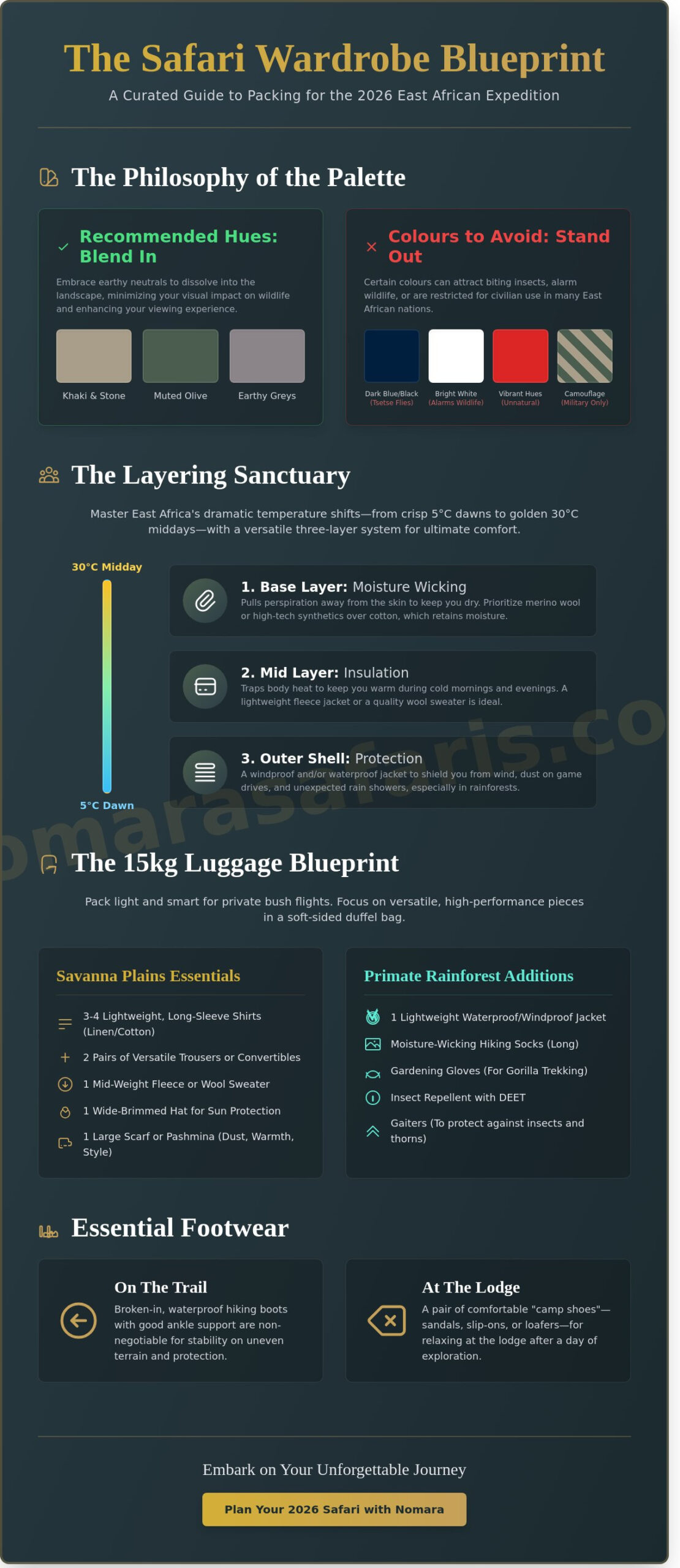
The Safari Palette is a silent language of respect, a curated collection of tones that allows the soul to dissolve into the untamed landscape while ensuring the body remains protected. When deciding what to wear on safari, the choice of color is far more than a stylistic preference. It’s a functional necessity born from the rhythms of the wild. Earthy neutrals like khaki, stone, and muted olive don’t just echo the Savannah’s dry grasses; they serve as a sophisticated camouflage that minimizes your visual impact on the environment.
- Khaki and Stone: These tones reflect heat and blend seamlessly with the dust of the East African plains or the golden grasslands of the Serengeti.
- Muted Olive: This shade is ideal for the lush riverine forests and verdant landscapes found across East Africa.
- Avoid Bright Whites and Reds: High-contrast colors signal danger to wildlife, often causing animals to retreat before you’ve even raised your binoculars.
The Science of Colour in the Bush
Wildlife observation relies on the art of invisibility. Apex predators like lions possess limited color vision, perceiving the world through depth and contrast rather than a vibrant spectrum. By wearing mid-tone neutrals, you break up your silhouette against the bush, allowing for more intimate encounters. Practical safety also dictates your wardrobe. Research into the behavior of the tsetse fly shows these biting insects are biologically attracted to dark, solid colors, particularly navy blue and black. In tsetse-prone regions of East Africa, wearing dark shades can lead to painful bites and unnecessary discomfort.
Cultural awareness is equally vital for the discerning traveler. While the history of safari style traces its origins back to military uniforms, modern explorers must avoid camouflage patterns. In many East African nations, camouflage is reserved strictly for military personnel. Wearing it as a civilian is often illegal and can lead to complications with local authorities, detracting from the serenity of your journey.
The Aesthetic of the Modern Explorer
The modern safari wardrobe is a curated sanctuary of style. It moves away from the rigid costume of the past toward a timeless, sophisticated look that feels at home in a private lodge. Choosing what to wear on safari involves selecting pieces that transition effortlessly from a sunrise game drive to a candlelit dinner under the stars. This versatility ensures you remain prepared for the dust of the trail without sacrificing elegance during your evening retreat.
Natural fibers are the cornerstone of this experience. Organic linen and long-staple cotton offer unparalleled breathability, allowing your skin to stay cool during the midday heat. These textiles age beautifully, acquiring a soft patina that tells the story of your journey through the wilderness. A bespoke linen shirt or a well-tailored pair of cotton trousers provides the comfort required for the bush while maintaining an air of quiet, authoritative elegance for your private dinner.
The Layering Sanctuary: Mastering the 24-Hour Safari Cycle
The African wilderness operates on a rhythm of dramatic contrasts. As you step into an open-sided vehicle at dawn, the air often sits at a crisp 5°C, biting at exposed skin. By high noon, that same landscape transforms under a relentless equatorial sun, with temperatures soaring toward 30°C. Deciding what to wear on safari isn’t merely a matter of style; it’s about creating a personal sanctuary that adapts to these shifting microclimates. Mastery of the 24-hour cycle relies on the “three-layer” rule: a moisture-wicking base to pull perspiration away, an insulating middle to trap heat, and a protective outer shell to deflect the wind.
Technical fabrics are your greatest ally in this environment. High-tech synthetic blends or lightweight merino wool outperform traditional cotton, which tends to trap moisture and leave you chilled when the sun dips. Beyond the core layers, a mid-weight pashmina or large scarf is the most versatile tool in a traveler’s kit. It serves as a shield against the fine dust of the Serengeti, a soft pillow for a bush plane flight, or an elegant wrap for a private dinner under the stars.
The Dawn Departure: Insulation and Comfort
The first light of morning is magical, but the wind chill in a moving, open vehicle is formidable. A lightweight, packable down jacket is essential for these early hours. It offers significant warmth without the bulk, compressing into a small pouch once the sun crests the horizon. If your journey falls during the cooler months of July or August, the chill is even more pronounced. During this window, protecting your extremities with light gloves and a breathable beanie is vital. For those coordinating their wardrobe with the seasons, understanding the best time to visit East Africa will help you determine exactly how heavy your insulation should be. These small additions ensure you’re focused on the leopard in the acacia tree rather than the bite of the morning air.
The Midday Heat: Breathability and Sun Protection
As the day matures, the challenge shifts from retaining heat to managing solar intensity. Modern safari attire utilizes roll-up tabs that convert long sleeves into short ones, offering instant ventilation as the mercury rises. In 2026, chemical-free sun protection has become the gold standard. UPF-rated clothing provides a physical barrier against UV rays that won’t wash off or feel greasy in the humidity. Loose-fitting garments crafted from high-tech synthetic blends create a cooling chimney effect, allowing air to circulate against the skin. This thoughtful approach to what to wear on safari ensures you remain comfortable during the heat of the afternoon. To begin curating your own soul-stirring adventure, explore the bespoke journeys offered by Nomara Safaris.
Terrain-Specific Gear: Savanna Plains vs. Primate Rainforests
The landscape you traverse dictates the very fiber of your wardrobe. Whether you’re drifting across the golden seas of the Serengeti or navigating the mist-shrouded slopes of the Virungas, your choice of what to wear on safari must evolve with the terrain. A delicate linen might feel divine under a Baobab tree, yet it’ll surrender instantly to the thorns of a primate sanctuary. Ultimately, your destination dictates your fabric durability.
While the open plains offer a sense of liberation, the rainforest demands a protective embrace. The transition from a vehicle-based game drive to an immersive forest trek requires a shift in both mindset and material. Understanding these nuances ensures that your focus remains on the wildlife rather than personal discomfort.
Savanna Style: Kenya and Tanzania Essentials
In the vast expanses of the Maasai Mara or during a 3 days Murchison Falls safari, the elements are your primary companions. Dust is a constant presence on these sun-drenched plains. A buff neck gaiter becomes an indispensable shield, protecting your breath and skin from the fine silt kicked up by the vehicle. It’s a small but vital piece of gear for maintaining comfort over long distances.
- Wide-brimmed hats: Ensure yours has a sturdy chin strap. High-speed game drives across the open savanna often create a fierce wind that can claim a loose hat in seconds.
- Lightweight trousers: Opt for technical fabrics that offer UV protection and moisture-wicking properties to handle the midday heat.
- Layering: Temperatures can drop to 10 degrees Celsius during early morning drives before climbing to 30 degrees by noon.
Rainforest Rigour: Gorilla and Chimpanzee Trekking
The emerald cathedrals of Bwindi Impenetrable Forest and Rwanda’s Volcanoes National Park demand a more rugged approach. While classic safari shorts are perfect for the Mara, they’re a distinct liability in the dense undergrowth. The forest floor is a complex ecosystem. You must adopt the “tucking in” method, pulling your socks over your trouser hems to create a physical seal against safari ants and stinging nettles that thrive in the damp shade.
Long-sleeved shirts are non-negotiable for protection against forest insects and jagged branches. The secret to a successful trek often lies in a pair of sturdy gardening gloves. These provide essential grip and protection when you’re pulling yourself up steep, muddy embankments or grabbing onto vines for stability. To manage the inevitable moisture, pair your boots with waterproof gaiters. These prevent mud and debris from entering your footwear, ensuring your focus remains on the soul-stirring moment you finally encounter a mountain gorilla family. When considering what to wear on safari in these regions, prioritize utility and protection over pure aesthetics. For those planning a gorilla trekking adventure, our guide on whether Uganda is safe for tourists in 2026 offers essential context for planning your journey with confidence.
The Curated Checklist: A 2026 Safari Packing Blueprint
Packing for a 7 to 10 day bespoke journey requires a shift in perspective. You aren’t just filling a suitcase; you’re assembling a toolkit for discovery. Most regional bush flights across East and Southern Africa enforce a strict 15kg weight limit. This 33lb restriction includes your carry-on luggage. While it might seem restrictive, it’s an invitation to prioritize quality over quantity. Modern lodge laundry services are the secret to this minimalism. Most luxury camps provide daily laundering, often returning items within 24 hours. This allows you to pack only enough clothing for three days of active adventure while maintaining an effortless elegance.
The Core Capsule Wardrobe
Your wardrobe should mirror the shifting light of the savanna. When considering what to wear on safari, think in layers that breathe and protect. This curated selection ensures you remain comfortable from the chilly dawn to the golden hour. Choose neutral tones like sand, olive, and stone to blend into the environment and respect the silence of the wilderness.
- 3x Long-sleeved shirts: Technical fabrics or light linen guard against the sun and evening insects.
- 2x T-shirts: These are ideal for layering under a fleece or wearing during the heat of midday.
- 2x Convertible trousers: These offer the versatility of shorts with the protection of full-length pants when walking through tall grass.
- 1x Smart-casual evening outfit: A simple dress or tailored trousers for dinner under the stars at a private sanctuary.
- Wool-blend socks: Merino wool is essential. It wicks moisture and prevents odors during long days in the bush.
- Swimwear: A dip in the lodge pool provides a necessary reprieve during the afternoon heat.
The Practical Accessories
The right tools bridge the gap between observing nature and feeling a part of it. Precision is paramount. High-quality polarized sunglasses are non-negotiable for reducing the intense glare reflecting off the water or the dry plains. For wildlife viewing, 8×42 binoculars are the industry gold standard. They offer a wide field of view and excellent light gathering without the heavy weight of larger lenses. This specific magnification is perfect for tracking the flick of a leopard’s tail or the intricate plumage of a lilac-breasted roller.
Your 2026 tech kit should prioritize efficiency. Mirrorless cameras have replaced heavy DSLRs, offering silent shutters that won’t disturb a predator’s rest. Always carry a high-capacity power bank. Even the most remote wilderness camps offer charging, but having portable power ensures your devices are ready for every soul-stirring moment. Finally, pack a compact medical kit with antihistamines, sterile wipes, and any personal prescriptions to ensure self-sufficiency in the untamed wild. Understanding what to wear on safari extends beyond clothing to the very tools that capture the legacy of your trip.
Ready to experience the raw beauty of the African wilderness for yourself? Explore our bespoke safari itineraries and begin your journey into the heart of the continent.
Completing the Journey: Footwear and Final Touches
The rhythm of the African wilderness is felt first through the soles of your feet. Selecting the right foundation is the final, vital layer in deciding what to wear on safari, as the terrain dictates your choice with uncompromising clarity. Whether you’re tracking the Great Migration across the golden grasses of the Serengeti or navigating the mist-shrouded slopes of the Virunga Mountains, your footwear acts as the bridge between your spirit and the ancient earth.
Stepping with Confidence: Footwear Guide
For those venturing into the emerald cathedrals of Rwanda or Uganda, heavy-duty hiking boots are non-negotiable. These terrains often involve 45-degree inclines and dense undergrowth; you’ll require the structural integrity of high-ankle support to protect against fatigue. Don’t arrive with pristine, unused gear. We recommend a minimum of 15 miles of “break-in” time before your departure to ensure the leather molds to your stride. On the open savannah, however, the 12-ounce agility of a lightweight trail runner is often superior to a 3-pound boot. These breathable alternatives allow for silent movement during bush walks while keeping your feet cool in the 85-degree midday heat.
The ritual of the “Camp Shoe” is perhaps the most cherished transition of the day. As the sun dips below the horizon, shedding your rugged trail gear for a pair of high-quality leather sandals or simple flip-flops signals a return to the sanctuary of the lodge. These are also essential for the short walk to the outdoor shower or navigating the wooden boardwalks of a private water-side camp. It’s a small shift that marks the beginning of your evening reflection under the stars.
Final touches extend to your environmental footprint. Since Tanzania implemented its strict ban on single-use plastic bags in 2019, your toiletry kit should reflect a commitment to conservation. Replace plastic bottles with glass or aluminum containers; utilize biodegradable soaps that respect the delicate ecosystems of the local water sources. This mindful approach ensures the landscapes we cherish remain untamed for generations to come. Your preparation is a silent promise to the wilderness.
The Nomara Difference
At Nomara Safaris, we believe the journey begins long before you touch down on the red soil of East Africa. Our bespoke itineraries include a curated, one-on-one packing consultation to ensure your gear matches the specific micro-climates of your route. Your private guide, a master of the local landscape, provides the ultimate security, helping you navigate everything from rocky outcrops to soft riverbeds with ease. We handle the technicalities so you can focus on the soul-stirring moments that define a true sanctuary. Design your dream East Africa safari with Nomara Safaris and step into a world where every detail is crafted with intention.
Step Into the Untamed Heart of 2026
The art of preparation transforms a simple trip into a profound sanctuary of discovery. By 2026, the modern explorer understands that a curated wardrobe is more than aesthetic; it’s a silent dialogue with the landscape. You’ve mastered the earth-toned palette that honors the savanna and the rugged, moisture-wicking layers essential for the primate rainforests of East Africa. Footwear isn’t just gear. It’s your physical connection to the ancient soil of Uganda, Kenya, and Tanzania. Deciding what to wear on safari sets the stage for a journey where every detail is handled with quiet expertise.
As a brand operated by Nexto Investment Company Limited, we provide expert-guided tours that prioritize both your comfort and the delicate balance of conservation. We believe travel should leave a legacy. Every itinerary we build focuses on sustainable impact and community empowerment across these three iconic nations. Your adventure awaits in the tall grass and the misty canopy. Begin your soul-stirring journey with a bespoke Nomara Safaris itinerary. The wild is calling for those who travel with intention.
Frequently Asked Questions
Do I really need to buy expensive safari-branded clothing?
You don’t need to purchase specialized safari-branded attire to enjoy an authentic journey. Focus instead on high-quality natural fibers like linen or cotton that breathe with the rhythm of the savannah. While technical gear offers moisture-wicking properties, your existing wardrobe of neutral tones will suffice perfectly. Ensure your choices reflect the quiet elegance of the wilderness while providing comfort during long, soul-stirring game drives.
Can I wear jeans on a safari in Kenya or Tanzania?
You can certainly wear jeans while visiting Kenya or Tanzania, though they’re often impractical for the midday heat. Denim is heavy and slow to dry, which can be uncomfortable during the 30-degree Celsius temperatures typical of the East African afternoon. Save your denim for the cooler evenings around the campfire. When deciding what to wear on safari during the day, lightweight trousers in khaki or stone remain the superior choice for comfort and breathability.
What is the best type of hat for an African safari?
A wide-brimmed hat with a circumference of at least 7 centimeters is the essential choice for protecting your face and neck from the equatorial sun. Choose a design with a secure chin strap to ensure it remains in place during breezy drives in open-sided vehicles. This simple accessory becomes a private sanctuary against the heat. It allows you to focus entirely on the horizon without the distraction of a harsh glare.
Are there specific colours I should avoid for gorilla trekking?
Avoid wearing bright blue or black garments when trekking for gorillas in Rwanda or Uganda, as these shades attract tsetse flies. Instead, opt for forest greens and deep khakis that blend seamlessly into the dense canopy of the Bwindi Impenetrable Forest. This palette ensures you remain an unobtrusive observer in their ancient home. Neutral tones also hide the mud and organic debris encountered on the steep 45-degree slopes of the volcanic mountains.
How do I pack for a 15kg weight limit on bush flights?
Adhere to the strict 15kg limit on bush flights by utilizing a soft-sided duffel bag that fits into the compact 25cm by 30cm luggage pods. Most luxury lodges provide complimentary overnight laundry services, meaning you only need to pack three sets of clothing. This curated approach to packing light ensures your journey remains effortless. It allows the small Cessna aircraft to navigate the remote airstrips of the Maasai Mara safely and efficiently.
Is it okay to wear bright colours in the safari lodge at night?
It’s perfectly acceptable to wear bright colors or your favorite patterns once you’ve returned to the sanctuary of the lodge for the evening. Since the wildlife remains at a distance, you can embrace your personal style during sundowners or dinner. Transitioning into vibrant attire creates a beautiful contrast with the darkening untamed landscape. It marks the shift from the active exploration of the day to the sophisticated relaxation of a private African night.
Should I bring a formal outfit for dinners at luxury lodges?
You don’t need formal evening wear like suits or gowns for dinners at even the most exclusive luxury lodges. The atmosphere is one of refined safari chic, where smart-casual attire in natural fabrics is the preferred aesthetic. A crisp linen shirt or a simple summer dress is ideal for a bespoke dinner under the stars. This balance of elegance and practicality ensures you feel sophisticated without the burden of excessive luggage or stiff formality.
What kind of shoes are best for a walking safari?
Sturdy, closed-toe hiking boots with significant ankle support are the best choice for a walking safari through the African bush. These shoes protect you from thorns and uneven terrain while you track wildlife on foot. Ensure your boots are well-broken-in at least 30 days before your departure to avoid blisters. When considering what to wear on safari for these intimate encounters, prioritize footwear that offers both quiet movement and robust protection.

