
The Best Time to Visit East Africa: A Curated Guide for 2026
What if the most iconic wildlife spectacle on earth is actually best experienced when the guidebooks tell you to stay home? Most travelers plan their journey around a single, crowded window, yet the true pulse of the land reveals itself in the quiet transitions between seasons. Finding the best time to visit east africa requires more than a glance at a weather map; it demands an intimate understanding of the rhythmic shifts across Kenya, Tanzania, Uganda, and Rwanda. We know you’re navigating the confusion of overlapping rainy seasons and the anxiety of missing a Great Migration crossing in 2026. You seek a journey that feels like a private invitation into the wild, not a struggle against the elements or the masses.
This curated guide distills decades of field expertise into a clear roadmap for your bespoke safari. We’ll reveal the seasonal “sweet spots” that offer the perfect balance of predator action and emerald-hued solitude. You’ll gain the confidence to book a multi-destination itinerary that avoids the crowds and the deepest mud. Prepare to discover how the right timing transforms a simple trip into a soul-stirring sanctuary of discovery.
Key Takeaways
- Master the rhythmic cycles of the dry and green seasons to align your journey with the soul-stirring pulse of the African wilderness.
- Identify the best time to visit east africa to witness the raw drama of the Great Migration’s river crossings and the ancient, circular dance of the Serengeti.
- Discover the exclusive windows for primate trekking in the emerald rainforests of Rwanda and Uganda, where clarity and accessibility converge.
- Uncover why the vibrant “Green Season” serves as a private sanctuary for photographers seeking dramatic light and dust-free, cinematic landscapes.
- Learn to weave the “shoulder seasons” into your 2026 itinerary to curate a bespoke odyssey that balances quiet intimacy with unparalleled wildlife encounters.
Understanding the Seasonal Pulse: The Dry vs. Green Seasons
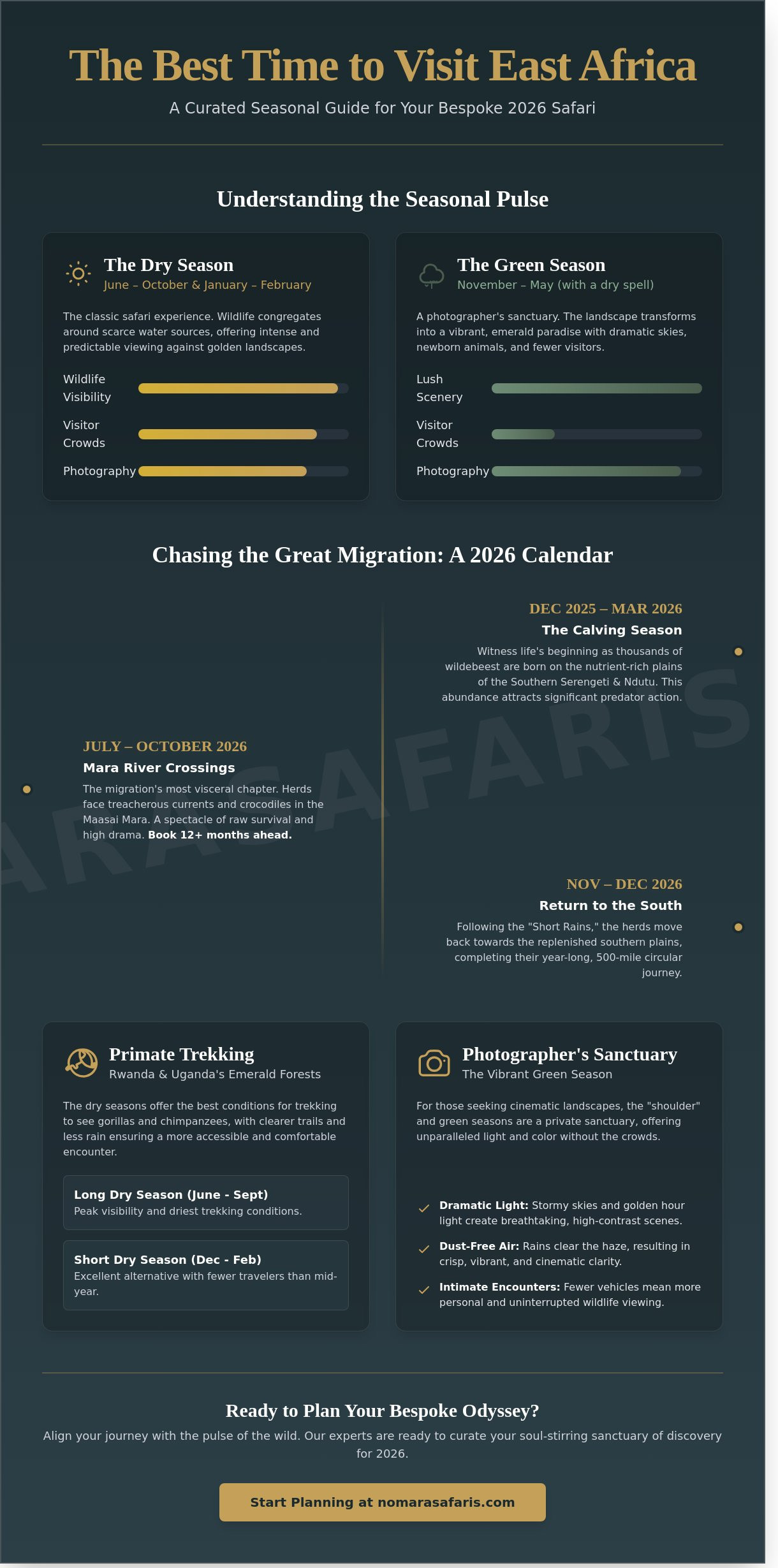
To seek the soul of the continent, one must first learn its heartbeat. The rhythm of the wild is dictated by a timeless atmospheric dance. Determining the best time to visit east africa requires an appreciation for the two primary climatic cycles: the long dry season and the vibrant green season. These phases dictate every movement of the wild, from the smallest bird to the largest migratory herds. The “Short Rains” arrive in November and December, offering a gentle awakening to the parched earth with brief, refreshing afternoon showers. In contrast, the “Long Rains” from March to May provide a more profound deluge that replenishes the Great Rift Valley. Understanding the Climate of East Africa is essential for any traveler seeking to align their journey with the natural world’s movements. This seasonal shift transforms the landscape from a shimmering, golden savannah into an emerald sanctuary. It’s a poetic rebirth that alters the very texture of the wilderness. The Safari High Season is defined as the period between June and October.
The Classic Dry Season (June to October)
During these months, the land surrenders its moisture, and the untamed world focuses on survival. Wildlife congregates around dwindling water sources, making sightings remarkably predictable and intense. You’ll find lions, elephants, and buffalo gathered at the few remaining riverbanks, creating a theater of natural drama. The air remains crisp with clear blue skies, while cooler evenings offer a refreshing respite for the discerning traveler. It’s a time of unparalleled visibility. However, one should expect higher visitor numbers in iconic parks like the Maasai Mara. The popularity of this window is a testament to the sheer density of life on display. It’s a curated experience of nature at its most raw and accessible.
The Short Dry Spell (January to February)
This period represents a secret window for those who value intimacy and nuance. It’s an unparalleled time for clear photography in the Serengeti, as the dust of the dry season has settled and the air is strikingly transparent. The landscape sits in a delicate balance of warm temperatures and lush, but manageable, vegetation. Birdwatching enthusiasts will find this time particularly soul-stirring, as migratory species are present in spectacular numbers. This is also the calving season for many herbivores. Thousands of new lives begin on the southern plains, attracting predators in a display of life’s fragile persistence. It’s a bespoke moment for travelers who wish to witness the circle of life without the crowds of the mid-year peak. The best time to visit east africa often depends on whether you seek the grand spectacle or these quiet, profound moments of discovery.
Chasing the Great Migration: A 2026 Safari Calendar
The Great Migration isn’t a single event but a perpetual, circular journey. It’s a primal heartbeat that dictates the rhythm of the Serengeti-Mara ecosystem. Over 1.5 million wildebeest, joined by 200,000 zebras, traverse a 500-mile loop across Tanzania and Kenya in a constant search for fresh grazing. For many travelers, the best time to visit east africa is defined by the location of these massive herds. At Nomara Safaris, we believe the experience should be as fluid as the migration itself. Our bespoke mobile camps are meticulously curated to follow the movement, providing a private sanctuary at the very edge of the action without the constraints of permanent structures.
The Mara River Crossings (July – October)
This period represents the migration’s most visceral chapter. Between July and October, the herds gather on the banks of the Mara River, facing treacherous currents and waiting crocodiles. It’s a spectacle of raw survival and high drama. We focus on securing exclusive viewing points away from the primary tourist hubs, ensuring your encounter remains intimate and profound. Because this window is the most sought-after in the 2026 calendar, securing a reservation requires at least 12 months of lead time. While the drama unfolds on the plains, many of our guests choose to balance the intensity by exploring primate trekking in Uganda, where the emerald forests offer a different kind of soulful connection to the wild.
The Calving Season and the Southern Circuit (December – March)
As the rains begin to nourish the Southern Serengeti and the Ndutu region, the herds settle for the calving season. This is a time of incredible abundance and renewal. In February alone, as many as 8,000 wildebeest calves are born every day. This surge of life draws an unparalleled concentration of predators; you’ll witness lions, leopards, and cheetahs in their most active state. The landscape during these months is lush and unhurried, offering a sense of vastness that’s hard to find elsewhere. It’s a transformative window where the circle of life is visible in its most honest form. If you’re ready to witness this ancient cycle, you can begin planning your bespoke journey with our experts today.
The Golden Windows for Primate Trekking in Uganda and Rwanda
The rhythm of the rainforest differs sharply from the sun-drenched plains of the Serengeti. In the emerald heights of Uganda and Rwanda, the climate is a living, breathing entity. While the savannah offers vast horizons, the primate sanctuaries of Bwindi Impenetrable Forest and Volcanoes National Park offer an intimate, vertical world. Identifying the best time to visit east africa for trekking requires a deep understanding of these microclimates. The premier windows occur from June to August and again from December to February. During these months, the rains retreat, revealing the true majesty of the Albertine Rift.
The transition between these landscapes is where the magic of a curated journey truly shines. It’s remarkably simple to bridge the gap between the roaring falls and the silent forest. Many travelers choose to combine a 3 days Murchison Falls safari with their primate encounter. This logistical harmony allows you to witness the powerful surge of the Nile before retreating into the high-altitude sanctuaries where the mountain gorillas dwell. The contrast between the golden grasses of the north and the deep malachite of the south creates a soul-stirring narrative of the African wild.
Trekking Bwindi Impenetrable Forest in the Dry Season
The dry months bring a distinct clarity to the ancient forest. Trails that are often slick with mountain mud become firmer, allowing for a more deliberate, unhurried pace through the undergrowth. Photography is unparalleled during this time. The slightly thinner foliage allows shards of dappled sunlight to reach the forest floor, perfectly illuminating the silvered fur of a mountain gorilla. Because these conditions are so sought after, permit availability is strictly limited. With only 160 gorilla permits issued daily in Uganda, you’ll need to book your bespoke primate tour at least six to twelve months in advance to ensure your place in this private world. Before finalizing your plans, many of our guests find it reassuring to review our comprehensive guide on whether Uganda is safe for tourists in 2026, which addresses the realities of travel security and the bespoke infrastructure that ensures a seamless experience.
The Rainy Season Trek: An Intimate Encounter
The “Green Season” from March to May and October to November offers a different kind of magic for the intrepid soul. While the terrain is more demanding, the rewards are profound. Gorillas often descend to lower, warmer altitudes during the rains to feast on fresh bamboo shoots. This often means shorter trekking times. The atmosphere is evocative and moody; mist clings to the volcanic peaks, creating a sanctuary of quiet beauty. To navigate this humid environment, you’ll require high-performance, breathable waterproof gear. It’s a time for those who value solitude and the raw, untamed spirit of the rainforest over the convenience of a dry trail.
Beyond the Peak: Why the ‘Green Season’ is the Photographer’s Sanctuary
There is a persistent myth that the arrival of the rains signals a time to stay away. For the discerning traveler, this couldn’t be further from the truth. While the dry season offers ease of spotting, the Green Season provides a soul-stirring canvas that the dusty months simply cannot replicate. The air, scrubbed clean of haze, achieves a crystalline clarity that makes every horizon sharp. Photographers prize this time for the soft, diffused light of a clouded sky and the dramatic, moody backdrops that transform a standard wildlife portrait into a piece of fine art. It’s a time when the wilderness feels raw and vital.
We define the Green Season as a period of profound renewal, lower costs, and unparalleled solitude. It’s a secret known to those who value the quiet pulse of the wild over the bustle of the peak crowds. For many connoisseurs, this is the best time to visit east africa because the landscape itself becomes a living, breathing character in the story of your journey. You aren’t just observing nature; you’re witnessing its rebirth.
The Beauty of the Emerald Landscape
When the first clouds gather, the transformation is instantaneous. The scorched browns of the savannah surrender to a vibrant, electric green. This flush of new grass triggers the arrival of over 300 species of migratory birds from Europe and Asia, filling the air with a complex symphony of calls. The weather follows a predictable, poetic rhythm. Intense afternoon thunderstorms often sweep across the plains for sixty minutes, clearing just as quickly to leave behind the most spectacular, high-contrast sunsets you’ll ever witness. The scent of the African bush after rain, a mixture of damp earth and wild jasmine, creates a sensory immersion that stays with you long after you return home.
Exclusivity and Value in the Low Season
Traveling during this window offers a level of intimacy that’s impossible to find during the Great Migration peaks. With fewer guests in the parks, the opportunity for private vehicle upgrades increases significantly. You’ll often find yourself as the sole guest in a boutique camp, receiving the undivided attention of master guides who have more time to share their deep ancestral knowledge of the land. Accessing world-renowned sanctuaries that are typically booked eighteen months in advance becomes a reality. This season also plays a vital role in our commitment to the continent. By visiting now, you directly support year-round employment for local staff and ensure that conservation efforts remain funded during the quieter months. It’s a choice that reflects both sophisticated taste and a dedication to a lasting legacy.
Ready to capture the wild in its most vibrant state? Explore our bespoke Green Season itineraries and find your own private sanctuary.
Planning Your Bespoke East African Odyssey
Crafting a 2026 journey through the cradle of humanity requires more than a simple calendar; it demands an understanding of the wild’s shifting rhythms. While many travelers flock to the peaks of the dry season, the discerning explorer looks to the shoulder months of June and October. These windows offer the best time to visit east africa for those seeking a balance of vibrant landscapes and intimate wildlife encounters. In June, the dust hasn’t yet settled, and the air remains crisp and clear. By October, the plains are golden, and the concentrated wildlife around remaining water sources provides a dramatic theater of survival just before the short rains arrive.
Logistics in this vast region are handled with quiet precision. Moving from the expansive savannahs of the Masai Mara to the mist-shrouded rainforests of Uganda is made seamless through private regional charters. Flights from Nairobi’s Wilson Airport to Entebbe take approximately 2.5 hours, effectively bridging two entirely different worlds in a single afternoon. These bush planes aren’t just transport; they’re low-altitude galleries offering a perspective of the Great Rift Valley that few ever witness.
The Ultimate Multi-Country Itinerary
A sophisticated 2026 itinerary often begins with the thundering drama of the Great Migration in Kenya. After four days of witnessing the raw intensity of the Mara, you’ll transition to the silent, emerald sanctuary of Bwindi Impenetrable Forest. Balancing high-intensity trekking with unhurried afternoon sundowners ensures the journey remains a rejuvenation rather than a marathon. Your private guide acts as the storyteller throughout this transition, navigating the subtle seasonal nuances that cross borders, ensuring you’re always in the right place as the light hits the horizon.
- Kenya: Focus on the private conservancies for exclusive Great Migration sightings.
- Uganda: Experience the profound silence of gorilla trekking in the ancient canopy.
- The Connection: Utilize direct regional links to maximize your time in the wilderness.
Taking the Next Step Toward the Untamed
The best time to visit east africa is ultimately a personal discovery. A bespoke consultation allows us to align your specific interests, whether they be avian photography or predator tracking, with the 2026 lunar cycles and migratory patterns. This level of curation prepares you for the emotional weight of the experience. It’s a journey that lingers in the soul long after the dust of the Serengeti has been washed away. We invite you to step into a world where every detail is an expression of craftsmanship and every moment is a private sanctuary.
Your legacy of adventure begins with a single, intentional conversation. Design your dream East Africa safari with our experts and reclaim your connection to the natural world.
Your 2026 Legacy in the Wild
The rhythmic pulse of the continent shifts with the rains, making the best time to visit east africa a choice between the golden dust of the 2026 Great Migration and the vibrant, lush solitude of the green season. Between July and September, the plains ignite with life, while the February calving season offers a raw look at the circle of life in the Serengeti. Our team of local experts navigates the complexities of the wild for you, from the expert procurement of restricted gorilla and chimpanzee permits to the creation of bespoke, private itineraries that redefine luxury. We view every safari as a sanctuary, a place where sustainable wilderness conservation meets unparalleled craftsmanship. It’s a commitment to a legacy that transcends the typical holiday. By choosing a path less traveled, you engage in a transformative experience that honors the untamed spirit of the land. Africa doesn’t just show you its beauty; it invites you to become part of its story.
Begin crafting your soul-stirring East African journey with Nomara Safaris
Frequently Asked Questions
When is the absolute best month to see the Great Migration?
August is the absolute best month to witness the dramatic Mara River crossings in the northern Serengeti and Masai Mara. During this window, over 1.5 million wildebeest brave crocodile-infested waters in a raw display of survival. It’s a primal, soul-stirring spectacle. For those seeking the tender beginnings of life, February offers the calving season in the southern Serengeti. Here, 8,000 calves are born daily into the untamed wilderness.
Is it worth visiting East Africa during the rainy season?
Visiting during the rainy season, specifically April and May, offers a private and lush sanctuary for the discerning traveler. While some lodges close, the open ones provide a bespoke experience with 40 percent fewer visitors than peak July. You’ll find the best time to visit east africa if you prioritize vibrant emerald landscapes and dramatic lighting for photography. The air is crisp, and the dust of the plains has finally settled.
How far in advance should I book a 2026 gorilla trekking permit?
You should book your 2026 gorilla trekking permit at least 12 to 18 months in advance to secure your preferred dates. Only 96 permits are issued daily for Volcanoes National Park in Rwanda to ensure the protection of these majestic primates. Demand for these intimate encounters is high. Planning early allows us to curate a seamless journey that integrates this transformative experience into your broader, bespoke East African itinerary.
Can I see the Big Five and Gorillas in the same 10-day trip?
You can certainly encounter the Big Five and mountain gorillas within a 10 day journey by utilizing private bush flights between regions. A typical route pairs 4 days in the Serengeti or Masai Mara with 3 days in Rwanda’s Volcanoes National Park. This curated pace eliminates long drives, giving you more time for quiet observation. It’s a sophisticated way to experience Africa’s most iconic wildlife in a single, unhurried and soul-stirring expedition.
What is the weather like in East Africa in January and February?
January and February bring dry, warm days with temperatures averaging between 25 and 30 degrees Celsius across the East African savannahs. These months represent a short dry season, offering clear skies and excellent visibility for wildlife spotting. The landscape remains vibrant from the previous rains, yet the thinning vegetation makes it easier to track elusive leopards. It’s a golden window for those seeking warmth and unparalleled sunshine in the heart of the wilderness.
Are there fewer animals to see during the Green Season?
There aren’t fewer animals during the Green Season; rather, the wildlife is more dispersed across the lush, revitalized plains. Resident species like lions, leopards, and elephants remain in their territories year-round. In the Serengeti, you’ll find the Great Migration herds concentrated in the south for the calving season. Bird watchers will find this time particularly rewarding, as over 300 migratory bird species arrive to join the local populations in their verdant sanctuary.
What should I pack if I am visiting during the shoulder season?
Pack versatile layers and a high-quality waterproof jacket for a shoulder season visit in June or November. Temperatures can fluctuate by 15 degrees Celsius between a crisp sunrise game drive and a sun-drenched afternoon. Bring breathable, neutral-toned clothing to blend into the untamed surroundings. Sturdy, waterproof boots are essential for navigating damp trails. For a complete guide to dressing for every condition on the plains, our curated resource on what to wear on safari will ensure your comfort remains unparalleled as you explore the shifting, poetic moods of the African wilderness.
Is the Great Migration in Kenya or Tanzania during June?
The Great Migration is located in the central and western corridors of Tanzania’s Serengeti during June. This is the best time to visit east africa to witness the herds moving north toward the Grumeti River. While the herds haven’t yet reached Kenya’s Masai Mara, the Serengeti offers a vast, private stage for this ancient trek. You’ll see thousands of zebras and wildebeest gathered on the plains, preparing for the dramatic river crossings ahead.


What To Wear On Safari: A Curated Guide To Soul-Stirring Style In 2026 - Nomara Safaris
April 16, 2026 - 12:15 pm[…] a breathable beanie is vital. For those coordinating their wardrobe with the seasons, understanding the best time to visit East Africa will help you determine exactly how heavy your insulation should be. These small additions ensure […]