
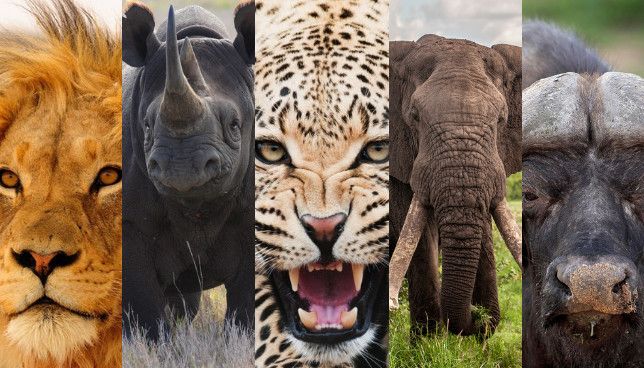
The term Big Five was coined by professional hunters, not conservationists. It referred not to the largest animals but to the five most difficult and dangerous to hunt on foot: the lion, leopard, elephant, rhino, and Cape buffalo. Today, the phrase has been reclaimed by the safari industry as the ultimate checklist for first time visitors. There is an undeniable thrill in encountering all five, a sense of completion that transforms a good safari into a great one. For travelers booking Big Five wildlife tours, the challenge is not simply finding these animals. It is finding them in a single destination, within a reasonable timeframe, without sacrificing the broader experience of the bush. East Africa delivers. Tanzania’s Ngorongoro Crater offers the densest concentration of Big Five on earth, often yielding all five in a single morning. Kenya’s Masai Mara and private conservancies deliver four reliably, with rhino requiring a trip to Lake Nakuru or Ol Pejeta. Uganda offers savannah Big Five in Queen Elizabeth and Murchison Falls, alongside the primates that make the country unique. At Nomara Safaris, we design Big Five wildlife tours that maximise your statistical probability of completing the set while keeping you immersed in the wonder of the savannah. This guide will walk you through each animal, the best destinations for each, and the itineraries that bring them all together.
The lion is the most social of the Big Five and, for most travelers booking Big Five wildlife tours, the most emotionally resonant sighting. Lions live in prides, typically consisting of related females, their cubs, and a coalition of two to three males. The females do the majority of the hunting, working cooperatively to take down prey much larger than themselves. The males defend the territory and mate with the females. Seeing a lion pride at rest, with cubs tumbling over one another and the males snoozing in the shade, is a safari highlight. But the real thrill comes from witnessing a hunt. Lions are crepuscular, most active at dawn and dusk, and a successful chase is a burst of explosive power.
On Big Five wildlife tours in East Africa, lion sightings are almost guaranteed in the Serengeti, Ngorongoro Crater, and Masai Mara. The Serengeti supports over 4,000 lions, making it the best destination on the continent. The Ngorongoro Crater has the highest density of lions in Africa, with prides that are habituated to vehicles. In Kenya, the Masai Mara’s famous Marsh Pride has been documented for decades. In Uganda, lions are present in Queen Elizabeth National Park and Murchison Falls, though they are less numerous than in Tanzania. Nomara Safaris positions you in the areas with the highest lion density based on the season.
The leopard is the most difficult of the Big Five to see on Big Five wildlife tours. It is solitary, nocturnal, and a master of camouflage. Leopards spend their days resting in trees or dense thickets, emerging at dusk to hunt. Unlike lions, they are silent and secretive. A leopard sighting is often a moment of quiet discovery: your guide stops the vehicle and points to a shape in a tree. It takes a moment for your eyes to resolve the branches into the outline of a cat. Then you see the tail hanging down, the spots, the golden eyes blinking slowly. It is a moment of pure magic.
The best destinations for leopards on Big Five wildlife tours are the Serengeti’s Seronera valley, where the riverine forest provides ideal habitat, and the Masai Mara’s Talek River area, where leopards are reliably seen on morning and evening drives. In Uganda, leopards are present in Queen Elizabeth National Park but are more elusive. Nomara Safaris assigns senior guides who specialise in finding leopards. They read alarm calls from baboons and impalas, track fresh footprints, and know the favourite trees of individual leopards.
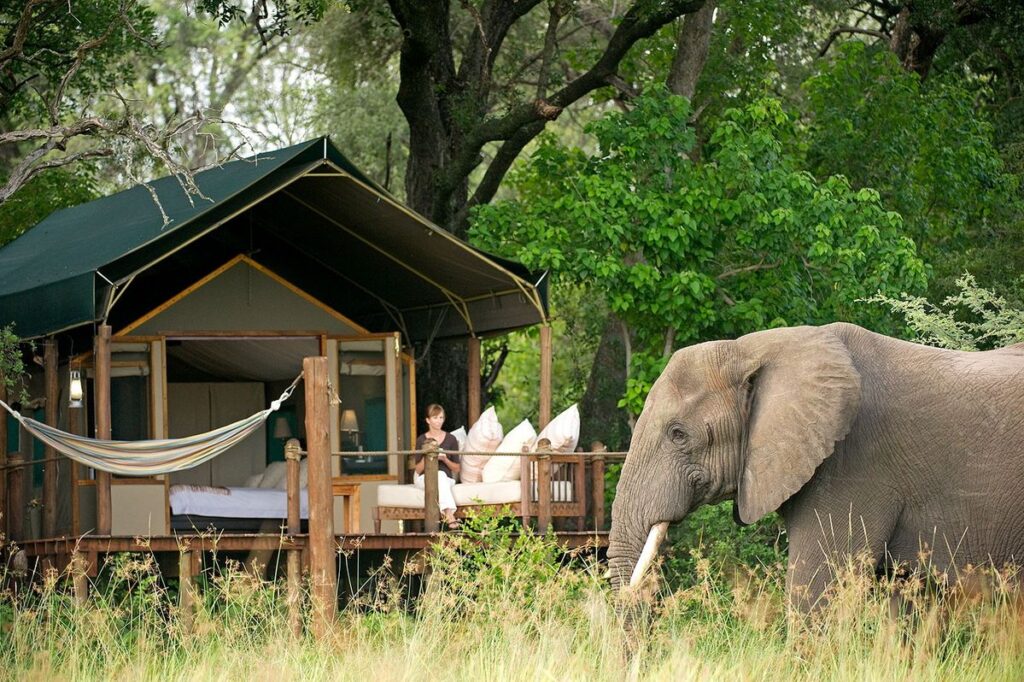
The elephant is the largest land animal on earth, and encountering one on Big Five wildlife tours is a humbling experience. Elephants are highly intelligent, social, and emotional. They live in matriarchal herds, with the oldest female leading the group. Seeing a herd of elephants cross the track, trunks touching, calves tucked between the adults, is a moment of profound connection. The great tuskers, old bulls with tusks that sweep the ground, are increasingly rare, but they still exist in Amboseli and Tarangire.
For Big Five wildlife tours focused on elephants, Tanzania’s Tarangire National Park is the best destination. During the dry season from June to October, the park hosts elephant herds of up to 300 individuals, drawn by the permanent water of the Tarangire River. Kenya’s Amboseli National Park offers elephants with the backdrop of Mount Kilimanjaro, a classic African image. In Uganda, elephants are abundant in Queen Elizabeth National Park and Murchison Falls. Nomara Safaris ensures that your Big Five wildlife tours include time in the parks with the highest elephant density.
The rhino is the most challenging of the Big Five to see on Big Five wildlife tours due to poaching pressures that have decimated populations across Africa. There are two species in East Africa: the black rhino, which is critically endangered, and the white rhino, which was introduced from southern Africa. Black rhino are solitary, aggressive, and prefer dense bush, making them harder to spot. White rhino are more social and graze on open plains, making them easier to see. Both are rare gifts on any safari.
The most reliable destination for rhinos on Big Five wildlife tours is the Ngorongoro Crater in Tanzania, where a protected population of black rhino lives on the crater floor. Sightings are not guaranteed, but the density is high enough that your chances are good. In Kenya, Ol Pejeta Conservancy and Lake Nakuru National Park offer excellent rhino viewing, including the last two northern white rhinos on earth. In Uganda, rhino are present at the Ziwa Rhino Sanctuary, a breeding project where you can walk with rhinos on foot. Nomara Safaris can include any of these destinations in your Big Five wildlife tours depending on your itinerary.
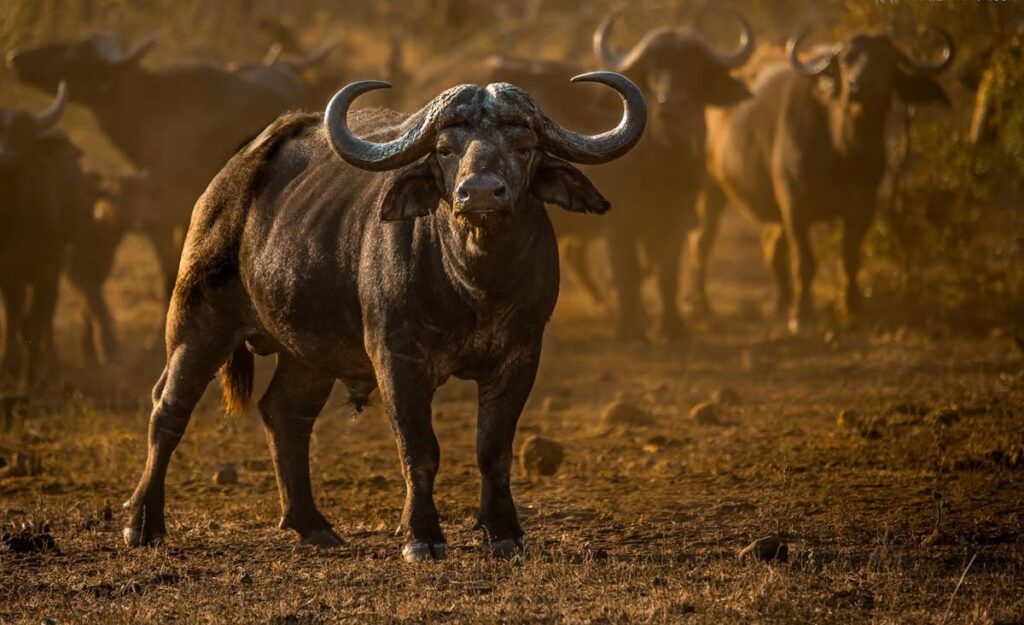
The Cape buffalo is often overlooked by travelers booking Big Five wildlife tours in favour of the more charismatic predators and elephants. But ask any guide which of the Big Five is most dangerous, and they will answer buffalo. Known as the Black Death, buffalo are unpredictable, aggressive, and have been known to circle back and ambush pursuers. They are also surprisingly subtle, disappearing into thick bush with ease. Seeing a large herd of buffalo, with their heavy horns and dark eyes, is an impressive sight.
Buffalo are the most ubiquitous of the Big Five on Big Five wildlife tours in East Africa. They are present in every savannah park in Tanzania, Kenya, and Uganda. In the Serengeti and Ngorongoro Crater, herds number in the hundreds. In Queen Elizabeth National Park, they graze on the banks of the Kazinga Channel. The old dagga boys, solitary old bulls, carry a particular menace. Nomara Safaris ensures that buffalo sightings are almost guaranteed on any Big Five wildlife tours itinerary.
Tanzania is the single best destination for Big Five wildlife tours in East Africa because it delivers all five reliably within a compact itinerary. The Ngorongoro Crater alone often produces lion, leopard, elephant, buffalo, and rhino in a single morning. Add the Serengeti, and you have the best lion and leopard viewing on the continent. Tarangire offers exceptional elephant viewing. For travelers who want to complete the Big Five with minimal travel, Tanzania is the answer.
Big Five wildlife tours in Tanzania typically focus on the northern circuit: Tarangire or Lake Manyara, the Serengeti, and the Ngorongoro Crater. A seven to ten day itinerary allows time for multiple game drives in each park, increasing your chances of completing the set. The Serengeti delivers the Migration as a bonus. Nomara Safaris designs Big Five wildlife tours in Tanzania that maximise your statistical probability of seeing all five.
Kenya offers exceptional Big Five wildlife tours, but with a caveat. The Masai Mara delivers lion, leopard, elephant, and buffalo in abundance. Rhino are present but rarely seen in the Mara. To complete the set, you must add a trip to Lake Nakuru National Park or Ol Pejeta Conservancy, both of which offer reliable rhino viewing. This makes for a slightly longer itinerary than Tanzania, but the quality of the game viewing in the Mara is outstanding.
Big Five wildlife tours in Kenya typically include the Masai Mara, Lake Nakuru, and Amboseli for elephants with Kilimanjaro views. The private conservancies bordering the Mara offer off road driving and night drives, enhancing your chances for leopard and lion sightings. Nomara Safaris recommends a ten to twelve day itinerary for Kenya.
Uganda offers Big Five wildlife tours as part of a broader primate focused itinerary. Queen Elizabeth National Park and Murchison Falls National Park both support lion, leopard, elephant, buffalo, and occasional rhino at the Ziwa Rhino Sanctuary. The density is lower than in Tanzania or Kenya, but the experience of combining savannah game drives with gorilla trekking is unique. For travelers who want both the Big Five and primates, Uganda is the only choice.
Big Five wildlife tours in Uganda typically include Queen Elizabeth, Murchison Falls, and the Ziwa Rhino Sanctuary. A ten to twelve day itinerary can include chimpanzee tracking in Kibale and gorilla trekking in Bwindi alongside the savannah game drives. Nomara Safaris designs these combination itineraries carefully.
This 7 day Big Five wildlife tour focuses on the northern circuit. Day one: arrive Kilimanjaro, transfer to Arusha. Day two: drive to Tarangire for elephants and buffalo. Day three: drive to Ngorongoro Crater rim. Day four: full day on the crater floor for lion, leopard, rhino, and buffalo. Day five: drive to central Serengeti for lion and leopard. Day six: morning game drive, then fly to Kilimanjaro. Day seven: depart. Cost range: mid range USD 3,500 to USD 5,000; luxury USD 7,000 to USD 10,000.
This 10 day Big Five wildlife tour covers Kenya’s best. Day one: arrive Nairobi. Days two to three: Masai Mara for lion, leopard, elephant, and buffalo. Day four: drive to Lake Nakuru for rhino. Day five: drive to Amboseli for elephants with Kilimanjaro. Days six to seven: game drives in Amboseli. Day eight: drive to Nairobi. Day nine: depart. Cost range: luxury USD 8,000 to USD 12,000.
This 12 day Big Five wildlife tour combines savannah and primates. Day one: arrive Entebbe. Day two: drive to Murchison Falls. Days three to four: game drives and boat safari for lion, elephant, buffalo, and leopard. Day five: drive to Kibale. Day six: chimpanzee tracking. Day seven: drive to Queen Elizabeth. Days eight to nine: game drives and Kazinga Channel boat safari. Day ten: drive to Bwindi. Day eleven: gorilla trekking. Day twelve: depart. Cost range: mid range USD 5,000 to USD 7,000; luxury USD 8,000 to USD 12,000 excluding permits.
Tanzania is the best country for Big Five wildlife tours in East Africa because the Ngorongoro Crater delivers all five within a single day. No other destination on earth offers such reliable rhino sightings alongside lion, leopard, elephant, and buffalo. The Serengeti adds the Great Migration as a bonus. Kenya also offers excellent Big Five viewing, but rhino require a trip to Lake Nakuru or Ol Pejeta. Uganda offers Big Five alongside primates, but the density is lower. For first time travelers who want to complete the set efficiently, Nomara Safaris recommends Tanzania.
Yes, in the Ngorongoro Crater in Tanzania, it is possible to see the Big Five in one day. The crater floor supports approximately 25,000 large mammals, including all five. Lions are common on the open plains. Leopards are present along the forested crater rim. Elephants roam the swamps and forests. Buffalo are everywhere. Black rhino are present on the crater floor, though they are the most difficult to spot. No other destination on earth offers such a condensed, reliable Big Five experience. For Big Five wildlife tours, Nomara Safaris always includes the Ngorongoro Crater.
The leopard is the most difficult of the Big Five to see on Big Five wildlife tours due to its solitary, nocturnal, and secretive nature. Unlike lions, which lounge in the open, leopards spend their days hidden in trees or dense thickets. A good guide finds leopards by reading alarm calls from baboons and impalas, tracking fresh footprints, and knowing the favourite trees of individual leopards. The rhino is also difficult, not because it is secretive but because it is endangered. In East Africa, rhino are restricted to a few protected areas. For Big Five wildlife tours, Nomara Safaris assigns senior guides who specialise in finding both leopard and rhino.
The dry season from June to October is the best time for Big Five wildlife tours in East Africa. Without rain, water sources shrink to permanent rivers and waterholes, and animals congregate around them, making sightings predictable. Vegetation thins out, removing cover. The dry season also coincides with the Great Migration in the Serengeti and Masai Mara. The green season from November to May offers lower prices and fewer crowds, but the thicker vegetation makes leopard and rhino more difficult to spot. For travelers who prioritise completing the Big Five, Nomara Safaris recommends the dry season.
Completing the Big Five is a rite of passage for first time safari goers. But the real magic of Big Five wildlife tours is not the checklist. It is the moments between the sightings. The lion cub tumbling over its mother’s tail. The leopard stretching on a tree branch. The elephant reaching up with its trunk to pull down acacia pods. The rhino turning its massive head to stare at you. The buffalo standing motionless in the long grass. At Nomara Safaris, we design Big Five wildlife tours that prioritise quality time with each animal, not just a tick on a list. Contact Nomara Safaris to begin planning your Big Five wildlife tour in East Africa.