
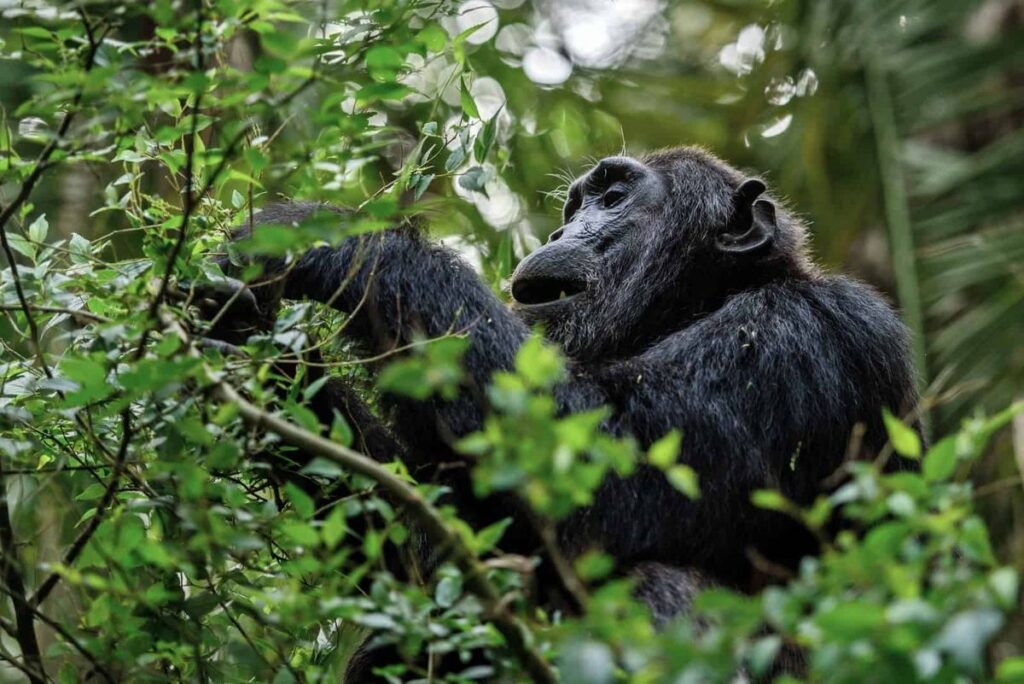
Kibale Forest National Park is widely regarded as the premier destination for chimpanzee trekking in East Africa. Known as the Primate Capital of the World, this lush rainforest in western Uganda is home to over 1,500 chimpanzees and 13 primate species, offering one of the highest chimpanzee sighting success rates in Africa. This guide covers everything you need to know about chimpanzee trekking in Kibale Forest, from permit costs and what to expect to the best time to visit and how to combine it with other safari experiences.
Kibale Forest National Park covers over 795 square kilometres of tropical rainforest, wetlands, and grasslands in western Uganda, near the town of Fort Portal. The park is home to the highest density and diversity of primates in East Africa, with 13 species including red colobus monkeys, L’Hoest’s monkeys, grey-cheeked mangabeys, and olive baboons. The park also protects over 370 bird species, forest elephants, buffalo, and bush pigs.
What makes Kibale stand out among chimpanzee trekking destinations is its exceptional sighting success rate, which exceeds 90 to 95 percent. The park has several habituated chimpanzee communities, including the well-known Kisongi group with approximately 80 individuals, making it possible for visitors to consistently encounter these intelligent primates in their natural habitat. The forest itself adds to the experience. Dense tropical vegetation, towering fig trees, and a network of trails create an immersive trekking environment. The combination of high encounter rates, expert guiding, and stunning scenery makes Kibale the premier chimpanzee trekking destination in East Africa.
A typical chimpanzee trekking day in Kibale Forest begins at the Kanyanchu Visitor Centre, the main hub for primate tracking. The briefing starts at 8:00 AM for the morning session or 2:00 PM for the afternoon session. You receive a safety briefing and are assigned to a chimpanzee community and a guide. Groups are limited to six to eight trekkers, ensuring a personalized experience.
The trek itself can last from 30 minutes to four hours, depending on where the chimpanzees slept and how far they have moved. The trackers locate the chimpanzees before you set out, significantly improving your chances of a successful encounter. As you walk through the forest, your guide will point out other primates, bird species, and medicinal plants. The forest trails can be muddy and uneven, especially during the wet season, so sturdy footwear is essential.
When you find the chimpanzees, you have exactly one hour with them. The experience is dynamic and exhilarating. Unlike the more subdued gorilla trekking, chimpanzees are highly active and vocal. You watch them socialise, groom, feed, and play. You may see them using tools, a behaviour that fascinated Jane Goodall. The pant-hoot chorus, where the chimpanzees vocalise together, is a highlight that echoes through the forest. After your hour, you trek back to the visitor centre, with the whole experience usually taking three to four hours in total.
A chimpanzee trekking permit is required to track chimpanzees in Kibale Forest. Permits are issued by the Uganda Wildlife Authority and are strictly limited to reduce the interaction between the apes and humans, as chimpanzees are prone to diseases. It is strongly recommended to book through a trusted tour operator, as they handle the process and payments on your behalf.
The cost of a chimpanzee trekking permit in Kibale Forest is USD 250 per person for foreign non-residents. Foreign residents pay USD 200, and East African citizens pay a reduced rate. The permit is valid only for the date specified and includes the park entry fee for that day. Because permits are in high demand, especially during the dry seasons, you should book at least three to six months in advance.
| Permit Type | Foreign Non-Resident | Foreign Resident | East African Citizen |
|---|---|---|---|
| Standard Trekking | USD 250 | USD 200 | Contact UWA |
| Habituation Experience | USD 300 | USD 250 | 250,000 UGX |
For travellers who want more than the standard one hour, Kibale Forest offers the Chimpanzee Habituation Experience. This full-day activity allows you to spend up to four hours or more with a chimpanzee community that is being habituated for tourism. You join researchers, trackers, and guides as they slowly acclimate the chimpanzees to human presence.
The habituation experience starts earlier than standard trekking, typically around 6:30 AM, and continues into the afternoon. During this time, you observe chimpanzees behaving naturally, without the conditioning of daily tourist visits. You learn about chimpanzee behaviour, social structure, and conservation. The experience is more educational and more immersive than standard chimpanzee trekking, making it suitable for dedicated primate enthusiasts, photographers, and researchers.
The habituation permit costs USD 300 per person, only USD 50 more than the standard trek. Only four visitors are allowed per day, so booking well in advance is essential. The fitness requirements are higher, as you are in the forest for a full day, often in challenging terrain.
Chimpanzee trekking in Kibale Forest is possible year round, but conditions vary depending on the season. The best time is during the dry seasons from December to February and June to September. During these months, the trails are less muddy, making trekking easier and more comfortable. Visibility is better, and the weather is generally more predictable.
The wet seasons from March to May and October to November have their advantages. The forest is lush and green, the birding is exceptional with migratory species present, and there are fewer visitors. Some lodges offer lower rates. Chimpanzee trekking is still possible, but the trails can be slippery and muddy. The chimpanzees remain present, and the dense vegetation can create a more atmospheric experience.
The morning treks are generally preferred because the chimpanzees are most active after leaving their nests. Afternoon treks are also available and can be equally rewarding.
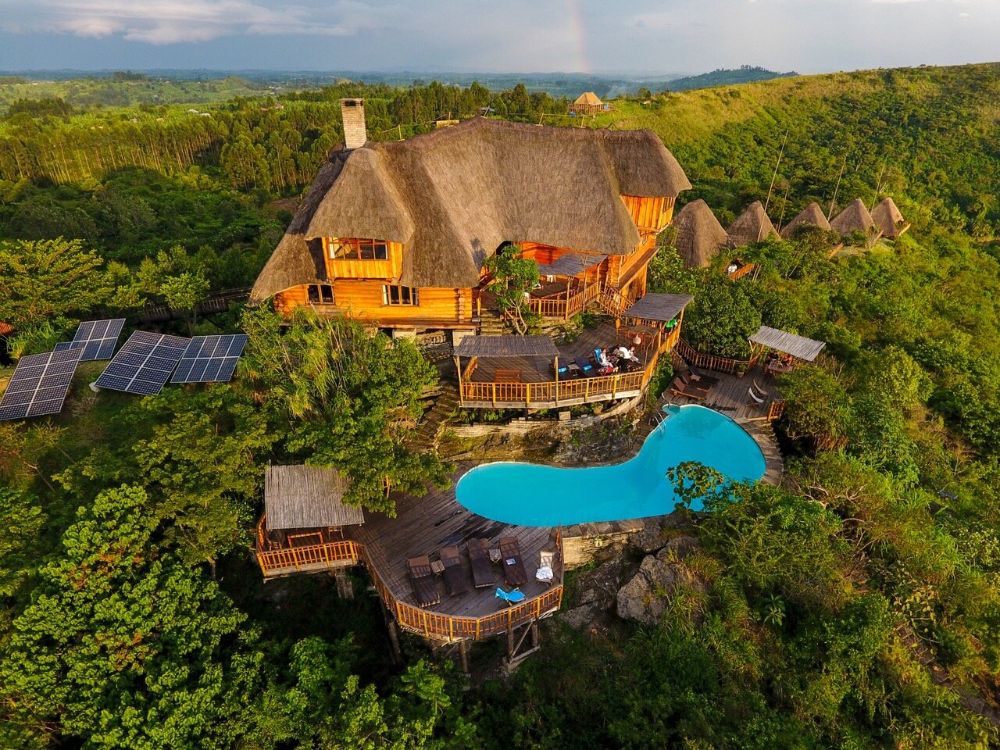
Kibale Forest has a range of accommodation options, from luxury lodges to budget campsites. Kyaninga Lodge is perched on the rim of a volcanic crater lake, offering spectacular views and a swimming pool. It is located approximately 45 minutes from the park. Primate Lodge Kibale is located within the forest itself, closest to the trekking starting point, with cottages and tents. Turaco Treetops is a semi-luxe lodge with stunning views over the Rwenzori Mountains, offering exceptional value.
For mid range travellers, Chimpanzee Forest Guesthouse offers comfortable rooms near the park headquarters. Kibale Forest Camp provides good value accommodation close to the forest. For budget travellers, Fort Portal town has several guesthouses and basic hotels, suitable for budget travellers willing to make the 30-minute drive to the park. Most lodges can arrange chimpanzee trekking permits and transport to the park headquarters.
Packing correctly makes a significant difference to your chimpanzee trekking experience. The forest terrain is uneven, the weather can change quickly, and insects are present. For clothing and footwear, pack waterproof hiking boots with ankle support and good grip, long trousers to protect against stinging nettles and insects, a long-sleeved shirt for sun and insect protection, a light rain jacket as rain is common even during dry seasons, and neutral colours like khaki, olive, or brown.
For essential gear, bring a daypack for water, snacks, and camera, one to two litres of water, energy snacks, insect repellent, sunscreen, a camera with low-light capability and spare batteries, binoculars for spotting birds and canopy primates, and gardening gloves for grip on trails. For optional items, consider gaiters for wet season trekking to keep mud out of boots, a walking stick which is often available at the headquarters, and a head torch for early morning starts.
Kibale Forest is perfectly positioned for combining with other Uganda safari destinations, making it a central part of many itineraries. The drive from Kibale to Queen Elizabeth takes approximately two to three hours. You can track chimpanzees in Kibale, then enjoy game drives on the Kasenyi Plains and boat safaris on the Kazinga Channel.
Many travellers combine chimpanzee tracking in Kibale with gorilla trekking in Bwindi. The drive takes approximately six to seven hours, and the combination offers a complete primate experience. For a longer itinerary, combine Kibale with Murchison Falls National Park for game viewing, boat safaris, and the powerful waterfall. The Bigodi Wetland Sanctuary, located just outside Kibale, is a community-run conservation area offering guided walks to see swamp birds, monkeys, and butterflies.
A chimpanzee trekking permit in Kibale Forest costs USD 250 per person for foreign non-residents. Foreign residents pay USD 200, and East African citizens pay a reduced rate. The habituation experience costs USD 300 for foreign non-residents.
The success rate of chimpanzee tracking in Kibale Forest is over 90 to 95 percent. The trackers monitor the chimpanzees daily, and you will find chimpanzees on almost every trek. This makes Kibale one of the most reliable places for chimpanzee tracking in Africa.
Chimpanzee trekking in Kibale is moderately demanding but less physically challenging than gorilla trekking. The terrain is mostly flat with some gentle hills. The trek can last one to four hours. You need moderate fitness. The habituation experience is more demanding as you are in the forest for a full day.
Standard chimpanzee trekking gives you one hour with a fully habituated chimpanzee community. The permit costs USD 250. The chimpanzee habituation experience gives you a full day with a community being habituated. You join researchers and trackers as they acclimate the chimpanzees. The permit costs USD 300. Only four visitors are allowed per day.
Yes, combining chimpanzee trekking in Kibale with gorilla trekking in Bwindi is very common. The drive takes approximately six to seven hours. Many travellers do a 10 to 14 day itinerary that includes Kibale, Queen Elizabeth, and Bwindi. This gives you chimpanzees, savannah wildlife, and gorillas in one trip.
Chimpanzee trekking in Kibale Forest is one of the most reliable and rewarding primate experiences in Africa. At Nomara Safaris, we secure chimpanzee trekking permits and design itineraries that combine Kibale with gorilla trekking and savannah safaris. Contact Nomara Safaris to book your chimpanzee trekking permit in Kibale Forest. Tell us your preferred travel dates. We will check availability and create a custom itinerary.