
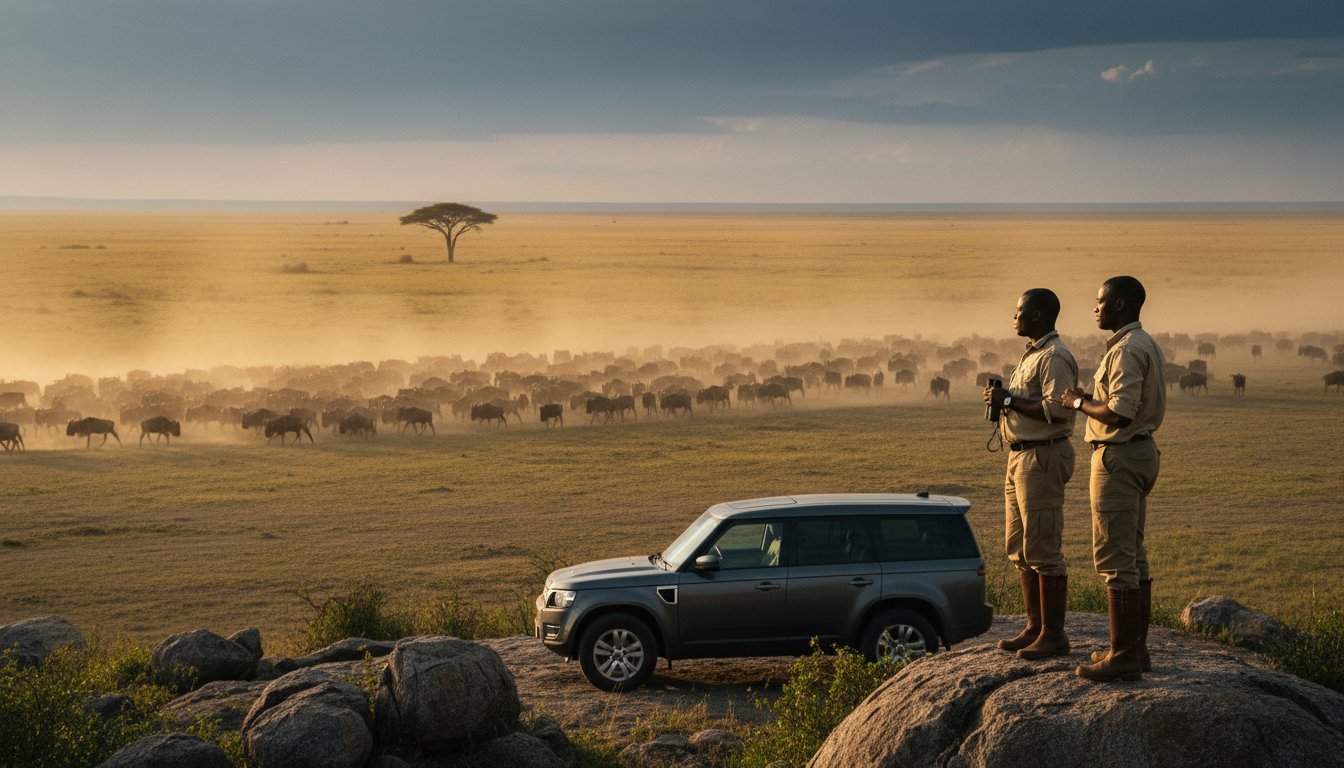
Tanzania Great Migration Safari 2026: The Ultimate Soul-Stirring Guide
What if the world’s most iconic wildlife event felt less like a crowded stadium and more like a private, sacred ritual performed just for you? It’s a common fear that the majesty of the Serengeti is being lost to the hum of idling engines, especially since Tanzania welcomed over 1.8 million visitors in 2023. You want the thunder of the herds, not the chatter of a dozen tour groups. You’re searching for a connection that’s deeper than a fleeting photo taken from a queue of vehicles.
This guide to your 2026 tanzania great migration safari ensures your journey is a bespoke sanctuary rather than a standard tourist circuit. We’ve curated the precise timings and hidden locations to help you witness the movement of two million wildebeest in profound, soul-stirring solitude. You’ll learn how our expert guiding and private camps bypass the crowds to find the raw heart of the wilderness. We’ll preview the seasonal rhythms of the herds and the exclusive territories where the Serengeti still feels truly untamed.
Key Takeaways
-
Master the 2026 seasonal rhythm to ensure you are perfectly positioned for the most dramatic moments, from the tender calving season in Ndutu to the powerful northern trek.
-
Discover how to navigate a tanzania great migration safari with absolute exclusivity by utilizing private concessions and fly-camping to escape the crowded tourist circuits.
-
Learn the logistical nuances of planning a bespoke journey, including the strategic benefits of fly-in safaris and the choice between refined luxury lodges or intimate mobile camps.
-
Identify the "shoulder month" secrets that allow for soul-stirring wildlife encounters when the herds are plentiful but the traditional crowds have vanished.
-
Explore how a curated approach to travel creates a lasting legacy of conservation, turning your private adventure into a meaningful contribution to the Serengeti’s future.
Table of Contents
What is the Tanzania Great Migration Safari?
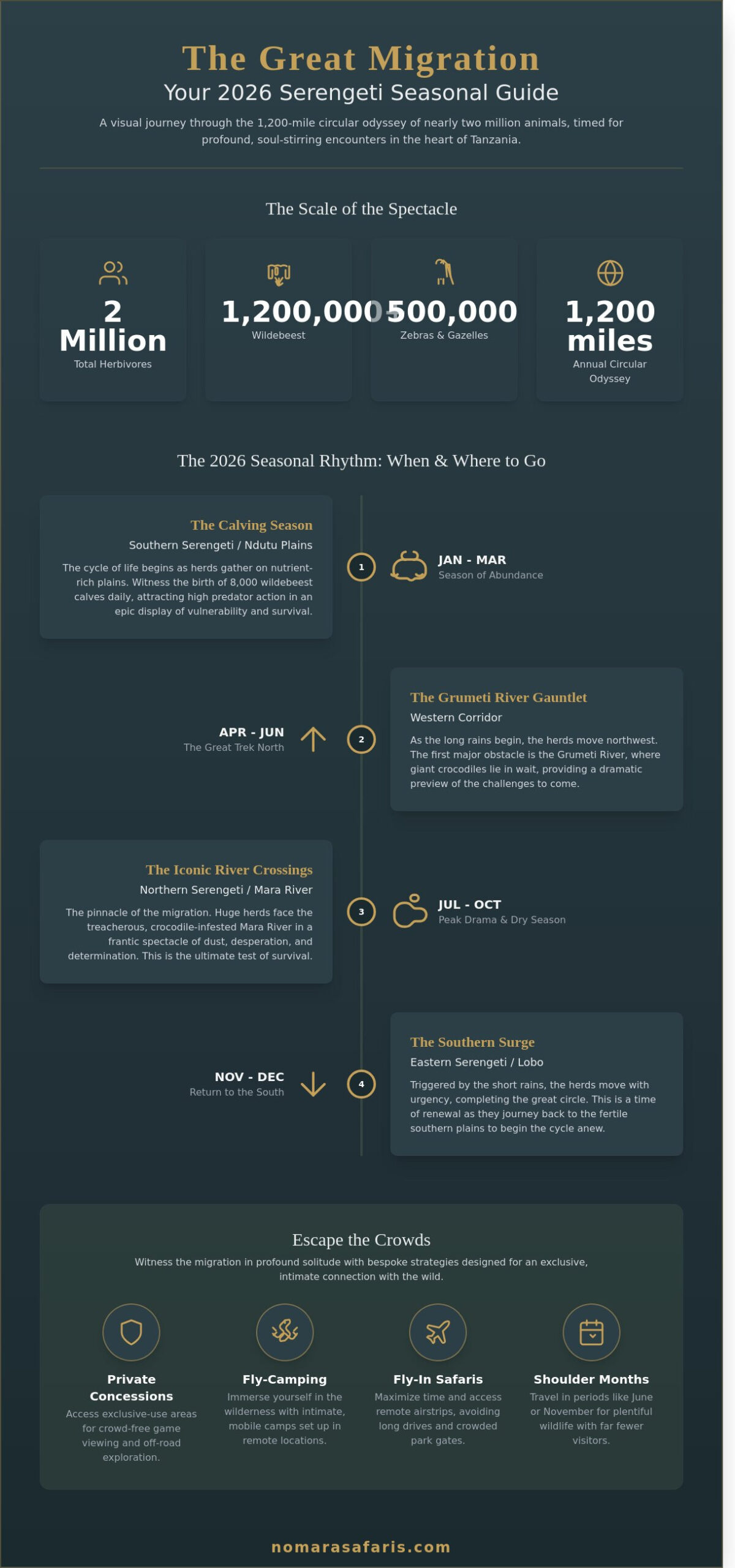
The tanzania great migration safari is the world’s most profound wildlife spectacle, a 1,200-mile circular odyssey that defines the rhythm of the African continent. It’s not merely a seasonal event but a perpetual journey of nearly 2 million herbivores. While the wildebeest are the primary protagonists of this drama, the cast is supplemented by 200,000 zebras and 300,000 Grant’s and Thomson’s gazelles. They move in a relentless search for green pastures and water, driven by an ancient, instinctual map.
Often called the "Soul of the Serengeti," this migration represents the rawest form of nature’s endurance. The journey is fraught with peril, as predators like lions, leopards, and hyenas follow the herds, waiting for a moment of vulnerability. This movement pulses through the Serengeti National Park, a vast ecosystem that serves as one of the world’s last true wilderness sanctuaries. It’s a place where the boundaries between life and death are thin, and the sheer scale of the herds creates a sensory experience that’s impossible to replicate elsewhere.
As we look toward 2026, the health of this ecosystem remains a testament to dedicated conservation. Recent data from the Serengeti-Mara Research Advisory Committee indicates that migratory populations remain stable, supported by cross-border anti-poaching initiatives and community-led land management. This resilience ensures that the Serengeti remains a vibrant, living landscape for the next generation of travelers.
The Symbolic Significance of the Migration
This journey serves as a sanctuary of life, representing the ultimate display of resilience in the face of nature’s uncompromising power. The animals move in a clockwise direction, a rhythm dictated by the scent of rain and the promise of mineral-rich grass in the southern plains. It’s a movement that never truly stops; it only changes its location. The migration is a perpetual cycle of birth and survival that has no beginning and no end.
Why Private Travel Changes the Experience
There’s a fundamental difference between touring the migration and truly living it. Standard tours often rush from one sighting to the next, but a private, bespoke itinerary allows for the luxury of patience. It’s the difference between seeing a river crossing and feeling the vibration of the earth as the herds descend. Curated travel provides the quiet observation necessary to witness the subtle nuances of the wild. This is soul-stirring luxury, where the focus shifts from ticking off a list to a profound, intimate connection with the untamed heart of Africa.
The 2026 Seasonal Rhythm: When and Where to Visit
The Serengeti does not follow a calendar; it follows the scent of rain and the promise of fresh grass. To witness a tanzania great migration safari is to observe a 1,200-mile loop of survival that never truly ends. For those planning a journey in 2026, understanding the nuances of this seasonal pulse is the first step toward a soul-stirring encounter with the wild.
-
January-March: The herds congregate on the southern short-grass plains of Ndutu. This is a season of abundance and high-stakes drama.
-
April-June: As the long rains arrive, the migration moves northwest. By June, the herds face their first major obstacle at the Grumeti River in the Western Corridor.
-
July-October: The dry season draws the survivors to the Northern Serengeti. This is the period of the iconic Mara River crossings, where the tension between life and death is most palpable.
-
November-December: The short rains trigger a southern surge. The herds move rapidly through the eastern Serengeti to return to the calving grounds, completing the ancient cycle.
Every month offers a different perspective on this prehistoric pilgrimage. While the river crossings capture the headlines, the quiet moments of the emerald season provide a more private, reflective experience. You might consider how a bespoke itinerary can align your personal rhythm with that of the wild.
The Miracle of the Calving Season
In February, the Ndutu region becomes a vast, living sanctuary. Statistics from the Tanzania National Parks Authority indicate that approximately 8,000 wildebeest calves are born every day during the peak of this window. The sheer density of life is staggering. Because the grass is short, visibility is unparalleled, allowing for intimate observations of predator-prey interactions. Lions, leopards, and cheetahs are drawn to the vulnerability of the nurseries, creating a raw and honest display of nature’s balance.
The Drama of the Mara River Crossings
The Kogatende region in the Northern Serengeti serves as the stage for the migration’s most harrowing chapter. From July through October, thousands of wildebeest gather on the banks of the Mara River. The "leap of faith" is not guaranteed; herds often wait for hours or even days, testing the water’s edge while Nile crocodiles, some reaching 16 feet in length, wait in the shallows. Success in witnessing a crossing requires expert guiding and deep patience. It’s a masterclass in the untamed reality of the African wilderness. For travelers weighing their options, understanding the kenya vs tanzania safari distinction is essential, as the Mara River crossings can be observed from both sides of the border depending on the season.
Bespoke Strategies: How to Escape the Safari Crowds
To witness the tanzania great migration safari is to touch the pulse of the earth. Yet, the grandeur of this spectacle often attracts a tide of travelers that can dilute the raw power of the wilderness. The Nomara Way rejects the predictable circuit. We prioritize exclusivity through the curation of private concessions and the profound intimacy of fly-camping. These temporary, lightweight camps are established in remote corners of the Serengeti, offering a soul-stirring sanctuary where the only sounds are the rhythmic grunts of wildebeest and the crackle of a campfire under a canopy of stars.
True luxury is the gift of time. By utilizing a private vehicle, you reclaim your rhythm. You aren’t beholden to a group schedule; if a leopard begins her hunt at dusk, you stay until the final act. Our guides move beyond the static of common radio chatter. They interpret the language of the bush, tracking herds through subtle shifts in the dust and the alarm calls of birds. This expertise ensures your encounter remains a private dialogue with nature, far from the cluster of vehicles that define the standard tourist experience.
Timing is equally vital. We often guide our guests toward the shoulder months, such as late May or early November. During these windows, the herds are mobile and the landscape is vibrant, yet the density of visitors drops by nearly 40 percent. It’s a period of transition where the air is clear, the light is soft, and the sense of solitude is absolute.
Hidden Gems: The Western Corridor and Grumeti
While the Mara River crossings in the north draw global crowds in August, the Western Corridor offers a more secluded stage. The Grumeti River crossings in June provide a dramatic, private alternative. Within the 350,000-acre private reserves bordering the Serengeti National Park, exclusive access is the core tenet. Here, off-road driving is permitted, allowing you to follow the tanzania great migration safari into the deep brush where the standard circuits cannot reach. This is a sanctuary for those who seek the untamed heart of Africa without the backdrop of other vehicles.
The Art of the "Slow Safari"
Meaningful connection isn’t found in a checklist. We encourage guests to spend at least four days in a single region to observe the subtle nuances of herd behavior. This unhurried pace allows for the beauty of off-peak hours. While others return for breakfast, we linger. The hours between 11:00 AM and 3:00 PM often reveal the most profound stillness. By positioning ourselves tactically near waterholes or known crossing points before the 5:30 AM dawn light breaks, we avoid the "jeep-jams" and witness the wilderness in its most authentic, undisturbed state.
Planning Your Private Migration Journey: Logistics & Gear
A tanzania great migration safari requires more than a simple itinerary; it demands a curated approach to logistics that respects the scale of the Serengeti. Spanning 14,750 square kilometers, this ecosystem is too vast to traverse by road alone without sacrificing precious hours of observation. Most discerning travelers opt for "fly-in" safaris, utilizing remote airstrips like Kogatende or Seronera. A 90 minute flight from Arusha replaces an exhausting eight hour drive, delivering you directly into the heart of the action. This efficiency ensures your energy is reserved for the wilderness, allowing the transition from the urban world to the untamed sanctuary to feel seamless and sophisticated.
Luxury Mobile Camps: Following the Herd
To truly witness the spectacle, one must remain fluid. Mobile migration camps are the pinnacle of bespoke adventure, designed to move three times a year to mirror the herds’ coordinates. These aren’t mere tents; they are sanctuaries of silk and wood that offer a private, under-canvas experience without compromising on high-end amenities like copper soaking tubs or gourmet cuisine. Staying in a mobile camp provides an intimate connection to the land. You’ll fall asleep to the distant lowing of wildebeest and wake to a landscape that has shifted overnight. It is a romantic, raw encounter with nature, curated for those who seek the soul of the Serengeti under a canopy of Tanzanian stars.
Photography and Observation Gear
Capturing the magnitude of 1.5 million animals requires precision tools. We recommend binoculars with 8×42 or 10×42 magnification to scan the horizons for predator movement. For photographers, a versatile 100-400mm lens is essential, though a fixed 600mm lens offers the reach needed for intimate portraits of river crossings. Dust is a constant companion on the plains, so bring sealed dry bags and sensor cleaning kits to protect your equipment. To truly honor the scale of this odyssey, one must carry a patient lens to capture the soul of the movement, lingering until the frantic energy of a river crossing settles into a quiet, evocative portrait of survival. Don’t forget high-capacity power banks, as the rhythmic pulse of the wild rarely pauses for a battery charge.
Preparing for the Tanzanian wilderness in 2026 involves mindful health planning. Ensure your Yellow Fever vaccination certificate is current, as it remains a mandatory entry requirement for those traveling through certain hubs. Malaria prophylaxis is a standard precaution for the Serengeti’s low-altitude plains. Most luxury packages now include AMREF Flying Doctors evacuation insurance, providing peace of mind as you venture into remote corners of the bush. This proactive preparation allows you to surrender fully to the experience, knowing every detail of your safety is managed with quiet expertise.
Ready to design your bespoke encounter with the wild? Explore our curated tanzania great migration safari options and begin your soul-stirring journey today.
The Nomara Difference: A Legacy of Impactful Travel
Choosing a tanzania great migration safari with Nomara Safaris transcends the traditional boundaries of luxury travel. It’s an invitation to step into a narrative where your presence serves a higher purpose. We believe that true luxury lies in the preservation of the untamed. Our bespoke journeys are meticulously curated to ensure that every footprint left behind is one of restoration. By partnering with local communities, we ensure that the economic benefits of your visit reach the hands of those who have coexisted with this wilderness for generations.
Our professional guides act as more than mere spotters of wildlife. They’re dedicated stewards of the wilderness, often bringing more than 12 years of field experience to every game drive. With a deep-seated passion for the ecosystem, they translate the silent language of the savannah for you. They don’t just show you the migration; they explain the delicate balance that keeps it alive. This intimate connection fosters a sense of stewardship in our guests, transforming a simple trip into a personal legacy of conservation.
Sustainable Luxury in Tanzania
Luxury and sustainability aren’t opposing forces at Nomara Safaris. We’ve achieved a 100% plastic-free status across our Tanzanian operations to protect the Serengeti’s fragile soil. Our selection of eco-friendly lodges prioritizes a minimal carbon footprint without compromising the sophisticated comfort you expect. Every night spent in our private camps contributes directly to the protection of the Serengeti ecosystem. This is meaningful travel. It’s a commitment to ensuring that the thunderous sound of hooves remains a reality for the next century.
Crafting Your Bespoke Itinerary
The journey toward your tanzania great migration safari begins long before you touch down on the dusty airstrip. Our personalization process starts with your vision. We listen to your desires for privacy, pace, and adventure. To maintain the soul-stirring intimacy of the experience, we strictly limit guest numbers to six per vehicle to ensure every seat is a window to the wild. This isn’t a mass-market tour; it’s a tailor-made sanctuary designed specifically for you.
We’re now designing exclusive itineraries for 2026. These journeys offer the rare chance to witness the circle of life in its most raw form, away from the crowds. Don’t just observe the wild. Become a part of its survival story. Reach out to our specialists today to begin designing your soul-stirring journey into the heart of Africa.
Your 2026 African Legacy Awaits
The 2026 seasonal rhythm promises a spectacular display of nature’s raw power across the Serengeti. Witnessing over 1.5 million wildebeest navigate the treacherous Mara River or the lush plains of the south requires more than just a map; it demands a deep understanding of the land’s pulse. By choosing private routes and timing your visit to specific 2026 corridors, you transcend the typical tourist path to find a true sanctuary in the wild. Our 2026 Great Migration specialists ensure you avoid the crowds by utilizing expert-guided private vehicles and a curated selection of exclusive luxury camps. This isn’t just a holiday. It’s a transformative encounter with the untamed heart of Africa.
Your tanzania great migration safari should be as unique as the landscape itself. We focus on impactful travel that honors the environment while providing unparalleled comfort. Let us craft a narrative of discovery where every sunset and wildlife encounter feels personally designed for you. Begin your soul-stirring journey with a bespoke Tanzania itinerary and secure your place in this ancient cycle of life. The wilderness is calling, and your seat by the campfire is ready.
Frequently Asked Questions
When is the absolute best month to see the Great Migration in Tanzania?
The best months to witness the tanzania great migration safari are July through September for the dramatic Mara River crossings or January and February for the synchronized calving season in the southern plains. During these peak windows, over 1.5 million wildebeest concentrate in specific regions, offering unparalleled wildlife spectacles. These periods provide the most predictable sightings of the untamed herds as they navigate the ancient rhythms of the Serengeti ecosystem.
Is the Great Migration in Kenya or Tanzania?
The Great Migration encompasses both Kenya and Tanzania, though the herds spend approximately 9 months of their annual cycle within the borders of Tanzania. While the Masai Mara hosts the herds from August to October, the vast Serengeti ecosystem supports the movement for the remaining 75% of the year. This continuous journey creates a year-round sanctuary for those seeking a deep, soul-stirring connection with the African wilderness. Travelers who wish to explore both destinations can find a detailed comparison in our guide to the kenya vs tanzania safari experience for 2026.
How many days do I need for a Great Migration safari?
We recommend a minimum of 7 to 10 days to fully immerse yourself in the rhythm of the wild. This duration allows for at least 3 nights in the heart of the migration and additional time to explore the unique biodiversity of the Ngorongoro Crater or Tarangire. A curated 10 day itinerary ensures you aren’t rushed, providing the quiet space needed to observe the intricate details of a private safari experience.
Can I see the Big Five during a Great Migration tour?
You can certainly encounter the Big Five while following the migratory herds, particularly in the Ngorongoro Crater and the Seronera Valley of the Central Serengeti. Statistics from the Tanzania National Parks Authority indicate high concentrations of lion and leopard in these regions year-round. Your tanzania great migration safari becomes a complete tapestry of African wildlife when these iconic predators intersect with the massive herds of the plains.
Is it safe to travel to Tanzania for a safari in 2026?
Tanzania remains one of Africa’s most stable and welcoming destinations for travelers in 2026. The Global Peace Index consistently ranks Tanzania as a peaceful nation, and the government’s 2024 tourism safety initiatives have further strengthened security in remote wilderness areas. Our private guides provide an extra layer of expert stewardship, ensuring your journey through these untamed landscapes is as secure as it is transformative.
What is the difference between a mobile camp and a luxury lodge?
A mobile camp is a bespoke, seasonal sanctuary designed to move twice a year to remain in the path of the herds, while a luxury lodge is a permanent structure offering unparalleled architectural elegance. Mobile camps provide an authentic, raw connection to the earth with high-end comforts under canvas. Lodges offer a more traditional sense of sanctuary, featuring permanent spas, wine cellars, and expansive suites built into the landscape.
How much does a private Great Migration safari cost?
The investment for a private Great Migration safari depends on the season of travel and the level of exclusivity chosen for your accommodations. High season months like July and August typically command a premium due to increased demand for river crossing access. Every journey we curate is a tailor-made experience, where the final cost reflects the artisanal craftsmanship and private logistics required to create a truly soul-stirring African adventure.
What happens if the herds don’t move according to the "schedule"?
Nature follows its own internal compass, and rain patterns can shift the movement of the 1.5 million animals by 14 to 21 days. To mitigate this, we utilize mobile camps that are strategically positioned and work with expert guides who possess a deep, intuitive knowledge of the land. This flexibility ensures that even when the clouds shift, your experience remains an intimate encounter with the wild heart of the Serengeti.

