
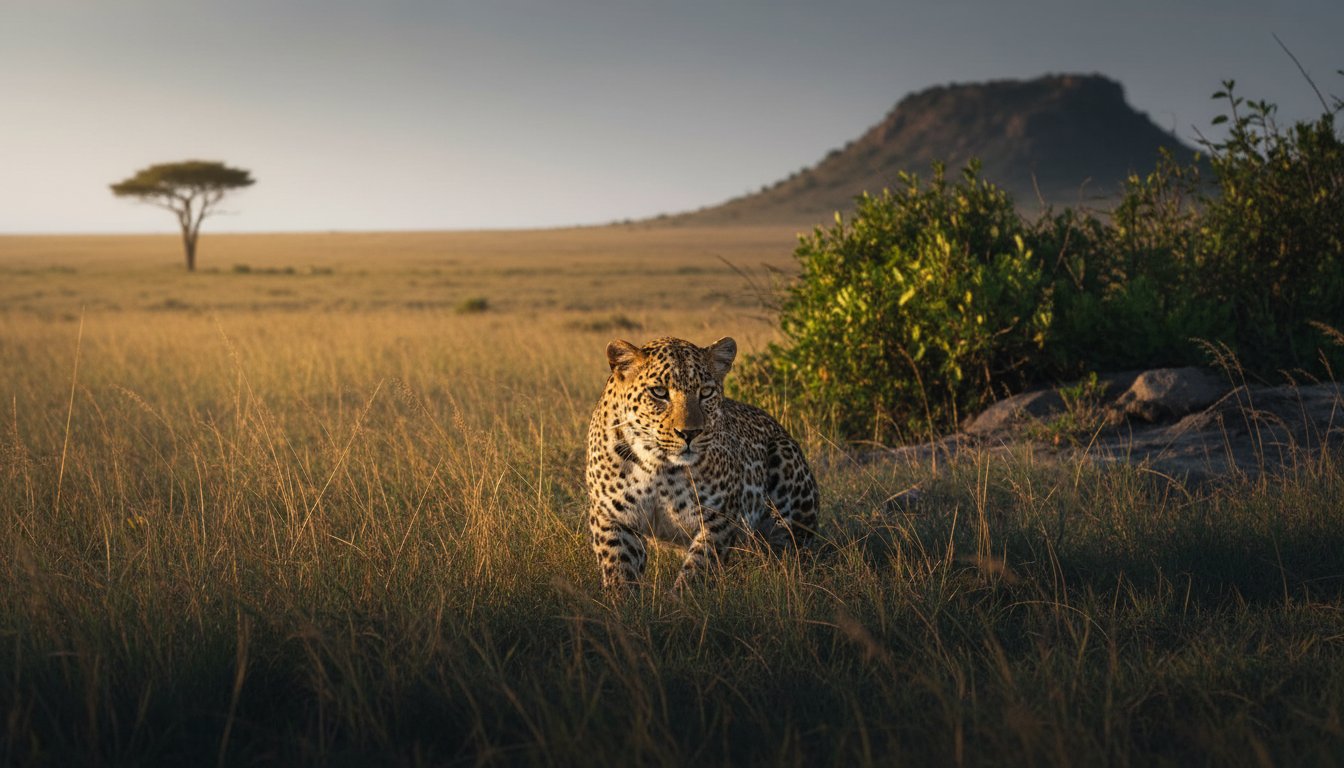
Kenya vs Tanzania Safari: Choosing Your Soul-Stirring African Legacy in 2026
What if the most profound moment of your life isn’t found at a crowded river crossing, but in the absolute silence of a private sanctuary where the only sound is the rhythmic breath of a stalking leopard? When planning a kenya vs tanzania safari for 2026, many travelers fear that the 30,000 square kilometers of the Serengeti-Mara ecosystem will feel smaller due to the noise of the crowds. You’ve likely felt the pull of the plains for years, yet the complexity of timing the 1.5 million wildebeest often stalls the dream. You seek an intimate connection with the wild, not a choreographed spectacle.
Choosing your destination is about more than just geography; it’s about selecting the sanctuary that resonates with your personal legacy. This guide will reveal the nuanced differences in exclusivity, wildlife density, and luxury across these two legendary landscapes. We’ll explore the hidden gems of private conservancies and the logistics of the Great Migration to help you curate a bespoke itinerary that prioritizes the untamed heart of Africa over the well-worn path.
Key Takeaways
- Discover how to distinguish between Kenya’s intimate, culturally rich landscapes and Tanzania’s vast, untamed expanses to find the sanctuary that speaks to your soul.
- Decipher the year-round rhythm of the Great Migration and Big Five density to master the kenya vs tanzania safari debate for your 2026 journey.
- Learn how to bypass traditional tourist paths by leveraging private conservancies that offer unparalleled privacy and exclusive wildlife encounters.
- Gain expert insights into the investment required for a bespoke safari, including how the “Green Season” can provide profound solitude and exceptional value.
- Understand why a hand-picked, storytelling approach is essential for crafting a transformative legacy that transcends the standard holiday.
The Soul of the Wilderness: Defining the Kenya and Tanzania Safari Ethos
Choosing between these two icons is the eternal question of East African travel. For the discerning explorer, a kenya vs tanzania safari represents more than a choice of destination; it’s a selection of the emotional rhythm you wish to inhabit. Kenya is the refined cradle of the industry, offering a seamless blend of heritage and avant-garde conservation. Tanzania is the untamed giant, a place where the scale of the earth feels ancient and absolute. Your decision rests on the frequency you wish to tune into during your 2026 expedition.
The wildlife of Kenya thrives within a landscape that feels both accessible and deeply personal. Here, the safari tradition was born, and it has evolved into a sophisticated art form. While Tanzania captures the imagination with its sheer size, Kenya captures the heart through its intimacy and the vibrant presence of its people. It’s a land where the connection between the wild and the human spirit is palpable in every sunrise. The choice isn’t about which country is better, but which landscape speaks to your personal legacy.
The Kenyan Atmosphere: Intimacy and Innovation
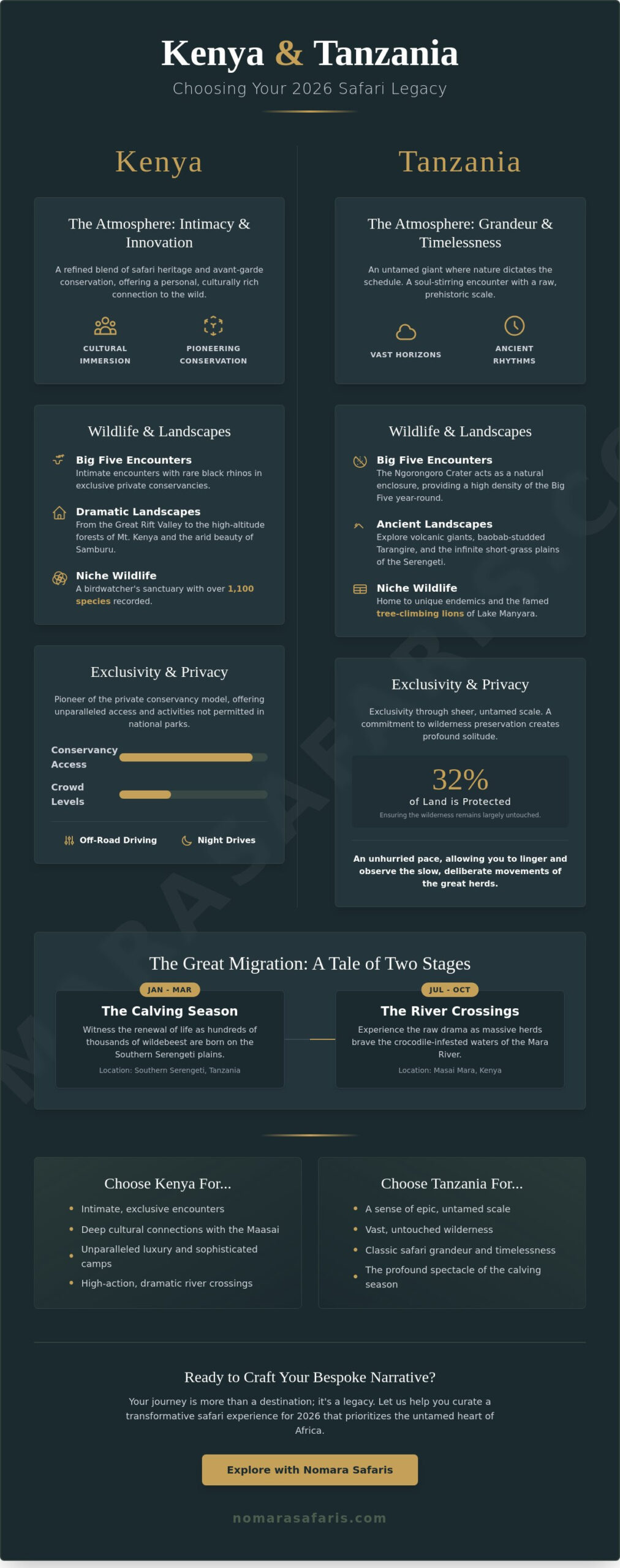
Kenya remains the pioneer of the private sanctuary model. This approach prioritizes exclusivity, allowing guests to explore vast tracts of land away from the standard tourist routes. The sophisticated camp culture here is unparalleled, often featuring bespoke tents that mirror the elegance of a bygone era while embracing 21st-century sustainability. The Maasai people are the heartbeat of this experience. As stewards and guides, they offer a soulful perspective that transforms a game drive into a profound cultural exchange. It’s a curated world where luxury meets a deep, abiding respect for the land.
The Tanzanian Atmosphere: Grandeur and Timelessness
Tanzania offers a sense of raw, prehistoric scale that few places on earth can match. Standing in the middle of the Serengeti, you realize that nature dictates the schedule here. The country has committed over 32 percent of its land to protected areas, ensuring the wilderness remains largely untouched by the modern world. This creates an unhurried pace. You’re invited to linger and observe the slow, deliberate movements of the great herds. It’s a soul-stirring encounter with a world that hasn’t changed in millennia. This is the realm of the untamed giant, where the vastness of the horizon provides a true sanctuary for the spirit.
Wildlife and Landscapes: From the Great Migration to the Big Five
When contemplating a kenya vs tanzania safari, you aren’t just choosing a destination; you’re choosing the backdrop for a lifelong memory. Both nations offer unparalleled access to the Big Five, but the soul of the experience lies in the subtle shifts of the horizon. Kenya’s landscapes are a masterclass in drama, where the jagged edges of the Great Rift Valley meet the rolling gold of the Masai Mara. Tanzania, by contrast, feels ancient and vast. It’s a land of volcanic giants and the seemingly infinite short-grass plains of the Serengeti, where the earth feels as though it hasn’t changed since the dawn of time.
- Big Five Density: Both countries maintain exceptional conservation standards. Kenya’s private conservancies offer intimate encounters with rare black rhinos, while Tanzania’s Ngorongoro Crater provides a natural enclosure where the Big Five reside year-round.
- Landscape Diversity: Kenya features the high-altitude forests of Mount Kenya and the arid, red-dust beauty of Samburu. Tanzania counters with the baobab-studded ridges of Tarangire and the lush, tropical greenery surrounding Lake Manyara.
- Niche Wildlife: Birdwatchers will find a sanctuary in Kenya, which hosts over 1,100 species. Tanzania offers unique endemics, such as the Ashy Starling, and the rare tree-climbing lions of Lake Manyara.
This geographic diversity ensures that no two days feel the same. Whether you’re watching a leopard descend from an acacia in the Mara or observing a herd of elephants navigate a volcanic crater, the sense of wonder remains constant.
The Great Migration: Masai Mara vs. Serengeti
The Great Migration is a perpetual cycle of life that defines the kenya vs tanzania safari debate. In the Masai Mara, the drama peaks between July and October. This is when massive herds brave the crocodile-infested waters of the Mara River in a display of raw survival. Conversely, the Southern Serengeti transforms into a nursery from January to March. Over 8,000 wildebeest calves are born daily, drawing predators in a sophisticated dance of nature. To plan your timing perfectly, explore our Tanzania Great Migration Safari 2026 guide.
Iconic Sanctuaries: Ngorongoro and Amboseli
Ngorongoro Crater is a self-contained Eden, a UNESCO World Heritage site hosting 25,000 large mammals within its prehistoric walls. It’s a sanctuary unlike any other on earth. Across the border, Kenya’s Amboseli National Park offers the most iconic views of Mount Kilimanjaro, providing a majestic backdrop for the park’s famous “tuskers.” These locations offer unmissable safari experiences, yet the most soul-stirring moments often occur in the quietude of Samburu or Tarangire, where the crowds thin and the wilderness speaks.
Every landscape tells a story of survival and beauty. Let us help you curate a private journey that captures the essence of these untamed territories.
Exclusivity and Privacy: The Private Conservancy Advantage
For the discerning traveler, the greatest luxury isn’t the thread count of the linens; it’s the profound silence of the savannah. The most common hesitation when weighing a kenya vs tanzania safari is the fear of crowded sightings. In public national parks, dozens of vehicles often converge on a single pride of lions, breaking the spell of the wild. Private sanctuaries and concessions rewrite this narrative entirely. They offer a sanctuary where the wildlife outnumbers the guests by a staggering margin.
Kenya pioneered the community conservancy model, particularly in the Greater Maasai Mara ecosystem. Here, over 340,000 acres of ancestral land are managed through partnerships with local Maasai landowners. In these private enclaves, such as Mara North or Olare Orok, vehicle numbers are strictly regulated. You’ll never find the “safari traffic” that occasionally plagues the public reserve. Tanzania offers a different but equally compelling version of exclusivity through massive private concessions like the 350,000-acre Grumeti Reserve. These areas act as private stages for the Great Migration, providing a front-row seat to nature’s greatest show without the audience.
The true magic of these private lands lies in the freedom they grant. Public parks generally require guests to stay on marked roads and return to camp by sunset. In a private conservancy, these boundaries dissolve. You can experience:
- Night Drives: Use infrared spotlights to find elusive nocturnal predators like aardvarks and honey badgers.
- Walking Safaris: Feel the crunch of the earth beneath your boots as you track elephants on foot with a master scout.
- Bush Dining: Enjoy a silver-service dinner under the Milky Way, far from the lights of any lodge.
Why Private Conservancies are the Future of Luxury Safari
Off-road driving is the ultimate differentiator for a soulful wildlife encounter. Instead of squinting through binoculars from a distant road, your guide can navigate the tall grass to bring you into the heart of the action. Most conservancies limit sightings to just three vehicles at a time, ensuring your connection with a leopard or a rhino remains intimate and undisturbed. Nomara Safaris curates stays in these exclusive sanctuaries because we believe your legacy shouldn’t be a photo of another tourist’s jeep. It’s about those quiet, breathless moments when it’s just you and the untamed world.
Infrastructure and Accessibility
Logistics define the rhythm of your journey. Kenya’s fly-in network is exceptionally well-developed. From Nairobi’s Wilson Airport, a 45-minute flight can place you in the heart of the bush, skipping hours of dusty roads. Tanzania’s Northern Circuit offers a more rugged, traditional charm, often involving scenic drives through the highlands of Ngorongoro. When your safari concludes, the “bush-to-beach” transition is effortless in both lands. You might choose the boutique, powder-white sands of Diani for a private coastal retreat, or the historical, spice-scented soul of Zanzibar to reflect on your journey. Both offer a seamless end to a kenya vs tanzania safari, blending raw adventure with refined relaxation.
Designing Your 2026 Legacy: Costs, Seasonality, and Extensions
Crafting a legacy requires a deliberate approach to both time and resources. When weighing a kenya vs tanzania safari for 2026, the investment reflects the depth of the encounter. Tanzania often commands a premium due to the sheer scale of its wilderness and the logistics of traversing vast, untamed regions like the Serengeti or the Selous. A bespoke journey here isn’t just a trip; it’s a curated investment in conservation and quietude.
The Price of Exclusivity: Budgeting for 2026
Your budget for 2026 should account for escalating park fees and the necessity of private vehicle hire. In Tanzania, daily conservation fees for the Ngorongoro Crater or Serengeti often range from $70 to $80 per adult, while luxury lodges in remote concessions can exceed $1,500 per night during peak cycles. An all-inclusive stay in the bush encompasses more than fine dining; it secures your sanctuary through expert guiding, remote bush flights, and meaningful community support. Luxury value is the deliberate balance of ecological impact and profound personal intimacy.
- Park Fees: Expect to allocate $100 to $200 per person daily for conservation and vehicle permits across the region’s premier parks.
- Early Selection: High-demand private camps for 2026 are already seeing 40% occupancy for peak months. Booking 12 to 18 months in advance is essential to secure the most secluded sites.
- The Green Season: Traveling in April or November offers up to 30% savings and unparalleled solitude in a lush, emerald landscape where the dust of the plains is washed away by refreshing rains.
Extending the Journey: Primate Trekking
The ultimate East African trifecta involves pairing the savannah with the ancient rainforests of Uganda or Rwanda. Transitioning from the golden plains of a kenya vs tanzania safari to the misty heights of Bwindi Impenetrable Forest is remarkably fluid. Regional flights between Nairobi, Arusha, and Entebbe typically take less than 90 minutes, allowing you to witness the Great Migration and mountain gorillas within the same week. This geographical proximity turns a simple holiday into a comprehensive continental legacy.
For those seeking a deeper Ugandan immersion, you can easily integrate a 3 Days Murchison Falls Safari to witness the Nile’s power alongside diverse wildlife before heading to the primate capitals. These logistical links between Kenya, Tanzania, and Uganda ensure your transition from the plains to the jungle is as seamless as it is soul-stirring.
Ready to secure your place in the wild for 2026? Connect with our consultants to design your bespoke sanctuary.
Crafting Your Bespoke Narrative with Nomara Safaris
A generic, one-size-fits-all itinerary fails the discerning traveler because it ignores the unique rhythm of the individual soul. Mass-market tours often rush through the landscapes, treating the 1.5 million wildebeest of the Great Migration as a mere checklist item rather than a profound natural phenomenon. At Nomara Safaris, we believe travel is a deliberate act of immersion. Our philosophy centers on hand-picked accommodations that serve as private sanctuaries, where the boundaries between high-end luxury and the raw African wilderness simply vanish.
The kenya vs tanzania safari debate often forces a choice where none is required. We specialize in blending these two iconic territories into a single, seamless 12-day odyssey. This journey is designed to capture the golden light of the Masai Mara and the ancient, volcanic majesty of the Ngorongoro Crater without the friction of logistical hurdles. Every mile of your journey supports a lasting legacy. We partner with conservancies that prioritize local land rights and wildlife protection, ensuring your presence contributes to the preservation of these ecosystems for decades to come.
Your Private Sanctuary Awaits
Our professional guides are expert storytellers who possess the rare ability to uncover hidden gems far from the congested tourist circuits. They understand that the most soul-stirring moments often occur in the quiet intervals between sightings. Whether you are observing a leopard in a secluded grove or enjoying a private dinner under a canopy of stars, your schedule remains unhurried and flexible. This personalized pacing respects the wild’s natural timing, allowing you to settle into the sanctuary of the bush. We invite you to begin this transformative journey with a custom consultation that aligns your personal values with the untamed heart of Africa.
Next Steps: From Dream to Discovery
The transition from a vision to a reality begins with a conversation with our bespoke travel designers. During the curation process, we explore your specific desires, from the level of camp intimacy you prefer to the specific wildlife behaviors you hope to witness. You’ll receive a tailor-made proposal that reflects a deep understanding of East African geography and seasonal shifts. We handle every detail with quiet confidence, leaving you free to anticipate the adventure ahead. Design your dream East Africa safari itinerary today and secure your place in a world where travel is a profound, life-changing legacy.
Claim Your Place in the African Wilderness
Your 2026 journey to the untamed heart of East Africa isn’t a mere holiday; it’s an intentional step toward a lasting legacy. Whether you find your sanctuary in the private conservancies of the Maasai Mara or beneath the vast, golden skies of the Serengeti, the kenya vs tanzania safari debate ultimately settles on the specific rhythm of your soul. Tanzania offers the sheer grandeur of the 1.5 million-strong Great Migration across the 14,750 square kilometer Serengeti ecosystem. Conversely, over 15 private conservancies in Kenya’s Greater Mara region offer unparalleled intimacy. These exclusive lands often limit vehicle density to just one per 1,400 acres to protect the sacred silence of the wild.
At Nomara Safaris, we’re specialists in multi-country East Africa itineraries that bridge these two iconic worlds. Our expert-led private tours prioritize sustainable and ethical wildlife encounters, ensuring your presence supports conservation efforts that have protected these landscapes since the mid-20th century. We don’t just plan trips. We curate profound, soul-stirring transitions into the wilderness that respect the delicate balance of nature. Begin your bespoke East African journey with Nomara Safaris and write your own chapter in the story of the wild. The plains are calling for you.
Frequently Asked Questions
Is Kenya or Tanzania better for a first-time safari?
Kenya often provides a more seamless introduction for first-time travelers due to its sophisticated tourism infrastructure and shorter distances between parks. The Masai Mara’s 1,510 square kilometers of protected land offer a high density of wildlife that ensures legendary sightings within hours of arrival. Tanzania’s Northern Circuit is equally magnificent, yet its vast scale, such as the 14,750 square kilometer Serengeti, requires a more unhurried pace. Your choice depends on whether you crave the refined efficiency of Kenyan hubs or the raw, expansive grandeur of the Tanzanian wilderness.
Can I see the Great Migration in both Kenya and Tanzania?
You can witness the Great Migration in both nations as 1.5 million wildebeest follow an ancient, circular path through the shared ecosystem. From July to September, the herds typically congregate in Kenya’s Masai Mara for the dramatic river crossings that define the season. During the remaining nine months, this soul-stirring spectacle unfolds across the southern and central plains of Tanzania’s Serengeti. This continuous journey ensures that a well-timed kenya vs tanzania safari reveals the pulse of the wild regardless of which border you cross.
Which country is more expensive for a luxury safari?
Tanzania generally commands a higher price point for luxury due to its remote locations and higher government park fees. A 2024 report by the Tanzania National Parks Authority noted that concession fees in premium areas often exceed those in neighboring regions. Kenya offers a broader range of high-end private conservancies that provide exclusive access at various investment levels. Both destinations feature bespoke sanctuaries where the cost reflects the unparalleled privacy and curated service provided to every guest seeking a transformative experience.
How many days do I need for a combined Kenya and Tanzania safari?
You should dedicate at least 10 to 14 days to fully appreciate a combined journey through these two iconic landscapes. This timeframe allows for four nights in the Masai Mara and six nights across the Serengeti and Ngorongoro Crater; it also accounts for the travel days between borders. Shorter trips often feel rushed and fail to capture the profound essence of the wilderness. A fortnight ensures a deliberate pace where you can linger in private camps without the pressure of a ticking clock.
Is it safe to travel between Kenya and Tanzania in 2026?
Traveling between Kenya and Tanzania remains safe and efficient via established border crossings or through scheduled regional flights. The East African Community continues to prioritize tourism security, with over 80 percent of luxury travelers opting for fly-in safaris to maximize their time in the bush. Private transfers use vetted local guides who understand the nuances of the 2026 travel landscape. You’ll find the transition between these two worlds is seamless and professionally managed by experts who value your peace of mind.
Which destination is better for a family safari with children?
Kenya is often the preferred choice for families due to its abundance of private conservancies that offer tailored junior ranger programs and flexible daily schedules. These exclusive sanctuaries allow children to engage with nature through guided walks and cultural visits that aren’t permitted in the stricter national parks. While Tanzania offers spectacular sights, the longer driving distances between parks can be taxing for younger explorers. Kenya’s logistics are designed for intimacy and ease, making it a sophisticated choice for a multi-generational legacy.
Do I need different visas for Kenya and Tanzania?
You generally need separate entry authorizations for each country unless you qualify for the East Africa Tourist Visa. As of 2024, Kenya has transitioned to an Electronic Travel Authorization system, while Tanzania maintains its own online e-visa portal. It’s essential to secure these documents at least 30 days before your departure to ensure a smooth transition at the border. Our team curates the logistical details of your kenya vs tanzania safari to ensure these administrative requirements never interrupt the flow of your journey.
What is the best month to visit both countries on one trip?
September is the pinnacle month for a dual-country expedition as it aligns with the dramatic river crossings in the northern Serengeti and Masai Mara. During this window, the weather is consistently dry; wildlife gathers around permanent water sources in both nations. Statistics from local conservancies show that predator sightings increase by 40 percent during these dry months. This period offers the most vibrant tapestry of life, providing a profound connection to the untamed heart of Africa under clear, golden skies.


Comments are closed