
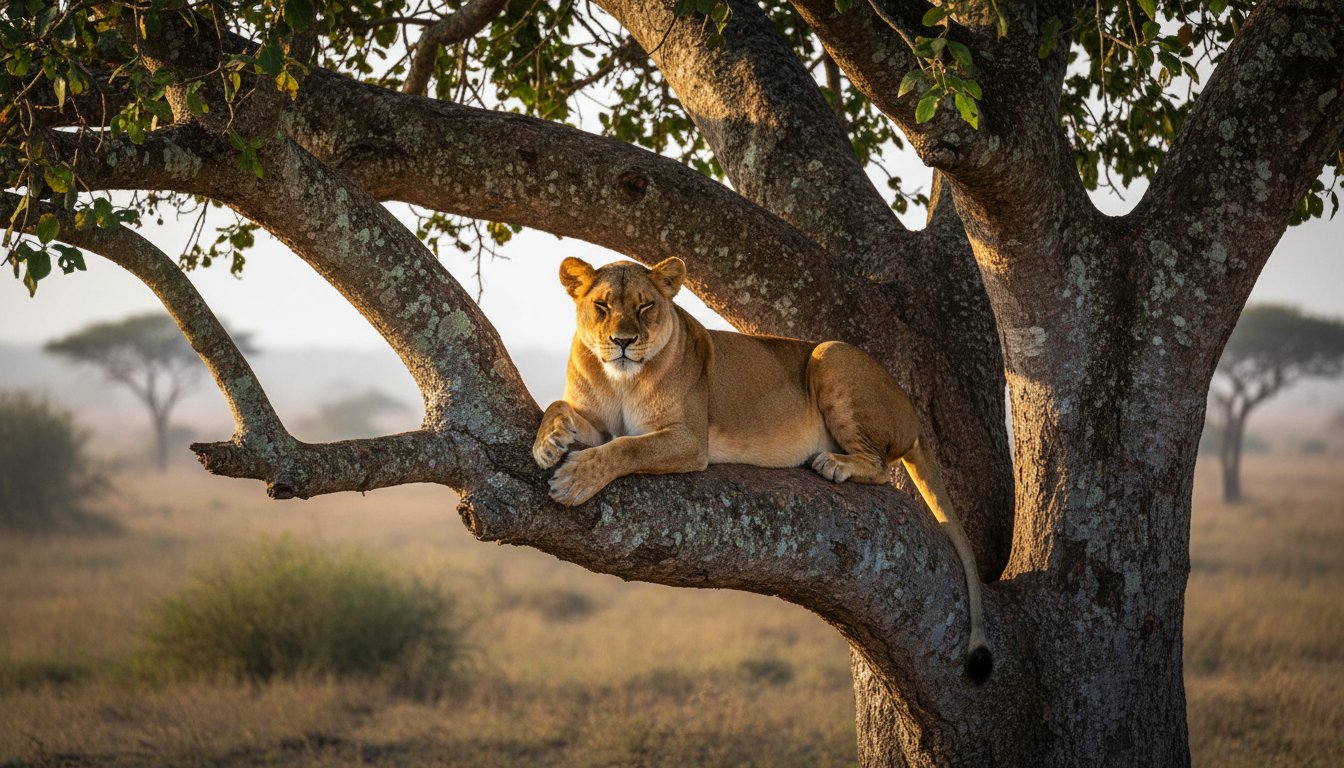
The Tree Climbing Lions Uganda: A Soul-Stirring Encounter in Ishasha
On a Tuesday afternoon in the southern sector of Queen Elizabeth National Park, the silence of the savannah is broken only by the rustle of broad leaves. You look up, expecting the flash of a bird, but instead meet the amber gaze of a 400 pound predator perched precariously on a limb. Finding the tree climbing lions uganda is famous for is more than just a tick on a bucket list; it’s a rare encounter with a behavioral anomaly that less than 5% of the world’s lion population exhibits. You’ve likely spent hours dreaming of this moment, fearing that a crowded tour or a poorly timed drive might leave you staring at empty branches.
We understand that your journey is about more than just a photograph; it’s about the profound connection found in these quiet, untamed sanctuaries. This guide offers a curated look into the mystery of why these prides ascend the ancient sycamore figs and how you can secure a private, intimate viewing away from the masses. We’ll explore the specific ecological triggers behind their behavior and provide a bespoke itinerary to ensure your visit to Ishasha is nothing short of transformative.
Key Takeaways
-
Uncover the rare evolutionary mystery behind the tree climbing lions uganda, a behavioral phenomenon found in only two populations on Earth.
-
Discover the remote Ishasha sector, a private sanctuary that offers a more intimate and exclusive wildlife encounter than the busier northern plains.
-
Gain bespoke insight into the optimal timing and logistics needed to witness these majestic predators resting within the ancient sycamore fig trees.
-
Learn how a curated, private safari experience transforms a simple game drive into a soul-stirring journey through Africa’s most untamed landscapes.
Table of Contents
-
The Enigma of Uganda’s Tree-Climbing Lions: A Rare Wildlife Phenomenon
-
Why Do Lions Climb Trees? Understanding This Peculiar Behavioral Adaptation
-
Ishasha Sector: The Untamed Sanctuary of the Tree-Climbing Prides
-
Practical Guidance for Your Ishasha Safari: Timing, Logistics, and Photography
-
Curating Your Private Encounter: The Nomara Safaris Perspective
The Enigma of Uganda’s Tree-Climbing Lions: A Rare Wildlife Phenomenon
The southern plains of the Ishasha sector offer a sight that feels like a whisper from an ancient, untamed world. While most of Africa’s apex predators claim the golden grasses as their primary domain, the tree climbing lions uganda protects have chosen a more elevated existence. This isn’t merely a survival tactic; it’s a sophisticated cultural trait that sets these prides apart from almost every other population on the continent. These lions represent a unique behavioral subset of Panthera leo, turning the sturdy branches of ancient trees into their private galleries.
Global rarity defines this experience. Aside from a single population in Tanzania, the Ishasha prides are the only lions in the world to exhibit this behavior with such daily consistency. For the discerning traveler, this creates a soul-stirring encounter that moves beyond the typical safari narrative. It’s a moment of quiet awe, where the raw power of the wild meets an unexpected, graceful artistry. Contrasting these arboreal hunters with typical terrestrial prides establishes a profound sense of wonder, as the sight of a massive feline resting high above the ground defies the traditional expectations of a game drive.
A Biological Mystery: Why Ishasha?
The Ishasha sector serves as the premier sanctuary for these arboreal hunters. Nestled within the diverse landscapes of Queen Elizabeth National Park, which covers approximately 1,978 square kilometers, this region provides the perfect architecture of ancient sycamore figs and umbrella trees. While lions in other regions might occasionally climb to avoid ground-level pests or the midday heat, the Ishasha prides do so as a daily cultural habit. The tree-climbing lion is a behavioral anomaly that challenges traditional feline biology. This unique adaptation offers a window into a world where the boundaries of nature are constantly being rewritten in the heart of the wilderness.
The Cultural Legacy of the Canopy Prides
This behavior is a living legacy, meticulously passed down through generations. Lionesses lead their cubs into the branches, teaching them to navigate the heights through observation and mimicry. This transmission of knowledge ensures the survival of a unique behavioral lineage that remains a focal point for global biodiversity. There’s a profound stillness in witnessing a 400-pound predator lounging with effortless ease on a delicate branch. This evocative sight serves as a reminder of the wilderness’s ability to surprise even the most seasoned explorer, offering a bespoke connection to the natural world. These canopy prides represent a fragile, unparalleled beauty that requires our deepest respect and dedicated conservation efforts.
Why Do Lions Climb Trees? Understanding This Peculiar Behavioral Adaptation
The sight of a 400-pound apex predator draped across a sturdy branch is a profound departure from the typical African narrative. In the Ishasha sector, this isn’t a fluke; it’s a refined legacy. These tree climbing lions uganda have mastered an art that remains a mystery to most of their continental kin. It’s a testament to the untamed intelligence of African wildlife. Survival here demands a departure from the ordinary, pushing these big cats to seek a sanctuary far above the swaying grasslands.
Escaping the Ground-Level Nuisance: Tsetse Flies and Heat
The ground is often a place of relentless heat and irritation. During the peak of the wet seasons, tsetse fly populations surge, delivering painful bites that can drive even the most stoic pride to distraction. By ascending into the sprawling limbs of a Sycamore Fig, lions find a natural sanctuary. The elevation offers a consistent breeze that acts as a biological shield against insects. Data managed by the Uganda Wildlife Authority highlights how these arboreal habits coincide with the park’s specific ecological pressures. Thermoregulation plays a vital role too. Temperatures on the sun-baked savannah floor can regularly exceed 32 degrees Celsius. The shaded canopy remains significantly cooler, allowing the lions to conserve energy for the night’s hunt.
Lions show a distinct preference for the broad, sturdy limbs of the Sycamore Fig and the occasional flat-topped Acacia. These trees act as nature’s daybeds, providing the structural integrity required to support an entire pride. It’s a display of quiet confidence, as they lounge in the breeze while the world below swelters in the equatorial sun.
Tactical Advantage: The High-Altitude Vantage Point
From a perch 20 feet above the golden grass, the world transforms into a strategic map. This vantage point provides a panoramic view of the prey roaming the plains. Large herds of Uganda Kob and Topi are easily monitored from above. This allows the pride to plan a bespoke hunt with surgical precision. The height also offers a reprieve from ground-level chaos. While a lion is an apex predator, a defensive herd of 600 Cape Buffalo or a persistent clan of spotted hyenas can be a significant annoyance. The trees provide a private retreat where the pride can slumber undisturbed by lower-level threats.
This behavioral evolution is exactly what makes our curated expeditions so impactful. It’s a chance to witness nature’s intelligence firsthand. Wildlife biologists in East Africa suggest this trait is passed down through generations. It’s a cultural inheritance unique to this specific landscape. The lions aren’t just resting; they’re occupying a strategic fortress. This elevation allows them to survey their kingdom with unparalleled clarity, turning a simple nap into a tactical observation. As we move deeper into the Ishasha sector, several specific theories supported by local researchers shed even more light on why this behavior has become a permanent fixture of the region’s pride dynamics.
Ishasha Sector: The Untamed Sanctuary of the Tree-Climbing Prides
The Ishasha sector exists as a quiet, southern sanctuary within the broader reaches of Queen Elizabeth National Park. It’s a place where the air feels heavier with mystery and the horizon seems to stretch into infinity. Unlike the busier northern Mweya peninsula, Ishasha offers an intimate, private encounter with the wild that feels entirely your own. The landscape is defined by its ancient Sycamore Fig and Acacia trees, which serve as the elevated living rooms for the tree climbing lions uganda is famous for. These giants provide thick, horizontal limbs where the prides escape the heat of the ground and the irritation of insects. While a 3 Days Murchison Falls Safari showcases the classic terrestrial prides of the north, Ishasha demands a different perspective. Research shared by the Wildlife Conservation Society highlights how these unique behaviors are deeply tied to local environmental pressures, making every sighting a rare, curated spectacle of nature.
Navigating the Southern Wilderness
This remote corner of the park sits on the edge of the map, bordered by the winding Ishasha River and the Democratic Republic of Congo. The Edward Flats provide a stunning backdrop of open alluvial plains, where the light at sunset turns the grass into a sea of liquid gold. Moving through this sector requires an unhurried pace. It’s a deliberate journey through diverse ecosystems, from tangled riverine forests to sun-drenched savannahs. Because the crowds are thin, the game drives feel bespoke and personal. You can spend an hour under a single tree, watching the subtle flick of a tail against the bark, without the intrusion of other vehicles. It’s a place where the silence is as profound as the discovery.
Beyond the Lions: A Holistic Ecosystem
The allure of the climbing prides is undeniable, yet Ishasha is a holistic sanctuary for a wealth of African wildlife. Large herds of elephants frequently cross the plains, moving with a quiet grace that belies their massive size. You might catch the flash of a leopard’s coat in the denser thickets or spot a Topi standing sentinel on a termite mound. For the discerning traveler, birdwatching in Uganda reaches a pinnacle here, with the Shoebill stork occasionally appearing in the nearby marshlands. The tree climbing lions uganda protects are part of a larger, curated narrative of East African nature. This region isn’t just a stop on an itinerary; it’s a soul-stirring chapter in a story of conservation and raw, untamed beauty that leaves a lasting legacy on the heart.
Practical Guidance for Your Ishasha Safari: Timing, Logistics, and Photography
Navigating the remote Ishasha sector requires a blend of logistical precision and emotional stillness. The journey to this wild corner of Queen Elizabeth National Park is a curated transition between distinct ecosystems. If you’re traveling from the emerald heights of Bwindi Impenetrable Forest, expect a drive of roughly 2 to 3 hours. Those descending from the Mweya Peninsula will cover approximately 64 kilometers of rugged, beautiful terrain. It’s a journey that demands a professional guide whose expertise transcends simple driving. True trackers understand the subtle shifts in the wind and the specific Sycamore fig trees that serve as ancestral resting spots. They transform a standard game drive into a bespoke masterclass in wildlife behavior.
Patience is your most valuable currency in this landscape. A soul-stirring discovery isn’t something that can be rushed or manufactured. It’s a reward for those who are willing to linger under the heat of the midday sun. Your emotional state should mirror the environment: quiet, observant, and ready. When you finally encounter the tree climbing lions uganda protects, the wait only heightens the impact of the moment.
The Best Time for a Canopy Encounter
Peak viewing times align with the dry seasons, specifically from June to August and between December and February. During these months, the tracks are navigable and the lions are frequently seen seeking refuge from the heat within the branches. Interestingly, the rainy seasons of April and May can also yield spectacular results. The sodden ground becomes uncomfortable for the pride, pushing them upward into their arboreal sanctuaries to escape the dampness and biting insects. Mid-morning to late afternoon is the golden window for sightings as lions seek shade.
Capturing the Moment: Photography Tips for Tree-Climbing Lions
Photographing these apex predators from a low angle looking up requires specific preparation. A lens with a focal length of at least 300mm is essential for capturing the texture of their fur against the rough bark. You’ll often face harsh backlighting as the sun filters through the canopy. Manage this by overexposing slightly or using a spot meter on the lion’s face to preserve detail. For the best results during a long observation of the tree climbing lions uganda is famous for, follow these tips:
-
Stability: Use a beanbag or a monopod against the vehicle frame to ensure sharp frames during long waits.
-
Composition: Include the architectural limbs of the fig tree to provide scale and context to the lion’s height.
-
Focus: Lock your focus on the eyes, even if the lion is resting, to capture the soul of the predator.
Experience the raw beauty of the Ishasha wilderness with a private, tailor-made safari designed by our experts.
Curating Your Private Encounter: The Nomara Safaris Perspective
At Nomara Safaris, we view the wilderness as a sanctuary that demands a respectful, unhurried approach. We don’t just facilitate travel; we curate soul-stirring journeys that bridge the gap between high-end luxury and the raw, untamed heart of Africa. To witness the tree climbing lions uganda is a rare privilege. It’s an experience that shouldn’t be rushed or shared with a crowd. By prioritizing private vehicles and expert guides, we transform a standard game drive into a deeply personal narrative of discovery.
The value of a private journey lies in the freedom to linger. Our guides, many of whom have spent over 12 years navigating these specific sectors, understand the subtle behavioral cues of the prides. They know which sycamore fig trees offer the best shade and which clearings the lions prefer after a night of hunting. This expertise ensures your encounter is intimate rather than performative. Our hand-picked accommodations in the Ishasha sector further this connection, offering an unparalleled immersion in nature. These lodges are selected for their architectural craftsmanship and environmental stewardship, ensuring your presence supports the local ecosystem.
The legacy of your trip is perhaps its most vital component. By choosing a curated safari, you contribute directly to the protection of these vulnerable prides. Your visit funds anti-poaching patrols and community conservation programs that have operated in Queen Elizabeth National Park for decades. It’s travel with a purpose, where your presence helps secure the future of this unique wilderness.
Bespoke Itineraries: Integrating Ishasha Seamlessly
Ishasha serves as the perfect soul-stirring bridge in a larger Ugandan odyssey. It links the dramatic power of Murchison Falls in the north with the ancient, misty forests of Bwindi for gorilla trekking. This transition allows the landscape to unfold slowly, revealing its secrets in a rhythmic, deliberate pace. After a day spent tracking the tree climbing lions uganda, nothing compares to the quiet elegance of a private sundowner. You’ll watch the sky turn to bruised violet over the plains while holding a glass of chilled wine as the sounds of the bush intensify. It’s a moment of reflection that honors the sanctuary of the wild.
Your Journey Starts Here
We invite you to step away from the ordinary and embrace a journey designed specifically for your desires. Traveling with Nomara Safaris means moving with the quiet confidence of those who know East Africa’s hidden gems intimately. Our team handles every detail with precision and care, allowing you to focus entirely on the transformative power of the wilderness. Your legacy of impact begins with a single conversation.
**Design your bespoke East Africa safari with Nomara Safaris **
Step Into the Untamed Narrative of Ishasha
The ancient fig trees of the Ishasha sector hold a secret that few travelers ever witness firsthand. Observing the tree climbing lions uganda is more than a simple wildlife sighting; it’s an invitation into a rare behavioral enigma found in only two specific regions on the continent. Since 2018, Nomara Safaris has specialized in navigating these remote landscapes, ensuring your presence in this wilderness sanctuary is both intimate and deeply impactful.
We believe the discerning traveler seeks more than a standard holiday. You’re looking for a legacy of experience that resonates long after the savannah dust settles. As a fully licensed operator under Nexto Investment Company Limited, we design bespoke itineraries that respect the delicate rhythm of the wild while providing unparalleled comfort. Every private tour we curate balances sophisticated luxury with a raw, authentic appreciation for nature’s quietest, most profound moments.
Begin your soul-stirring journey into the heart of Ishasha with Nomara Safaris. The wilderness doesn’t rush, and your seat in the sanctuary is ready for an encounter that will redefine your perspective on the natural world.
Frequently Asked Questions
Where is the best place to see tree-climbing lions in Uganda?
The Ishasha sector of Queen Elizabeth National Park stands as the premier destination to witness the tree climbing lions uganda. Spanning the southern reaches of this 1,978 square kilometer park, Ishasha offers a unique sanctuary where these majestic cats drape themselves across ancient sycamore fig branches. It’s a rare sight that transforms a standard game drive into a poetic encounter with the untamed heart of the wilderness.
Why do lions climb trees in the Ishasha sector?
Lions in the Ishasha sector climb trees primarily to escape the biting Tsetse flies and the stifling heat of the savanna floor. Ground temperatures often exceed 30 degrees Celsius during peak daylight hours. By ascending the broad limbs of Albizia and Fig trees, they find cooler breezes and a strategic vantage point. This behavioral adaptation is a testament to the raw intelligence found within this private corner of the wild.
Are tree-climbing lions a different species?
Tree-climbing lions belong to the same species as all African lions, Panthera leo, rather than a distinct subspecies. Their behavior is a learned cultural trait passed through generations within specific prides. While lions are found across the continent, this specific habit is globally rare. Only two populations in the world, including the tree climbing lions uganda, exhibit this vertical lifestyle with such remarkable consistency and grace.
What is the best time of day to see tree-climbing lions?
The most opportune time to observe these lions is between 10:00 AM and 4:00 PM when the sun is at its zenith. During these six hours, the heat drives the prides upward into the canopy for shade. They often spend up to 15 hours a day resting among the branches. Early morning departures from your camp ensure you arrive just as the pride begins its ascent into the sprawling sycamore figs.
How many tree-climbing lions are left in Uganda?
Current estimates from the Wildlife Conservation Society suggest there are approximately 25 to 30 individual lions remaining in the Ishasha sector. This small, fragile population requires dedicated stewardship to ensure its legacy continues. Each sighting represents a profound privilege. Protecting these few individuals is vital for the biodiversity of the region; their presence defines the soulful essence of this ancient landscape.
Can I see tree-climbing lions in Murchison Falls National Park?
Sightings of lions in trees at Murchison Falls National Park are exceptionally rare and don’t represent a characteristic behavior of the prides there. Over 95 percent of documented tree-climbing encounters in the country occur within the southern sector of Queen Elizabeth National Park. While Murchison Falls offers a grand spectacle of water and wildlife, Ishasha remains the exclusive sanctuary for those seeking this specific, soul-stirring vertical display.
Is a private safari necessary to see the tree-climbing lions?
A private safari isn’t strictly required by park regulations, but it’s the most sophisticated way to experience this phenomenon. Curated journeys allow for an unhurried pace, letting you linger under a single tree for hours. Statistics from local guide associations show that private vehicles account for 80 percent of long-duration sightings. This exclusivity ensures your connection with nature remains intimate and undisturbed by the schedules of larger groups.
What should I pack for a safari to Ishasha?
Pack lightweight, neutral-toned clothing in khaki or stone and high-quality 8×42 binoculars for the best experience. The neutral colors help you blend into the wilderness, while professional optics are essential for viewing details from 20 meters away. Don’t forget a wide-brimmed hat and sunscreen for the equatorial sun. These curated essentials ensure your comfort as you wait for a moment of discovery in the Ishasha heat.


Comments are closed