
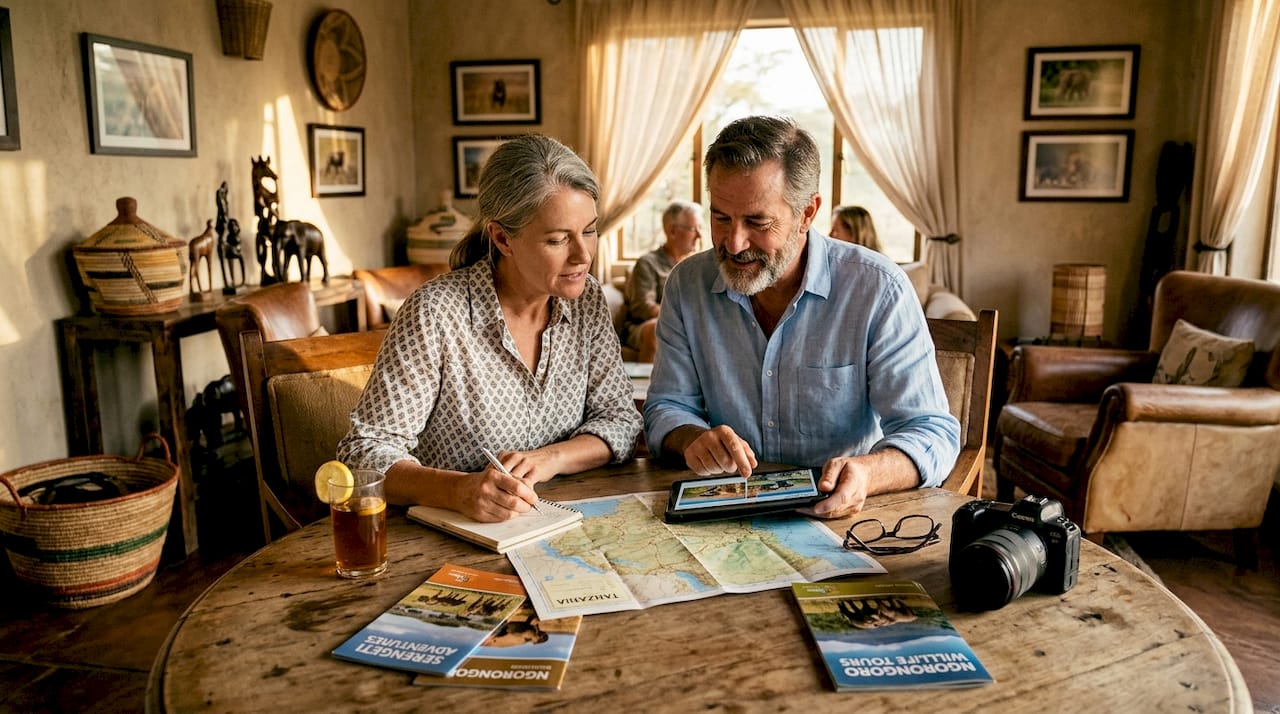
Planning a luxury Tanzania safari is one of the most exciting things you can do. It’s also one of the easiest ways to overspend without realizing it until the bill arrives. From remote lodges to private game drives, the costs can stack up fast, and first-timers often miss key expenses hiding in plain sight. This guide gives you a clear, step-by-step framework to build a realistic budget that matches your expectations. Whether you’re planning a week in the Serengeti or a multi-park journey through Tanzania’s greatest wildlife areas, you’ll finish this guide with confidence, clarity, and full control over your spending.
Table of Contents
- Decide what you want from your safari experience
- Understand the core cost factors
- Plan for extra and optional costs
- Build your personalized Tanzania safari budget
- Why most luxury safari budgets still go wrong
- Plan your dream Tanzania safari with experts
- Frequently asked questions
Key Takeaways
| Point | Details |
|---|---|
| Know your must-haves | Identifying your priorities ensures your safari budget fits your dream experience. |
| Anticipate all costs | Include core, optional, and hidden expenses to avoid budget surprises in Tanzania. |
| Compare and customize | Ask for detailed quotes and compare both group and private options for true value. |
| Verify and adapt budget | Double-check inclusions and stay flexible as you finalize your luxury safari plans. |
Decide what you want from your safari experience
Before you look at a single price tag, you need to know what kind of safari you actually want. This sounds obvious, but it’s where most luxury travelers lose control of their budget. They start browsing packages without a clear sense of what matters most, and they end up paying for things they don’t need while missing the experiences they truly want.
Start by asking yourself a few key questions:
- 🐆 Do you want to focus on specific wildlife, like big cats or elephants?
- 🏕️ Are you set on staying in exclusive, remote lodges with private plunge pools?
- 📸 Is photography a priority? If so, private vehicles and specialist guides matter.
- 👨👩👧 Are you traveling solo, as a couple, or with family or a small group?
- 🗓️ Do you have fixed travel dates, or can you be flexible around peak season?
Your answers shape everything. A couple wanting a romantic, ultra-private experience in a conservancy will have a very different budget from a family of four wanting a mix of game drives and cultural visits. Personalized and luxury options significantly affect overall costs, so knowing your priorities upfront prevents expensive surprises later.
Once you’ve answered those questions, sort your wishes into two lists. The first list is your non-negotiables: the things that, if missing, would ruin the trip. The second list is your nice-to-haves: experiences you’d love but could skip if the budget gets tight. This simple exercise gives you and your safari planner a clear framework. You can explore safari trip types to match your vision with real itinerary options before committing to anything.
Pro Tip: Write your non-negotiables down before you contact any operator. This prevents you from being upsold on experiences that don’t align with your actual goals, and it helps planners give you accurate, tailored quotes from the start.
Season and group size also play a major role. Traveling during peak season (July to October for the Great Migration) means higher lodge rates and more competition for exclusive spots. Smaller groups tend to cost more per person for private experiences but offer far greater flexibility and intimacy. Knowing this early lets you make smarter trade-offs.
Once you’ve set the stage with your goals, it’s time to understand the main factors that shape your budget.
Understand the core cost factors
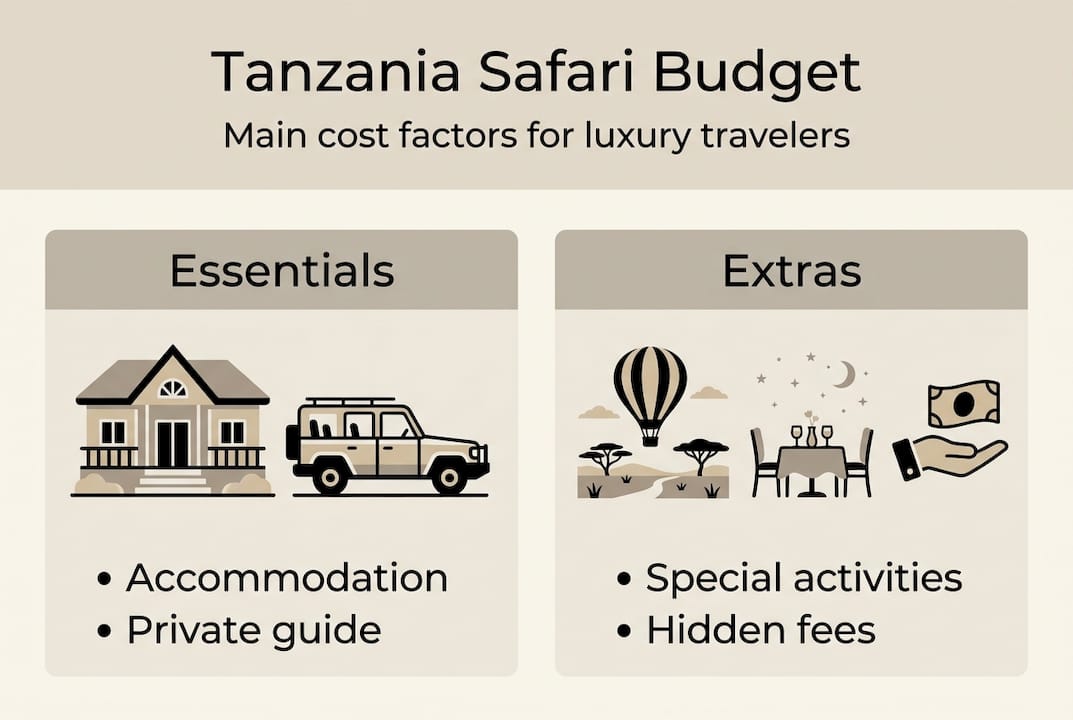
Having identified your priorities, now focus on where your money will go. A luxury Tanzania safari budget breaks down into several distinct categories, and understanding each one helps you avoid nasty surprises.
Here’s a breakdown of the main cost categories:
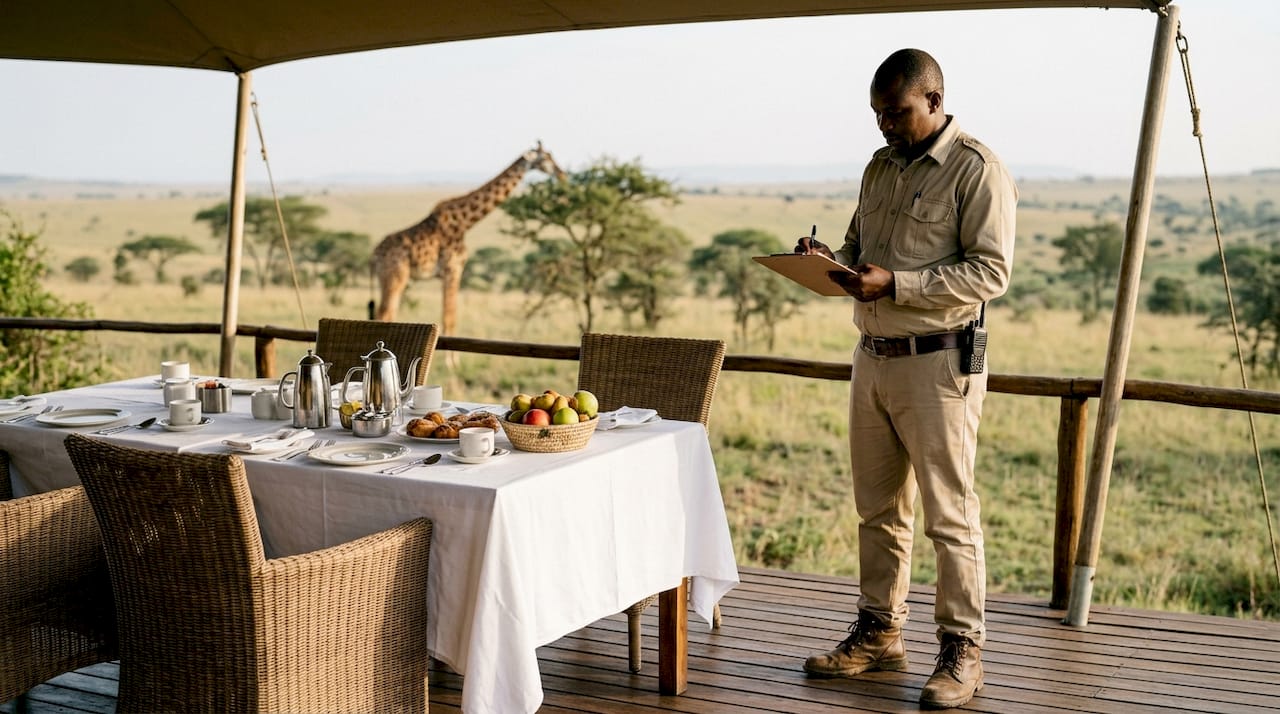
- Accommodation: This is typically the biggest expense. Luxury lodges and tented camps in prime locations like the Serengeti or Ngorongoro can range from $500 to $1,500+ per person per night.
- Park and conservation fees: Tanzania’s national parks charge entry fees that vary by park. These are often included in packages but always worth confirming.
- Ground transport: Private 4×4 safari vehicles with a dedicated guide are standard for luxury travelers. Shared vehicles cost less but sacrifice exclusivity.
- Internal flights: Flying between parks saves time and adds comfort. Expect to pay $200 to $600 per flight segment.
- Meals and beverages: Most luxury camps include all meals. Premium drinks and special dietary requests may cost extra.
- Guiding fees: Expert, specialist guides (for photography, birding, or cultural experiences) are often priced separately from standard guiding.
Accommodation and exclusive activities are the main cost drivers in luxury Tanzania safaris, so these deserve the most attention in your planning.
| Cost category | Luxury (per person/day) | Ultra-luxury (per person/day) |
|---|---|---|
| Accommodation | $500 to $900 | $1,000 to $1,500+ |
| Park fees | $60 to $100 | $60 to $100 |
| Transport and guide | $150 to $250 | $250 to $400 |
| Meals and drinks | Included or $50 to $100 | Included |
| Internal flights | $200 to $400 (per leg) | $300 to $600 (per leg) |
Season matters enormously. Peak season rates at top lodges can be 30 to 50% higher than shoulder or green season rates. The green season (November to May, excluding April) offers lush landscapes, fewer crowds, and real savings without sacrificing quality wildlife viewing. You can also review itinerary price examples to benchmark what full packages typically include at each price point.
According to average Tanzania safari costs, most travelers spend between $300 and $500 per day for mid-range options, while luxury experiences start at $600 and climb well beyond $1,500 per person per day. Knowing these benchmarks helps you spot quotes that are either too good to be true or unnecessarily inflated.
Don’t overlook hidden fees. Some lodges charge extra for laundry, Wi-Fi, spa treatments, or special bush dinners. Always ask for a full list of inclusions and exclusions before signing anything. Explore Tanzania safari lodge choices to compare what different properties include at various price levels.
Plan for extra and optional costs
After addressing baseline costs, the next layer is optional experiences and surprise expenses. These are the costs that rarely appear in a headline price but can add thousands of dollars to your final bill.
Here’s how common add-ons compare across safari styles:
| Experience | Group safari | Private safari | Ultra-luxury add-on |
|---|---|---|---|
| Hot air balloon (Serengeti) | $500 to $600 per person | $500 to $600 per person | Private charter available |
| Bush dinner or sundowner | Sometimes included | Often included | Always included |
| Cultural village visit | $30 to $80 per person | Customized | Fully curated |
| Specialist guide (photography) | Not typical | $100 to $300/day extra | Included in some packages |
| Spa treatments | Extra charge | Extra charge | Sometimes included |
Private safaris and special excursions can add significantly to overall cost, but they also deliver the exclusivity and personalization that luxury travelers genuinely value. The key is deciding upfront which extras are worth it to you.
Here’s a numbered approach to estimating and tracking your extra expenses:
- List every potential add-on you might want, from balloon rides to premium spa sessions.
- Assign a realistic cost to each item using operator quotes or published rates.
- Separate confirmed extras from maybes, and budget only for the confirmed ones.
- Add a 10 to 15% buffer to your total for unexpected costs like visa fees, airport transfers, or last-minute changes.
- Track spending in real time using a simple spreadsheet or travel budgeting app during the trip.
Visas, travel insurance, and gratuities are three costs that travelers consistently underestimate. Tanzania requires a visa for most nationalities (around $50 USD), and tipping guides, camp staff, and drivers is standard practice. Budget $15 to $20 per day per guide as a baseline for tips. A detailed budget guide for extras can help you account for these items systematically.
Pro Tip: Ask your safari operator for all-inclusive or itemized pricing upfront. This eliminates bill shock at checkout and makes it much easier to compare quotes from different providers on equal terms. You can explore group vs private safari costs to decide which format fits your style and budget best.
Build your personalized Tanzania safari budget
Now that you have all the core information, it’s time to put it together and finalize your personalized plan. Building a safari budget isn’t a one-time task. It’s a living document that evolves as your itinerary takes shape.
Follow these steps to build yours:
- List your essential costs: Accommodation, park fees, transport, internal flights, and meals. These are your fixed baseline.
- Choose your priorities: Use your non-negotiables list from the first section to decide where to spend more and where to save.
- Add confirmed optional extras: Hot air balloon? Private guide? Bush dinner? Add only what you’ve committed to.
- Request itemized quotes: Safari planners should always verify inclusions and compare multiple quotes for transparency. Ask every operator to break down their pricing line by line.
- Apply your buffer: Add 10 to 15% to your total to cover unexpected costs.
- Review and adjust: As your itinerary is confirmed, revisit the budget and update any figures that have changed.
‘Always ask for itemization to ensure nothing is overlooked.’
One practical tool is a simple spreadsheet with columns for category, estimated cost, confirmed cost, and notes. This lets you see at a glance where you’re on track and where you need to adjust. You can find sample itineraries to use as a starting point when estimating costs for different park combinations.
When comparing quotes from different operators, watch for vague language like “meals as per itinerary” or “transfers included where applicable.” These phrases often hide exclusions. A reputable operator will give you a clear, line-by-line breakdown without hesitation. If they won’t, that’s a red flag.
Review your budget at least twice: once when you receive your first detailed quote, and again when the final itinerary is confirmed. Costs can shift as lodge availability changes or as you add or remove experiences. Staying on top of this keeps you in control and prevents surprises at the end of your trip.
Why most luxury safari budgets still go wrong
Before wrapping up, let’s examine the most overlooked factors from a seasoned expert’s perspective. Even experienced, well-traveled clients regularly underestimate their Tanzania safari costs. And it’s rarely the big items that catch them off guard.
The real culprits are the small decisions made late in the planning process. A last-minute lodge upgrade. A private helicopter transfer that “seemed worth it.” A specialist photography guide added two weeks before departure. Each of these feels reasonable in isolation, but together they can add $3,000 to $5,000 to a trip that was already fully budgeted.
There’s also a common myth that luxury operators automatically include everything. They don’t. Even at $1,500 per person per night, some lodges charge separately for premium wines, laundry, and off-menu dining. Assuming “luxury means all-inclusive” is one of the most expensive assumptions a traveler can make.
Our advice: communicate your luxury expectations in full at the very first conversation. Don’t wait until the itinerary is built to ask what’s included. The more specific you are upfront, the more accurate your quote will be, and the fewer surprises you’ll face. You’ll find honest, experience-based guidance on our expert safari budgeting tips to help you navigate these conversations with confidence.
As we like to say: ‘True luxury is predictable, except when you skip the details.’
Plan your dream Tanzania safari with experts
You now have a solid framework for budgeting your luxury Tanzania safari. But knowing the steps and executing them flawlessly are two different things. That’s where working with a specialist operator makes all the difference.
At Nomara Safaris, we build bespoke itineraries that match your exact vision and budget, with full transparency on every line item. No vague inclusions. No hidden fees. Just a beautifully crafted safari designed around what matters most to you. Explore our luxury Tanzania safaris to see what’s possible, or browse our full range of trip types in East Africa to find the perfect fit. 📆 Reach out today and let’s start building your dream trip together.
Frequently asked questions
How much does a luxury Tanzania safari typically cost?
High-end Tanzania safaris range from $600 to $2,000 per person per day, depending on the lodge, season, and level of exclusivity you choose.
What is usually included in a Tanzania safari package?
Most packages cover accommodation, transport, park fees, meals, and guided game drives. Safari packages often exclude extras like international flights, tips, visas, and premium experiences.
When is the best time to book for better rates?
Shoulder and green seasons feature lower rates and fewer crowds, making them a smart choice for travelers who want excellent wildlife viewing without peak-season pricing.
Are private safaris worth the extra cost for luxury travelers?
Private safaris provide tailored experiences with heightened privacy and flexibility, making them the top choice for travelers who prioritize exclusivity and personalized service.

