
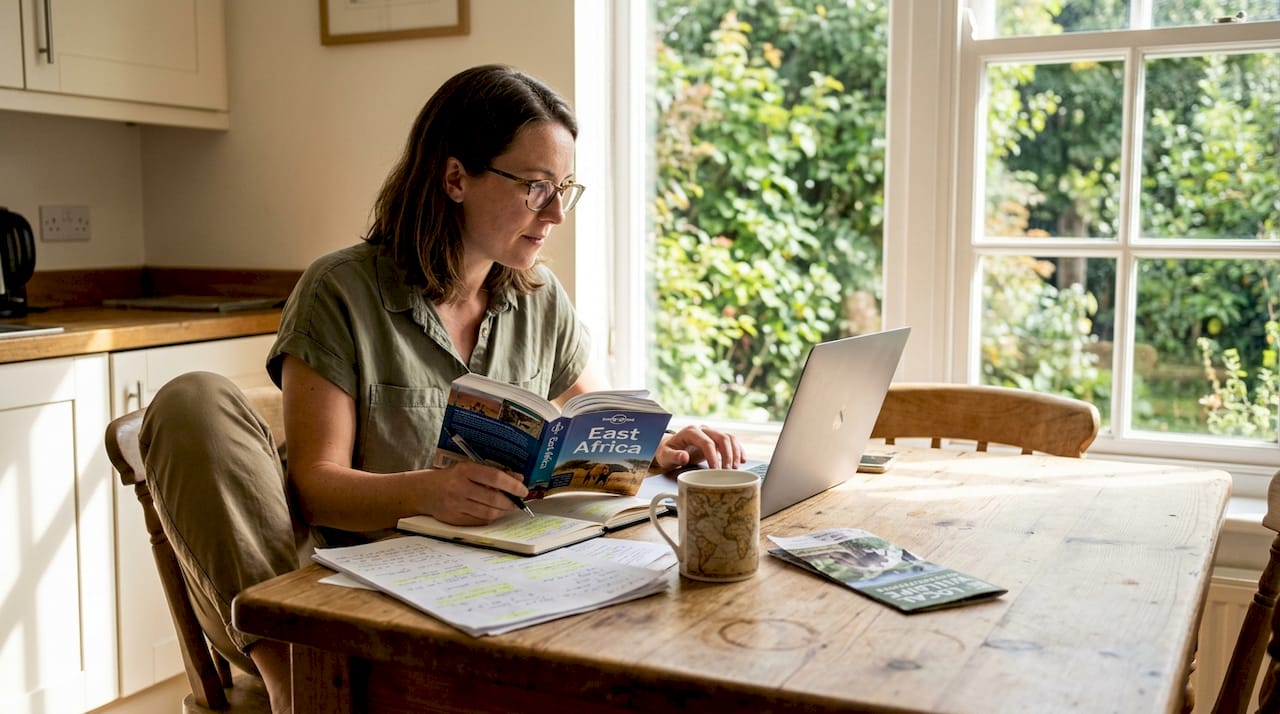
Planning a luxury safari in East Africa is one of the most rewarding things you can do as a traveler. It’s also one of the easiest ways to overspend or feel blindsided by costs you never saw coming. From permit fees and seasonal pricing to accommodation tiers and private guide upgrades, the variables multiply fast. The good news? With the right framework, you can build a budget that delivers an extraordinary experience without unwelcome surprises. This guide walks you through every key decision, from defining your criteria to comparing destinations, so you arrive in East Africa fully prepared.
Table of Contents
- Defining your safari budget criteria
- Options for luxury and budget-conscious safaris
- Safari costs breakdown: What’s included and what’s not
- Comparison: East African safari costs by destination
- Our take: The real value of expert safari budget planning
- Plan your East Africa safari with expert help
- Frequently asked questions
Key Takeaways
| Point | Details |
|---|---|
| Budget criteria matter | Start your safari planning by defining what drives your costs, including location, season, and experience. |
| Local operator savings | Booking through local providers can save you up to 20 percent compared to international agencies. |
| Hidden fee awareness | Watch for exclusions in luxury safari packages, such as permits, tips, and premium extras. |
| Destination affects prices | Your choice of East African country significantly impacts costs and the safari experience. |
| Expert planning adds value | Personalized, evidence-based budget planning leads to richer and more memorable safari adventures. |
Defining your safari budget criteria
Before you look at a single price tag, you need to know what’s actually driving the cost. Safari budgets aren’t built on one number. They’re shaped by a combination of factors that interact with each other in ways that aren’t always obvious.
Location, season, and duration are the three biggest levers. Peak season in Kenya’s Masai Mara, for example, runs from July through October when the Great Migration is at its most dramatic. Prices at top lodges during this window can be double what you’d pay in the green season. Duration matters too. A five-night safari gives you time to settle in and see more, but it also compounds daily costs quickly.
Accommodation tier is the next major variable. The spectrum runs from mid-range tented camps to ultra-luxury lodges with private plunge pools and butler service. Here’s a quick breakdown of what each tier typically offers:
- ✔ Luxury lodges: Private suites, gourmet dining, spa facilities, exclusive game drives
- ✔ Boutique tented camps: Intimate atmosphere, immersive bush setting, personalized service
- ✔ Mid-range camps: Comfortable shared facilities, guided game drives, solid wildlife access
- ✔ Budget options: Basic accommodation, group game drives, limited exclusivity
Private vs. group tours is a choice that affects both cost and experience. A private vehicle and guide gives you full flexibility to follow a leopard for two hours without worrying about other guests. Group tours share that cost but reduce control over your itinerary.
Wildlife focus also shapes your budget significantly. Gorilla trekking permits in Rwanda cost $1,500 per person. Big Five game drives in Kenya require a different kind of investment. Migration safaris demand precise timing, which often means peak-season pricing.
Pro Tip: Knowing your best safari timing before you start budgeting can save you thousands. Green season rates at top lodges are often 30 to 40% lower, and wildlife viewing is still excellent in most parks.
Finally, don’t overlook permits, guide fees, and hidden charges. Park entry fees, conservation levies, and activity permits are often quoted separately from accommodation. East Africa is pricier than South Africa but offers superior migration viewing, which means the investment is real but so is the return.
Options for luxury and budget-conscious safaris
With your criteria clear, the next step is matching your preferences to the right safari type. The range is wider than most travelers expect.

Luxury all-inclusive safaris are the gold standard. These packages bundle accommodation, meals, game drives, park fees, and sometimes internal flights into a single per-person-per-night rate. Expect to pay between $1,000 and $3,000 per person per night at top-tier properties. The advantage is simplicity and quality control. Everything is curated, and your time in the bush is maximized.
Boutique lodges and tented camps offer a more intimate alternative. Many of these properties have fewer than 20 beds, which means personalized attention and a quieter experience. They’re often positioned in private conservancies with exclusive wildlife access that the main national parks can’t match.
Here’s a quick comparison of the main safari types:
| Safari type | Typical cost per person per night | Best for |
|---|---|---|
| Ultra-luxury lodge | $1,500 to $3,000+ | Exclusive, high-end travelers |
| Boutique tented camp | $800 to $1,500 | Intimate, immersive experience |
| Mid-range camp | $300 to $800 | Value-focused travelers |
| Budget group tour | $100 to $300 | Cost-conscious adventurers |
Private guide and vehicle options are worth the premium if wildlife photography or specific animal sightings are a priority for you. You set the pace. You stay at a sighting as long as you want.
For gorilla trekking specifically, budget options do exist. Uganda offers gorilla permits at $800 per person, compared to $1,500 in Rwanda. The experience is equally powerful, and the savings are meaningful if you’re planning for multiple people.
Booking directly with a local safari operator like Nomara Safaris can save up to 20% versus international agencies. Local operators have direct relationships with lodges and guides, which translates to better rates and more flexibility. You can also explore our full range of East Africa safaris to see what’s possible across different budgets.
Pro Tip: Check our safari planning tips for seasonal deals and last-minute availability at top camps. Some of the best value windows are in November and April.
Safari costs breakdown: What’s included and what’s not
This is where many travelers get caught off guard. A package that looks complete on paper can carry a surprising number of exclusions. Knowing what to check for upfront protects your budget and your experience.
Standard inclusions in most luxury packages:
- Accommodation (lodge or tented camp)
- All meals (breakfast, lunch, dinner)
- Scheduled game drives with a guide
- Park entry fees
- Airport transfers within the destination
Common exclusions you must verify:
- International and domestic flights
- Visa fees (Kenya, Uganda, Rwanda, Tanzania all have separate requirements)
- Travel insurance
- Gratuities for guides and camp staff
- Premium drinks and minibar items
- Optional activities like hot air balloon rides or cultural village visits
- Gorilla or chimpanzee trekking permits
“Luxury safaris are often marketed as ‘all-inclusive’ yet many have hidden fees like premium drinks or extra activities.”
Permit costs deserve special attention. A Kenya safari package may include park fees but exclude conservancy fees, which can add $100 or more per night. Gorilla permits in Uganda and Rwanda are almost always listed separately. Always ask your operator for a full itemized quote.
Tipping is a genuine cost that many travelers underestimate. A standard guideline is $10 to $20 per day for your guide and $5 to $10 per day for camp staff. On a 10-night safari for two people, that adds up to $300 to $600 or more.
Working with experienced safari guides who are transparent about costs upfront is one of the most effective ways to avoid budget surprises. Ask for a written breakdown before you confirm any booking. Our gorilla safari tips page also covers permit inclusions and what to expect on the ground.
Comparison: East African safari costs by destination
Destination choice is one of the most powerful budget variables. Each country in East Africa offers a distinct experience at a different price point.
| Destination | Average daily cost (luxury) | Signature experience | Permit cost |
|---|---|---|---|
| Kenya | $800 to $2,500 | Great Migration, Big Five | Included in park fees |
| Tanzania | $700 to $2,200 | Serengeti, Ngorongoro | Included in park fees |
| Uganda | $600 to $1,800 | Gorilla trekking, chimps | $800 per person |
| Rwanda | $900 to $3,000 | Premium gorilla trekking | $1,500 per person |
Kenya is the classic East African safari destination. The Masai Mara delivers the world’s most famous wildlife spectacle during migration season. Luxury lodges here are world-class, and the infrastructure for high-end travel is well established. Costs are high during peak season but competitive in the green months.
Tanzania offers a broader range of price points. The Serengeti rivals the Mara for wildlife density, and the Ngorongoro Crater is unlike anywhere else on earth. You can find excellent Tanzania safari itineraries across both luxury and mid-range tiers.
Uganda is the best value destination for gorilla trekking. The $800 permit is significantly more accessible than Rwanda’s, and Uganda safari options often include chimpanzee tracking and Queen Elizabeth National Park in a single itinerary.
Rwanda commands a premium, but the experience is exceptional. Exclusive camps near Volcanoes National Park are among the most intimate wildlife encounters in Africa. Rwanda gorilla trekking attracts travelers who want the most curated, high-end version of this experience.
East Africa outpaces South Africa and other regions in cost but delivers the world’s best migration viewing. The value equation is strong if you plan carefully.
- 👉 Kenya and Tanzania: Best for Big Five and migration
- 👉 Uganda: Best value for gorilla trekking
- 👉 Rwanda: Best for exclusive, premium gorilla experiences
Our take: The real value of expert safari budget planning
Here’s something we’ve learned from years of planning safaris across East Africa: overpaying doesn’t guarantee the best experience. We’ve seen travelers spend $3,000 a night at a famous lodge and feel underwhelmed, while others at a $900-per-night boutique camp in a private conservancy called it the best trip of their lives.
The difference isn’t the price. It’s the fit. A well-planned budget means you’re spending on what actually matters to you, whether that’s a private vehicle, a specific migration window, or a permit for gorilla trekking in Rwanda.
The most common mistake we see is building a budget around the headline price and ignoring the exclusions. That’s where the real cost lives. Working with local safari guides who know the fine print of every lodge contract and permit process is not a luxury. It’s the smartest investment you can make before you ever board a plane.
Evidence-based budgeting, built on real costs and honest inclusions, leads to more memorable trips. Every time.
Plan your East Africa safari with expert help
Ready to turn these numbers into a real itinerary? At Nomara Safaris, we specialize in building personalized safari budgets that reflect your exact priorities, whether that’s a migration front-row seat in Kenya, gorilla trekking in Uganda, or an exclusive Rwanda camp experience.
Our team provides full cost transparency, itemized quotes, and expert guidance on timing, permits, and accommodation. We match you with the right experience at the right price. Explore our full range of safari trip types or start with something specific like our budget gorilla trekking option in Uganda. 📆 Reach out today to secure your spot and get a customized plan built around your travel goals.
Frequently asked questions
How much does a luxury safari in East Africa cost on average?
Luxury safaris typically range from $1,000 to $3,000 per person per night, depending on destination, season, and package inclusions. East Africa pricing tends to be higher than other safari regions, especially during peak migration season.
What are common hidden fees in luxury safari packages?
Hidden fees often include premium drinks, optional activities, permit surcharges, and tips for guides and camp staff. Always request a full itemized quote before confirming, since luxury all-inclusive packages frequently exclude these costs from their headline rates.
Can booking with a local safari operator save money?
Yes. Booking directly with a local operator can save up to 20% compared to international agencies, thanks to direct lodge relationships and lower overhead costs.
Are permits for gorilla trekking included in safari packages?
Not always. Permit costs vary by country, $800 in Uganda and $1,500 in Rwanda, and are often listed as separate line items. Always confirm permit inclusions before you finalize your booking.

